Look, I've been bending metal and wiring LEDs since 1997. SMD modules are what we put inside front-lit channel letters, halo-lit letters, and light boxes. They're tiny surface-mounted diodes soldered onto a PCB strip, then potted or sealed. You get 100-150 lumens per watt from a decent 2835 chip. That's real brightness.
Here's what nobody tells you: brightness means nothing without a good diffuser. We use 3mm acrylic with 90-92% light transmittance. The acrylic spreads the point-source light into an even face. Cheap acrylic? It yellows in 12-18 months. Domestic material. UV-resistant Mitsubishi or Degussa lasts 5-8 years. That's the difference between a sign that looks new and one that looks like a smoker's teeth.
For storefront channel letters, we recommend SMD 2835 modules at 2-inch spacing behind 3mm acrylic. That gives you a bright, even face. If you want RGB color-changing, use 5050. If you need maximum punch for a highway sign, use 5730 — 40-60 lumens per chip. But don't overpay. A 5730 in a 3-inch deep letter is like putting a V8 in a golf cart. Waste of money.
Our front-lit channel letters use this exact setup. Factory price $20-80 per letter. US retail installed? $200-700. Same 304 stainless, same Samsung LEDs. You do the math.
Neon flex is a silicone or PVC tube with a flexible LED strip inside. It bends into shapes. It looks like old glass neon but runs on 12V or 24V DC. We make neon flex signs for $30-200 per sign depending on size. It's popular for restaurant accent lighting, bar logos, and that retro vibe.
I've seen this go wrong: a customer ordered 50 feet of neon flex to spell "OPEN" across his storefront. Looked great for six months. Then the silicone turned yellow, the light turned pink, and he called me cussing. The supplier sold him 50-cent-per-meter garbage. We use mid-grade strip from rated manufacturers. Not the cheapest. But we also won't claim our neon flex matches channel letter brightness. It doesn't.
The ugly truth is neon flex loses 30-40% of its light through the diffusing tube. The LEDs inside are the same 2835 chips, but they're spaced further apart and wrapped in a light-eating jacket. It's fine for a border or an outline. It's not a replacement for a dimensional letter with a face.
An SMD 2835 module puts out 100-150 lumens per watt. In a channel letter, we pack maybe 12-16 modules per square foot of face. That gives you a surface brightness that reads from across the street. Neon flex? You get maybe 300-800 lumens per meter, depending on LED density and tube size. But that's spread over a long line, not focused on a face. Per square inch, the channel letter is at least twice as bright. I've held them side by side in the shop. No contest.
Here's what nobody tells you: brightness uniformity is not the same as brightness. A channel letter with poorly spaced modules will have hot spots — bright dots with dark gaps. That's why we run an 8-12 hour aging test and 100% QC inspection. Every letter gets checked before it leaves the factory. Neon flex is more forgiving on uniformity because the tube diffuses the light into a continuous line. But bend it too tight and you'll see a bright spot at the curve. Heat damage. We've all done it.
Look, neon flex is cheap per meter. $2-5 per meter for decent stuff, maybe $1 for junk. A channel letter involves laser cutting, bending, welding, grinding, polishing, acrylic face CNC, and LED assembly. That's labor. Our factory price for a front-lit channel letter is $20-80. A neon flex sign might cost $30-200 for the whole sign. But you're not comparing apples to apples.
For a simple border or an arrow, neon flex wins on cost because there's no metal fabrication. For a 24-inch letter "A", you need a backing panel, a power supply, mounting clips, and skilled labor to bend the tube perfectly. The cost ends up close to a basic front-lit channel letter. And the channel letter will look more professional and last longer. We warranty our LEDs 2 years, power supply 1 year. Cheap neon flex dies in 12-18 months. You'll pay twice.
That's our price list. No hidden fees. Shipping from China: express about 5-15 days for small orders, sea freight about 65 days for volume. US tariff adds about 30%. Still 50-65% cheaper than buying installed from a US shop.
The ugly truth is many factories will claim UL certification for everything. UL 48 costs $4,000-15,000 and takes 4-9 months with quarterly audits. We have CE, RoHS, ISO 9001. We can get UL if you pay for it and wait. Most customers don't need it for a storefront sign. But if you're in a jurisdiction that requires it, we'll tell you upfront and quote the real cost. No fake certificates.
We build channel letters, halo letters, light boxes, and neon flex shapes. We don't do giant monolithic neon signs over 10 feet because shipping becomes a nightmare. We'll split it into modules you assemble on site. That's honest.
For neon flex, we use mid-range LED strip. If you want Samsung or Osram chips inside the neon flex, we can do it but the price jumps 40-60%. Most storefronts don't need that. For channel letters, we already use quality modules — Samsung, Osram, or Blueview (Blueview). That's standard, not an upcharge.
For your main storefront signage — the company name on the facade — use front-lit channel letters or back-lit halo letters. They're brighter, more dimensional, and last longer. We export worldwide. We've seen what works. A channel letter with 304 stainless returns and 3mm UV acrylic

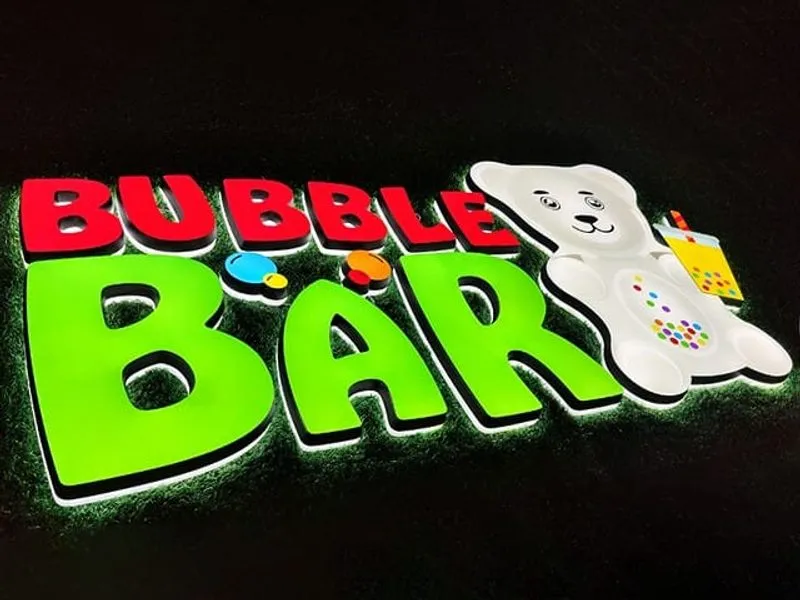
Real photo from our production floor — every sign we ship is made here.
Products mentioned or relevant to this topic — factory-direct, custom built.
Factory-direct since 2010. Free quote within 24 hours — no obligation.
Get a Free Quote → Copy EmailMOQ: 1 piece · Flexible lead time · 2-year warranty · Worldwide shipping
See pricing, specs, and get a free quote for the sign type you need. Built in our factory, shipped worldwide.