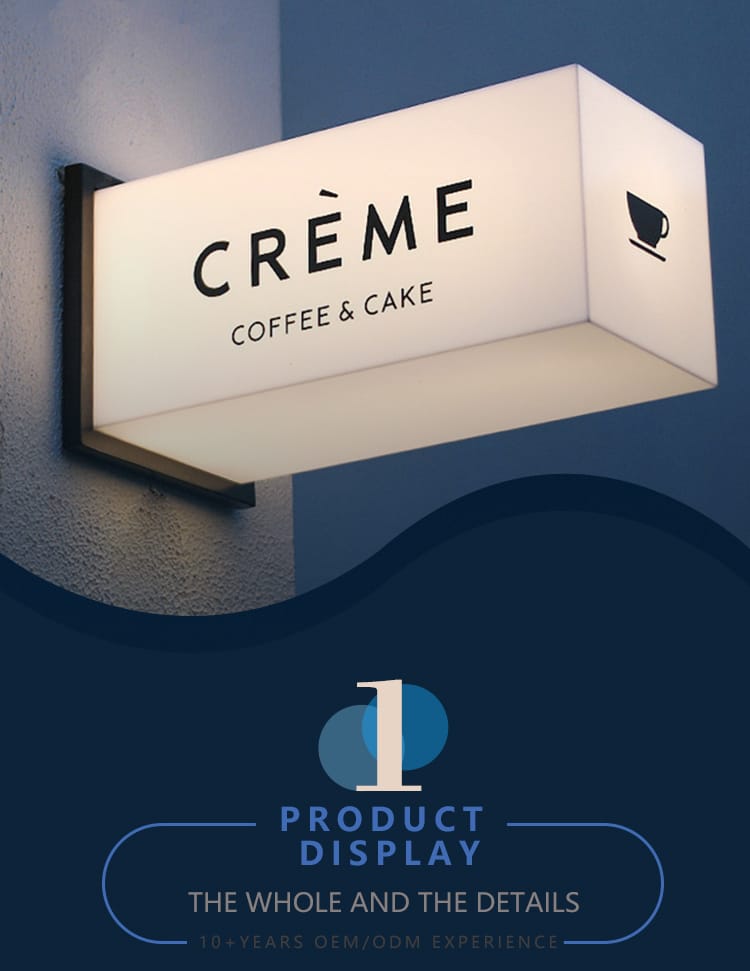
The first neon flex sign I ever installed looked like a masterpiece for exactly eleven months.
Then the letters started dimming in patches, turning that smooth, glowing tube into a stripy mess. The customer called us at 7 AM furious, and honestly, they were right to be. We'd sold them a cheap knockoff LED flex product that wasn't rated for outdoor use, and we paid for it in rework time and damaged reputation.
Here's what nobody tells you: The fight between SMD LED modules and neon flex isn't about which one "looks better." It's about understanding what you're actually buying, how it behaves over time, and whether you're willing to pay for dimming controls or a replacement cycle you didn't plan for.
Let's settle this properly.
First, What Are You Actually Comparing?
This is where most buyers get lost. They think they're choosing between two sign technologies. They're not.
An
SMD LED channel letter uses discrete modules mounted inside the letter cavity. The light bounces off the back and the face, creating a glowing effect. It's a point-source system that's been diffused.
Neon flex is a continuous tube of LED chips embedded in flexible PVC or silicone. It mimics the look of old glass neon, with one unbroken line of light.
One is a system. The other is a filament.
The ugly truth is that most people asking this question don't care about the science. They care about three things: Will it look even? Will it last? What will it cost me?
Let's answer all three.
The Uniformity Lie That Sells Thousands of Signs
"Hot spotting" is the industry term for when you see individual LED dots through the acrylic face. It looks like your sign has a rash.
With SMD modules, hot spotting happens when:
- You space the modules too far apart
- The letter cavity is too shallow
- You use modules with a narrow beam angle
- The acrylic face is too thin
With neon flex, uniformity is generally easier to achieve. The tube naturally distributes light along its length.
But here's the kicker. I've seen just as many bad neon flex installations. Cheap flex has inconsistent chip spacing inside the tube. You'll get a darker section every 15 centimeters where the manufacturer cut corners. You can't see it when the sign is brand new, but after six months, those sections yellow and dim faster than the rest.
The fix? Test your source. I run every incoming batch of LEDs through an 8-12 hour aging test in our factory. I can't tell you how many times that caught a bad batch before it hit a customer's wall.
For reference, our quality SMD modules use the 2835 chip at 100-150 lumens per watt. That's the industry workhorse for a reason. The cheap ones? They're using whatever chip they could buy cheapest that week, often with no binning tolerance.
Brightness: Don't Be Fooled by the Numbers
Here's a hard fact. SMD 5730 chips produce 40-60 lumens per chip. That's the highest brightness option we offer for
channel letters. The 2835 chips run at 100-150 lumens per watt, which is more efficient.
If you need a sign that punches through sunlight, you're looking at the 5730 modules, or you need to specify a higher LED count per meter on your neon flex.
But here's what nobody tells you about brightness: It's not just about the chip. It's about the color temperature and the distance.
A 6000-6500K cool white sign looks "brighter" to the human eye than a 3000-3500K warm white sign, even at the exact same lumens. That's not a product difference, that's biology.
For storefront signs:
- 3000-3500K warm light for cafes, bars, anything hospitality
- 4000-5000K neutral for corporate, retail, medical
- 6000-6500K cool for industrial, automotive, highway visibility
If a supplier tells you their LED is "the brightest on the market" without asking you about your application, they're selling you a flashlight, not a sign.
The Cost Breakdown That Actually Matters
Let's talk real numbers, because this is where the decision gets made.
Factory direct pricing for
front-lit channel letters runs $20-80 per letter with SMD LED modules. Bump that to
back-lit halo letters and it's $35-120. Those prices include the cabinet, the acrylic, the LED system, and the transformer.
Neon flex signs are trickier to price because they're often sold as a complete product. You're looking at $30-200 per sign from a factory, depending on size and complexity.
Here's the dirty secret the online "LED expert" forums won't tell you: The LED modules in that expensive neon flex tube are the same SMD chips you'd put in a channel letter. Someone just placed them in a row and covered them with silicone.
The production cost difference isn't huge. The pricing difference is all about the assembly complexity and the housing.
If you're buying from a US retail installer, you'll pay $200-700 per letter for front-lit and $400-1,000 for halo-lit. The product cost from our factory in Lu'an, Anhui, is 50-65% less. That's not a comment on quality. That's the difference between a Chinese factory with 3,000 square meters of production space and 50 workers versus a US shop buying from that same factory and marking it up.
The Lifespan Reality Check
Here's where I'm going to contradict half the marketing you've read.
The L70 rating of 50,000 hours is a theoretical number. It means the LED chip should maintain 70% of its initial brightness after that long. But this is measured in a lab at a specific ambient temperature that's way cooler than real-world conditions.
I've watched sign shops pay $800 for a front-lit letter. Same 304 stainless, same Samsung or Osram LEDs that we use. We ship that letter for $120.
Realistic expectations:
Quality SMD modules (Samsung, Osram, or Blueview brand): 5+ years real lifespan on an outdoor sign.
Cheap SMD modules: 12-18 months. Then they start dropping out. You'll notice one letter dimming, then another. It's like watching your sign die in slow motion.
Neon flex with quality components: 3-5 years. The flex itself is rated for UV, but the silicone can become brittle over time.
Neon flex with cheap components: 6-12 months before you see color shifting and dimming. This is the biggest trap in the market right now.
The difference between quality and garbage is often just a few dollars per sign. But thousands of buyers still pick the cheap option because they're "just trying to get it designed."
UV And Weather: The Slow Killer
You're putting this sign outside. The sun is not your friend.
For the acrylic face, you have two choices:
- Mitsubishi or Degussa acrylic: 90-92% light transmittance, UV-resistant, 5-8 year lifespan before yellowing
- Domestic acrylic: 1-2 years before it starts yellowing
That domestic acrylic looks identical in the shop. It's smooth, it's clear, it cuts the same. But a year of direct sun turns it brown. Now your nice clean white sign looks like it's made of tea-stained paper.
With SMD modular systems in channel letters, you also need to worry about the water. Your letter should be sealed with neutral silicone to prevent moisture intrusion. If water gets in, your expensive LED modules short out. I've seen it happen a hundred times.
Neon flex has a waterproofing advantage because the entire tube is sealed. But that's only true if the manufacturer used proper connectors at the power hookup. I've seen neon flex signs fail in a single rainstorm because the connection point wasn't sealed properly.
IP ratings matter. IP65 is dust-tight and protected against water jets. That's the minimum you should accept for outdoor use. IP66 handles powerful jets. IP68 is submersible. For a coastal installation, you want IP66 or better.
And for the
metal letters themselves?
Stainless steel letters are built for outdoor durability. The 304 grade runs 10+ years in standard conditions. The 316 grade with its 2-3% molybdenum content runs 15+ years in marine environments. If you're near the coast, pay the 20-30% premium for 316. Don't argue with me about this.
Aluminum letters are another option. They weigh one-third of steel, naturally resist corrosion, and are cheaper to ship. For a light-duty sign, they're perfect.
Neon Flex: The Aesthetic Trap
People choose neon flex for the look. I get it. The glow is smooth, continuous, and has that classic vibe that channel letters just don't have.
But here's what nobody tells you about the "modern neon" aesthetic: It's extremely sensitive to manufacturing quality.
A well-made neon flex tube produces an even, continuous glow. A poorly-made tube produces a dotted, shadowed mess that looks like a cheap string of holiday lights.
The bend radius matters. If the flex is bent too tightly in a sign, the tube can crack internally and the light output drops in that section.
You can't swap a single module on a neon flex sign. If a section fails in the middle of a 10-letter sign, you're replacing the entire tube or cutting out the failed section and patching in new material. That is a much more expensive repair than swapping out a single SMD module in a channel letter.
For a
neon flex sign, get the quality right the first time. I'd rather sell one good neon flex sign that lasts four years than five bad ones that generate warranty claims.
The "Cheap" Factory Lie
I run a factory in China. I'm allowed to say this:
Almost every manufacturer says they have CE, ISO 9001, and RoHS certification. Some of them are telling the truth. Most of them have a piece of paper they downloaded from a file-sharing site.
CE marking costs 20,000-50,000 RMB and takes 2-8 weeks. That's public knowledge.
The test: Ask to see the certificate with today's date. Reach out to the certification body. If the factory hesitates or can't produce a verifiable document, assume it's fake.
UL certification is a different animal. That costs $4,000-15,000 and takes 4-9 months. There are quarterly audits. A factory with real UL certification will show it to you immediately. They're proud of it.
ETL is an alternative that's 10-30% cheaper than UL. Also legitimate.
I'll be honest with you: A lot of great small factories don't have UL certification because they can't afford the process. That doesn't mean their product is bad. But it does mean you can't sell their product in a US city that requires UL-listed signage components.
Know your market before you buy.
Which One Should You Buy?
Here's my no-BS recommendation matrix.
Choose
back-lit halo letters with SMD LEDs if:
- You need a premium architectural look
- You want the letters to glow against a wall
- You're willing to pay $35-120 per letter
- You want individual letter maintenance capability
Choose
front-lit channel letters if:
- You want the classic bright storefront look
- You want maximum brightness at minimum cost
- You're on a tighter budget
Choose
neon flex if:
- You want that continuous line effect for script or logos
- You need a design that uses thin strokes
- You're willing to replace the entire sign if it fails
Choose generic SMD in a
light box if:
- You need even illumination across a large flat surface
- You're building an
acrylic light box for a menu or poster
One more thing. For the love of your budget, don't fall for the "sale" price on a complete sign that includes LEDs worth $5. You will pay for it later in electrical repairs and sign maintenance.
Production Reality: You Can't Rush Quality
When you order from our factory, here's the honest timeline.
Design confirmation takes one day. Then we laser cut the metal (that's ±0.1mm accuracy), bend and weld with TIG, grind and polish. The acrylic face gets CNC cut. The LED assembly happens. We seal everything with neutral silicone. Then we run an 8-12 hour aging test and do a 100% QC inspection. Export packing goes in foam, carton, and plywood crate.
Total lead time: about 5-15 days.
Here's what you won't get from us: "It's done, ship it tomorrow." Any factory that ships a custom sign without testing it is risking your sign's lifespan. The aging test is what catches those bad LED batches I mentioned earlier.
MOQ is 1 piece, so I'm not going to turn away a small order. But if you're a sign shop ordering 50 letters, you're going to get better attention because we know you're likely to reorder.
Shipping takes about 5-15 days by express, about 10 days by air, or about 65 days by sea. If you're importing from China, plan your lead time accordingly.
The Final Verdict
I've been doing this for 16 years. I've burned my hands on hot acrylic and argued with suppliers about LED quality.
The honest truth: For most storefront signs, a high-quality SMD LED system in a well-built channel letter is the better investment. It gives you more maintenance flexibility, a brighter output per dollar, and an easier repair path.
Neon flex wins when you need a specific continuous-line aesthetic. Just budget for the replacement cycle and specify quality components.
And if you're importing? Ask the hard questions. Ask for current certifications. Ask for photos of the aging test process. Ask for a video of your actual sign being tested before shipping.
A serious manufacturer will provide that. An order-taker will make excuses.
I've seen too many people chase the lowest number and end up with a sign that needs replacement in 18 months. The "savings" disappears when you're paying for a crane truck and an electrician twice in three years.
Buy once, buy right. Your sign is going to be on that storefront for years. Make sure it's the memory you want people to have of your business.