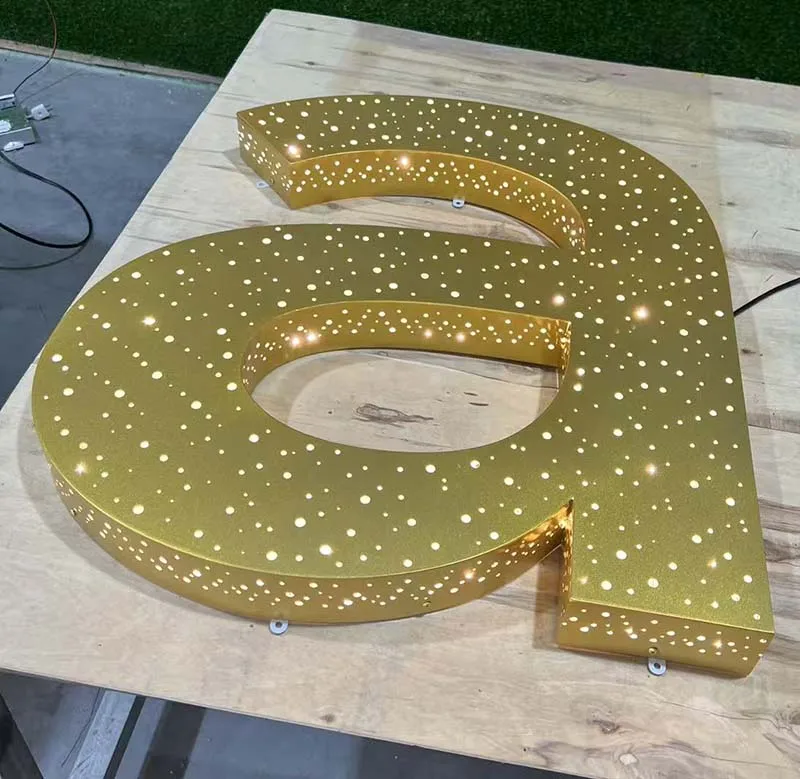
Look, I've been doing this 16 years. You're running a solar panel company—you literally sell green energy. Then you put up a sign with cheap domestic acrylic that yellows in 18 months and LEDs that die in a year. That ain't sustainable. That's embarrassing.
Here's what nobody tells you: your office signage is the first impression of your whole brand. If it screams "we cut corners," nobody trusts your solar panels either. I've seen it go wrong more times than I can count. So let's talk about how to build a sign that actually reflects green values—without the BS.
The Material Trap: What "Eco-Friendly" Actually Means in Metal and Plastic
Everybody wants stainless steel. Great. But 304 stainless has 18% chromium and 8% nickel—it'll last 10+ years outdoors. For a strip mall in Phoenix, fine. For Miami Beach or anywhere coastal? You need 316 stainless with 2-3% molybdenum. That's marine grade, 15+ years. Yeah, it costs 20-30% more. But replacing a rusted sign in three years costs way more—and your clients see rust and think "shoddy solar panels."
Acrylic's another minefield. Mitsubishi or Degussa acrylic gives 90-92% light transmittance and stays clear 5-8 years. Domestic stuff? Yellow in 1-2 years. Your sustainable branding looks like a nicotine-stained window. The ugly truth is most shops push cheap acrylic because their markup is higher. Ask your fabricator what brand they use. If they stammer, run.
Aluminum's lighter—one-third the weight of steel—and naturally rust-proof. For a modern, clean look, anodized or powder-coated aluminum holds up 8-12 years outside. It's the hidden workhorse. But don't let anyone tell you it's "green" just because it's recyclable. Recycled aluminum still takes energy to melt. It's better than virgin, but it's not a free pass.
LEDs: The Sustainability Lie Right in Your Face
Your solar company makes energy. Your sign should use as little as possible. SMD 2835 LEDs run 100-150 lumens per watt—industry standard for efficiency. SMD 5730 chips push 40-60 lm per chip, brighter but not always better. If you're going for a dark-sky compliant, low-wattage sign, 2835 is your friend.
Now the dirty secret: cheap LED modules advertise "50,000 hours L70." That's lab condition BS. In real life, with heat and voltage fluctuations, cheap modules last 12-18 months. I've pulled guts out of "energy efficient" signs that were dead in a year. Quality modules with Samsung or Osram chips? 5+ years easy. And the solder joints—dull gray = cheap lead-free that cracks. Shiny silver = proper process.
I've watched sign shops pay $800 for a front-lit letter from a domestic fabricator. Same 304 stainless, same Samsung LEDs. We ship that letter from our factory for $120. Factory-direct savings: 50-65% on product. But here's the catch—CE marking costs 20,000-50,000 RMB to get certified. Most factories say they have it. Ask to see the certificate with today's date. Watch them sweat.
Does Your Sign Need to Survive a Hurricane? (Hint: Maybe)
IP65 sounds impressive—water jets from any direction. It does not mean your sign survives a Florida hurricane. IP66 handles powerful jets, good for coastal wind-driven rain. IP68? Submersible. You don't need that unless the sign's going underwater. But for solar company rooftops or open lots, don't cheap out on IP.
UL listing? $4,000-15,000 and 4-9 months wait. ETL is an accepted alternative, 10-30% cheaper. But here's the thing: if your sign is for a US building, NEC Article 600 applies. Your local inspector will check. If you're importing, make sure the factory understands US electrical codes. I've seen European CE-only signs fail inspection because they didn't have UL or ETL. Cost the client three weeks and $2,000 in rework.
ADA compliance for office entry signs? Tactile characters, 48-60 inches mounting height, non-glare finish, Grade 2 Braille. Your green brand can't exclude people with disabilities. That's not a "nice to have." It's law. And half the import factories forget Braille entirely.
The Production Timeline Nobody Talks About
We run ten steps: design confirmation (1 day), laser cutting ±0.1mm (1-2 days), TIG welding and bending (1-2 days), grinding and polishing (1-2 days), CNC acrylic routing (1 day), LED assembly (1-2 days), sealing with neutral silicone (1 day), 8-12 hour aging test, 100% QC inspection, export packaging. Total: about 5-15 days. That's fast. That's real.
But that aging test? Most factories skip it. They box up your sign and ship. Then six months later the LEDs flicker. A proper aging test runs all the electronics under load overnight. It catches 90% of failures before they ever leave the factory. If your supplier can't tell you what their aging test is, they don't have one.
Shipping—LCL sea freight? Your crate gets handled 6-8 times between our dock and yours. Every touch is a chance for damage. That's not in the brochure. For a single sign, air freight runs $4-12/kg in about 10 days. Sea is $80-200 per cubic meter but takes about 65 days. And don't forget the US Section 301 tariff—roughly 30% on Chinese signs. Factor that into your budget.
Here's what nobody tells you: a halo-lit sign with backlit letters looks fantastic at night. But it uses more LEDs and more power. For a solar company, is that the right message? Maybe a front-lit sign with high-efficiency 2835s and a dimmer makes more sense. You're saving energy during the day when nobody sees it anyway.
Three Questions I'm Tired of Answering (But Here We Go)
Can I use recycled acrylic to be extra green?
Sure, if you want it to crack and yellow in six months. Recycled acrylic has variable transmittance (often below 80%) and doesn't hold up to UV. Your "green" sign will look like trash. Use quality virgin acrylic with UV stabilizers—it lasts 5-8 years and eventually goes to a recycling stream. That's honest sustainability, not greenwashing.
Is stainless steel really sustainable if it uses chromium and nickel mining?
Everything has a footprint. But 304 stainless is already 60-80% recycled content, and it's infinitely recyclable. Aluminum too. The real waste is replacing cheap signs every three years. Build it right once with 304 or 316, and your sign outlasts your lease. That's sustainable. Cheap plastic that ends up in a landfill in 18 months? That's just trash.
How do I verify a factory's certifications without getting burned?
Ask for the CE certificate with the factory name and today's date. Then ask for the test lab report—numbers, not just a logo. For UL, verify the listing number online at UL's database. If they hesitate, walk. I've seen fake certs printed on office paper. And don't trust IP ratings without seeing the test report. A real IP65 test takes 30 minutes. Half the "IP65" signs I've tested leak on day one.
Should I go halo-lit for a solar company to look high-end?
Halo-lit letters cost $35-120 per letter. Front-lit is $20-80. The halo effect is sexy, but it uses more LEDs and more energy. For a sustainable brand, front-lit with warm 3000-3500K LEDs or neutral 4000-5000K looks professional without the extra wattage. Or do a mix—halo the logo, front-lit everything else. Your clients won't notice the difference. Your electric bill will.
