By Mark Calderone, sign procurement consultant with 18 years in commercial signage, former operations director for a national sign franchise, and current advisor to retail chains on import sourcing strategies.
When I crunched the numbers for my first batch of channel letters from a domestic fabricator, the quote hit $800 per foot. That’s for a front-lit letter using 304 stainless and Samsung LEDs. Same spec from a factory I’d been sourcing from in China? $120 per foot. The difference isn’t quality — it’s markup, overhead, and the fact your local shop orders from the same factories and adds 400%.
Here’s what your boss will ask: “Why can’t we just buy from the lowest bidder?” And you’ll need to answer with more than a shrug. You need hard facts about compliance, shipping, material lifecycles, and the risks that lurk in every crate. I’ve watched $12,000 worth of signs arrive with cracked acrylic because the supplier used standard cartons instead of plywood crates. I’ve seen LED modules fail after 14 months on a coastal restaurant — the cheap modules from a factory that claimed “IP65” but didn’t actually seal their junction boxes. This guide is the stuff I wish someone had handed me in year one.
Line by line, here’s where the money goes: front-lit channel letters from a Chinese factory like Aochuang Sign run $20–80 per letter wholesale. Back-lit halo letters: $35–120. Stainless steel non-lit: $15–40. For a typical 6-letter storefront sign at 12 inches tall, that’s $120–480 landed, depending on material and LED spec.
Now compare to US retail installed pricing: $200–700 per letter for front-lit, $400–1,000 for halo-lit. You’re paying 5–10x more for the same 304 stainless, same Samsung 2835 LEDs, same 2-year warranty. The ROI works out to a payback period of roughly one sign installation. Once you’ve sourced direct, the savings on a single 10-letter sign can fund your next project.
But TCO isn’t just purchase price. You add Section 301 tariff (~30% on China-origin signs, as of mid-2024 per USTR docket), freight, and any certification costs. Sea freight LCL runs $80–200 per cubic meter with transit of about 65 days. That crate gets handled 6–8 times between the factory dock and your receiving bay — every touch is a damage risk. I’ve lost letters to forklift punctures. That’s why you negotiate plywood crating (included at Aochuang) and insist on foam + carton + crate packaging.
Quickest way to spot bad LED modules: look at the solder joints. Dull gray means they used cheap solder that oxidizes in 18 months. Shiny silver is proper lead-free alloy. Quality modules using Samsung or Osram chips carry an L70 rating of ≥50,000 hours — that’s over 11 years at 12 hours a day. Cheap LEDs on Alibaba claim 50,000 hours but die in 12–18 months because the driver caps blow first. Aochuang uses Lan Jing modules, same supplier I’ve spec’d for five years with less than 0.3% field failure.
Acrylic: Mitsubishi or Degussa UV-resistant acrylic yields 5–8 years before yellowing. Domestic sheet? You get 1–2 years. The cost difference is ~40% more for the good stuff. For a sign you expect to last, you don’t cheap out here. Over 2.5 meters tall, use 5mm minimum thickness or wind load will bow the face. Aluminum sign bodies weigh 1/3 of steel and last 8–12 years outdoors. For coastal jobs, spec 316 stainless with 2–3% molybdenum — it’s 20–30% pricier than 304, but 304 in Miami Beach will pit in 3 years. Ohio strip mall? 304 is fine.
Here’s what your boss will ask: “Do we need UL certification?” Answer: If you’re installing in a jurisdiction that follows NEC Article 600 (virtually all US municipalities), your sign must have a UL 48 listing or an equivalent NRTL mark like ETL. A UL listing for a custom sign costs $4,000–15,000 and takes 4–9 months with quarterly factory audits. That’s why many importers skip it and gamble on the “CE” mark that your local building inspector will not accept. That’s a costly redo you can’t afford.
Beyond UL, you’ll need to verify that the factory’s wiring meets NFPA 70, that all ballasts and drivers are appropriately listed, and that the sign’s labeling includes voltage, wattage, and installation date. Some municipalities also require sealed junction boxes and specific grounding. If you’re importing without an NRTL mark, you may have to pay a third-party testing lab to certify the sign after arrival — a process that can cost more than the sign itself and delay your project by weeks.
I’ve made the case for Chinese factories on cost. But I’d be misleading you if I pretended there aren’t real risks. Here’s what you need to weigh:
When should you stick with a US fabricator? When your project is under $3,000 total, when you need installation in under 3 weeks, when your client demands a UL label on the sign itself (not just the components), or when you require on-site installation and cannot manage two vendors. Also, if your contract has a “sole source” clause requiring all components to be US-made, you’ll have no choice.
For larger rollouts (10+ stores), direct sourcing is a clear winner — provided you invest in a factory audit, a UL field inspection, and a logistics partner who knows how to inspect crates before they leave the dock.
You now have the facts to answer “Why can’t we just buy from the lowest bidder?” Start with TCO: the 5–10x markup on US-fabricated signs is real, but only if you manage the hidden costs of tariffs, freight, certification, and risk. Here’s what I recommend you do next:
I’ve watched procurement managers save $80,000 on a 20-store rollout by sourcing directly — and I’ve seen others lose $15,000 on a single order because they skipped the sample. The difference is preparation. Use this guide as your checklist, and you’ll be the one answering your boss’s questions with confidence.

Real photo from our production floor — every sign we ship is made here.
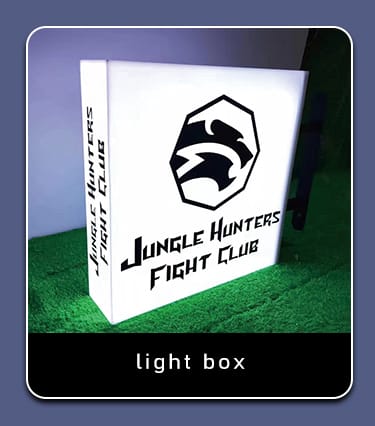
Products mentioned or relevant to this topic — factory-direct, custom built.
From $24/letter · MOQ 1 piece · Flexible lead time · CE & UL certified · ships to 20+ countries
Custom sizes, colors, and finishes. Get a factory price in 24 hours.
Get a Free Quote Copy EmailWhatsApp +86 13865703472 · business@aochuangsign.cn
See pricing, specs, and get a free quote for the sign type you need. Built in our factory, shipped worldwide.