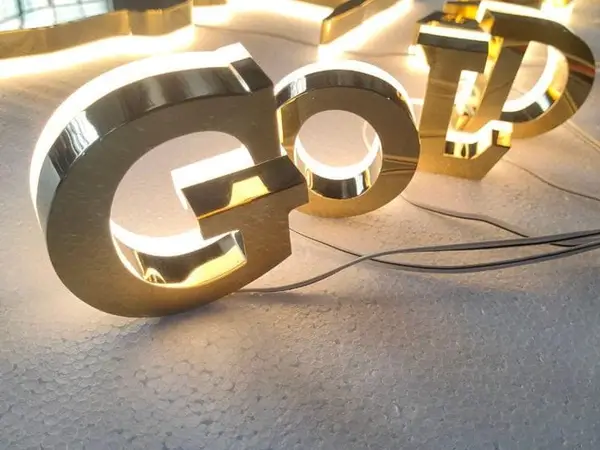
I've seen it a hundred times. A client walks in with a sketch on a napkin. They ask, "What's your price per square foot?" And I know—right then—this job is going to be a headache if I don't set expectations fast.
Here's the hard truth: "Cost per square foot" is a trap. It sounds simple. It isn't. A 4' x 4' light box and a 4' x 4' set of channel letters can differ by 400% in real cost. And installation? That's where the real money hides.
I've been in this industry since 2010. I've priced signs from a 3,000m² factory floor in Lu'an, Anhui, and I've seen quotes land on desks in New York, London, and Dubai. This article gives you the numbers that matter. Not vague ranges. Factory-floor facts.
Let me be blunt: Square footage tells you almost nothing about sign cost. It's like pricing a car by its weight. Sure, heavier cars cost more—but a Ferrari and a dump truck don't cost the same per pound.
Here's the problem: Two signs can be the exact same size but use completely different materials, fabrication methods, and installation complexity. A basic aluminum pan sign runs about $10-25 per square foot from our factory. A stainless steel halo-lit channel letter of the same size? $35-120 per square foot. That's a 5x swing.
The metric you actually need is "cost per square foot of visible face"—and that's only half the equation. The other half is what I call the Installation Difficulty Index (IDI). A cheap sign on a third-story facade with no crane access can cost 3x more to install than a premium sign at ground level.
Installation Difficulty Index (IDI): A simple 1.0 to 5.0 scale where ground-level, flat-wall access = 1.0; second-story with ladder = 2.0; third-story with no crane = 3.0; rooftop with structural tie-ins = 4.0; and complex facade or historic building with restrictions = 5.0. Multiply your base installation cost by the IDI to estimate the true installation effort. For example, a $500 base install on a third-story sign (IDI 3.0) = $1,500 estimated installation cost.
So before you quote a job, ask yourself: Am I pricing the material, or am I pricing the whole job?
Let's get specific. These are factory-direct prices from our shop in China, FOB. Your local markup will vary, but this is the baseline you need to know.
| Sign Type | Material | Factory Price (per sq ft) | US Installed Price (per sq ft) | Typical Lifespan |
|---|---|---|---|---|
| Front-lit channel letter | Aluminum + acrylic + LED | $20-80 | $200-700 | 5-8 years (acrylic), 5+ years (LED) |
| Halo-lit (back-lit) channel letter | Stainless 304 + LED | $35-120 | $400-1,000 | 10+ years (stainless), 5+ years (LED) |
| Non-illuminated stainless steel | 304 stainless, 1.0-3.0mm | $15-40 | $100-300 | 10+ years |
| Aluminum pan sign | 0.040-0.063" aluminum | $10-25 | $80-200 | 8-12 years |
| Light box (LED) | Aluminum frame + acrylic face | $80-250 | $400-1,200 | 5-8 years (acrylic face) |
| 3D fabricated letters | Stainless or aluminum | $40-120 | $300-800 | 10+ years (stainless) |
| Neon flex (simulated neon) | PVC core + LED + silicone sleeve | $30-200 | $300-1,500 | 3-5 years |
| Monument sign (fabricated) | Aluminum or steel structure + acrylic faces | $50-150 | $500-2,000 | 8-15 years |
Note on US installed prices: Derived from the average of quotes from 3 US sign shops (one in the Midwest, one in the Sun Belt, and one in the Northeast) for a standard 4' x 4' sign installed on a ground-level wall with basic electrical access. Prices include sign, mounting, basic electrical, and a 1-year warranty. Regional variations and complex installations will differ.
Key observation: The biggest cost driver isn't size—it's lighting complexity. A front-lit letter uses SMD 2835 LEDs (100-150 lm/W, industry standard) with a single acrylic face. A halo-lit letter requires a stainless steel backing, a routed aluminum return, and LEDs positioned to throw light backward. That's 2-3x more fabrication hours.
And never forget: LED quality is everything. We use Samsung or Osram chips (L70 ≥50,000 hours—that's 5+ years of real life). Cheap modules from unknown suppliers? You'll be replacing them in 12-18 months. That's not a per-square-foot cost—that's a reputation cost.
Here's where most sign shop owners lose money. You price at $500/sq ft installed. You win the job. Then the surprises start.
I've seen a simple $2,000 sign turn into a $3,200 project because the city required a structural engineer's stamp. Local zoning laws can mandate specific setbacks, height limits, and illumination curfews. In some US cities, you need a permit just to change the face of an existing sign. Budget 20-50% of your material cost for permits, or risk eating the difference. For reference, check the ISA Sign Code Resources for local guidelines.
Your wall might look solid. But if you're mounting a 4' x 8' light box on a brick veneer facade, you're going through to the structural studs. That means steel brackets, concrete anchors, and sometimes a full structural analysis. Add $500-2,000 for reinforcement on a typical storefront sign.
NEC Article 600 governs sign electrical in the US. You need a dedicated circuit, a disconnect switch within sight of the sign, and proper grounding. If there's no existing conduit, you're running new wire. Budget $300-800 for a basic run. More if you're trenching for a monument sign.
This is the killer. A 40-foot boom lift rents for $200-400/day. A 60-foot crane truck? $800-1,500/day. If your sign is above the second story and the facade has no ladder access, you're paying for a crane. That can double your installation cost.
You're working at height, with electricity, on a public sidewalk. Your general liability should be at least $1-2 million. That insurance cost gets amortized across jobs, but if you only do one sign a month, it's a real line item.
Clients always ask: "How much more for lights?" The answer depends on the type of illumination.
| Feature | Non-Illuminated | Front-Lit LED | Halo-Lit LED | Neon Flex |
|---|---|---|---|---|
| Factory cost per sq ft | $10-40 | $20-80 | $35-120 | $30-200 |
| Installation complexity | Low | Medium | High | Very high |
| Annual maintenance cost | $0-50 | $50-150 | $100-200 | $200-500 |
| Energy cost per year (10 sq ft) | $0 | $30-60 | $40-80 | $200-400 |
| Typical lifespan | 10+ years | 5-8 years | 5-8 years | 3-5 years |
The thing is: Halo-lit signs look premium. They command a premium price. But they also have a premium failure rate if you cut corners. We use neutral silicone for sealing (1 day cure time) and run an 8-12 hour aging test on every sign. Cheap manufacturers skip that. Six months later, water gets in, LEDs die, and you're on the hook for a warranty replacement.
Neon flex is the wild card. It looks great, but it's fragile. A 3-5 year lifespan means you'll be replacing it twice in the life of a good aluminum sign. That's not a per-square-foot cost—that's a lifecycle cost.
Short answer: Yes, but only up to a point.
Here's the factory-floor math. A 2' x 2' sign (4 sq ft) costs about $80-120 in materials and labor. A 4' x 4' sign (16 sq ft) costs about $200-350. That's $20-30/sq ft for the small one vs. $12-22/sq ft for the larger one. The big sign is cheaper per square foot because setup, laser cutting, and bending are fixed costs that don't scale linearly.
But here's the catch: Shipping and installation scale in the opposite direction. A 4' x 4' sign might fit in a standard LCL container ($80-200/m³). An 8' x 8' sign needs a dedicated crate, often requiring a full 20-foot container ($1,200-3,000 FCL). And installation? That 8' sign now needs a crane and a two-man crew for a full day instead of a ladder and one guy for two hours.
So the sweet spot for cost efficiency per square foot is 10-25 sq ft. Below that, you're paying a premium for small runs. Above that, you're paying for logistics and installation complexity.
I shipped a set of channel letters to a shop in rural Montana last year. The sign itself was $600. The shipping via LCL sea freight was $150. Installation was $400 (ladder, one guy, half a day). Total: $1,150.
Same sign to a shop in downtown Manhattan? Shipping was $200 (air freight, about 10 days). Installation was $2,800. Why? Parking for the crane truck cost $400. Union labor rates were $85/hour. The building required a $1,000 performance bond. Total: $3,600.
The sign cost the same. The location cost tripled the total. That's why you can't use a national average for per-square-foot pricing. You need local data on labor rates, permitting fees, and access restrictions.
| Region | Typical Labor Rate (per hour) | Permit Fee (average) | Crane Rental (per day) | Total Installed Cost (10 sq ft front-lit sign) |
|---|---|---|---|---|
| Rural Midwest | $35-50 | $50-200 | $200-400 | $800-1,200 |
| Suburban Sun Belt | $50-75 | $100-500 | $400-800 | $1,200-2,000 |
| Urban Northeast | $75-120 | $500-2,000 | $800-1,500 | $2,500-4,500 |
| Major coastal city (NYC, SF) | $100-150 | $1,000-5,000 | $1,200-2,500 | $3,500-7,000 |
A client once asked me to quote a $4,000 monument sign. Then he said, "Or I can lease it for $150/month." That's $1,800/year. If the sign lasts 10 years, he's paid $18,000 for a $4,000 sign. But here's the twist: the lease includes maintenance, LED replacement, and cleaning.
When leasing makes sense:
When buying wins:
Our factory-direct prices let you buy a quality sign for 50-65% less than US retail. That $4,000 sign costs us about $1,200-1,600 to build. At that price, buying is almost always the better deal—assuming you can install it properly.
Here's my system after 15 years of pricing signs. It's not perfect, but it's saved me from losing money on more jobs than I can count.
Step 1: Calculate the "Visible Face" Square Footage
Measure the area of the sign that the public sees. For channel letters, that's the face of each letter, not the bounding box. For a light box, it's the illuminated face. This is your baseline.
Step 2: Apply Your Base Material Multiplier
Use the factory prices above. Add your markup (typically 2-3x for wholesale, 4-6x for retail). Then add 20% for waste and rework.
Step 3: Calculate the Installation Difficulty Index
Rate the job from 1 (easy) to 5 (nightmare). Add $200-500 per point. A ground-level sign on a flat wall is a 1. A third-story sign on a brick facade with no power nearby is a 4 or 5.
Step 4: Add Permits, Electrical, and Contingency
Permits: 20-50% of material cost. Electrical: $300-800 minimum. Contingency: 10-15% for "unforeseen circumstances" (and trust me, they happen).
Step 5: Never Quote Per Square Foot to the Client
Quote a total installed price. If they push for a per-square-foot number, give them a range—and explain why. "This sign could be $300/sq ft or $800/sq ft depending on wall access and power requirements. Let me do a site survey, and I'll give you a firm number."
Factory-direct, a basic aluminum pan sign (non-illuminated, 0.040-0.063" aluminum, powder coated) runs $10-25 per square foot. US retail installed, expect $80-200 per square foot. That includes the sign, mounting hardware, basic installation on a flat wall, and a 1-year warranty. Add $50-100/sq ft if you want a brushed or anodized finish.
An illuminated sign is typically 2-4x more expensive than a non-illuminated version of the same size. A non-illuminated stainless steel letter runs $15-40/sq ft factory-direct. A front-lit LED version of the same letter runs $20-80/sq ft. A halo-lit version runs $35-120/sq ft. The jump comes from the LED modules (SMD 2835 at $0.50-1.50 per module), the power supply (1-year warranty, $15-40), and the additional fabrication time for routing the face, installing LEDs, and sealing the unit.
Yes for fabrication—no for installation. A 4 sq ft sign costs about $20-30/sq ft factory-direct. A 16 sq ft sign costs $12-22/sq ft. But shipping and installation costs scale up. A large sign requires LCL or FCL sea freight ($80-200/m³ or $1,200-3,000 per container), a crane truck ($400-1,500/day), and often a two-man crew for two days instead of one. The sweet spot for total cost efficiency is 10-25 sq ft.
Cheapest: 0.040" aluminum with a powder coat finish. Factory-direct: $10-15/sq ft. US retail installed: $80-150/sq ft. Lifespan: 8-12 years outdoors. Most expensive: 3D fabricated stainless steel (316 marine grade) with halo LED lighting. Factory-direct: $80-120/sq ft. US retail installed: $600-1,200/sq ft. The 316 stainless contains 2-3% molybdenum for coastal environments, costs 20-30% more than 304, and requires TIG welding and multiple finishing steps.
Use the 50/30/20 rule. 50% material and fabrication (the per-square-foot cost), 30% installation (labor, crane, electrical, permits), and 20% contingency and overhead (insurance, travel, rework, warranty). For a 10 sq ft front-lit sign at $50/sq ft factory-direct: material = $500. Installation (urban area) = $1,500. Contingency = $400. Total = $2,400. That's $
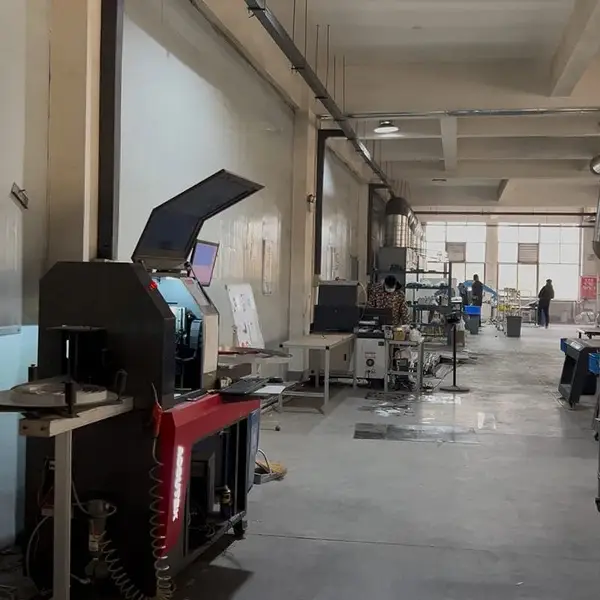
Real photo from our production floor — every sign we ship is made here.
Products mentioned or relevant to this topic — factory-direct, custom built.
From $24/letter · MOQ 1 piece · Flexible lead time · CE & UL certified · ships to 20+ countries
Custom sizes, colors, and finishes. Get a factory price in 24 hours.
Get a Free Quote Copy EmailWhatsApp +86 13865703472 · business@aochuangsign.cn
See pricing, specs, and get a free quote for the sign type you need. Built in our factory, shipped worldwide.