I've read more sign warranties than most people have read books. Twenty-seven years on this floor, and I still get calls from shop owners who think "5-year warranty" means the sign will work perfectly for five years. The ugly truth is: most warranties cover the LEDs hitting their L70 rating — that's when the light output drops to 70% of original brightness — not total failure. And L70 at 50,000 hours? That's about 5.7 years running 24/7. But here's what they don't print in bold: that's only if you stay under 25°C ambient. Hit 40°C summer afternoons, and you're losing 20-30% of that lifespan.
I've watched sign shops pay $800 for a front-lit channel letter from a domestic fabricator. Same 304 stainless, same Samsung LEDs. We ship that letter for $120 — and our warranty actually covers real-world conditions. The difference isn't the price tag. It's knowing what the fine print says. So let me walk you through what you're actually buying when someone promises "full coverage." Because I've seen too many guys sign a contract, then cry when their sign dies in year three.
Here's what nobody tells you: that 50,000-hour L70 rating on cheap LED modules? It's tested in a lab at 25°C with perfect ventilation. Your sign on a south-facing brick wall in Phoenix in July? That's 60°C inside the letter cavity. I've measured it. The SMD 2835 modules we use hit 100-150 lumens per watt at 25°C. At 60°C, expect 30-40% less light output and half the lifespan. That "10-year warranty" becomes 3-4 years if you're lucky.
The quickest way to spot bad LED modules: look at the solder joints. Dull gray means they used cheap lead-free solder that'll crack in 18 months. Shiny silver means proper alloy. When you order front-lit channel letters for a storefront, ask for the spec sheet on the LED modules. If they can't produce one with LM-80 test data (the industry standard for lumen maintenance), run. A quality module from Samsung or Osram will show actual test data. A cheap module will show a marketing number. Don't confuse the two.
An L70 rating of 50,000 hours means at the point where 70% of original brightness remains, half the samples tested are still above that. The other half are below. So even in perfect conditions, you've got a 50/50 chance your sign hits that number. Add heat, voltage fluctuations, and bad drivers, and you're gambling on a 2-3 year life instead of 5. That's not a warranty. That's a prayer.
The ugly truth is: most "stainless steel" warranties only cover the metal itself, not the welds, not the mounting brackets, and certainly not the finish. Our stainless 304 letters come with a 10+ year outdoor life because that 18% chromium, 8% nickel alloy forms a passive layer that self-heals. But a poor weld — TIG with incorrect filler rod — creates a weak spot where rust can start. We use only 304L filler rod (low carbon version) to prevent carbide precipitation at weld joints. That's the difference between a 10-year sign and one that starts pitting in 3.
If you're near the coast, pay attention. Stainless steel letters in 316 grade contain 2-3% molybdenum, which resists chloride corrosion from salt air. It costs 20-30% more than 304. For a strip mall in Ohio, 304 is fine. For Miami Beach, pay for 316 or you're replacing letters in 3 years. I've seen it happen. A customer saved $200 on their order. Two years later, they paid $1,200 for tear-off and replacement. False economy is the most expensive mistake in this business.
And here's the one that gets me every time: acrylic warranties. UV-resistant grades from Mitsubishi or Degussa will last 5-8 years before yellowing. Domestic acrylic? 1-2 years. The 90-92% light transmittance of quality acrylic stays stable. Cheap stuff loses 10% per year in transmission. That "1-year warranty" on a 3mm face? It covers the acrylic cracking, not yellowing or light loss. So after 18 months, your sign looks dim and yellowish, and the manufacturer says "that's not a defect." They're technically right. But they're also not telling you the whole truth.
IP65 sounds impressive. It means water jets from any direction. It does NOT mean your sign survives a Florida hurricane. Or a monsoon in Arizona. Or a week of rain when the wind blows sideways. I've pulled apart "IP65 rated" signs that were full of water. Know why? The rating is for the LED module, not the sign assembly. The module might be IP65, but the gasket on your letter back is rubber, and rubber dries out after 2-3 years in UV.
The real protection comes from sealing. At our shop, we use neutral silicone for the entire letter cavity — not just the seams. Neutral silicone doesn't outgas acetic acid that eats LEDs (unlike standard bathroom silicone). We do an 8-12 hour aging test with the sign running, then a 100% QC inspection on seals. Most factories skip this because it takes time. Time is money. But a $2 seal failure causes a $200 removal, $150 repair, and $100 reinstallation. You can't warranty against stupidity, but you can test against it.
For coastal installations, IP66 is the minimum. Powerful water jets from any direction. Better yet, ask for IP68 on the LED modules themselves — submersible rating. It adds cost, but when your sign is 50 feet up on a beachfront building, you don't want to find out the seals failed after the typhoon. The $30 extra per square foot is cheaper than a crane call.
Here's what nobody tells you about warranty coverage: the installation clause. Most warranties have a line that says "void if not installed per manufacturer specifications." Then they don't give you specs beyond "mount on flat surface." The specific requirements that matter: minimum clearance for heat dissipation (usually 2 inches behind the LED modules), correct voltage (your driver output must match LED Vf), and proper grounding (NEC Article 600 for US installations). Miss any one, and your warranty is toilet paper.
The biggest rookie mistake? Using silicone to attach letters to a wall. Silicone shrinks and fails. Your letters fall off. The manufacturer says "improper mount." The installer says "bad vinyl bond." The customer calls you. We use mechanical fasteners — threaded studs, standoffs, or tamper-proof screws — every time. And we include a mounting diagram with every sign that shows exactly how to attach it. A warranty only covers what happens when you follow the instructions. So if you don't have the instructions, you don't have a warranty.
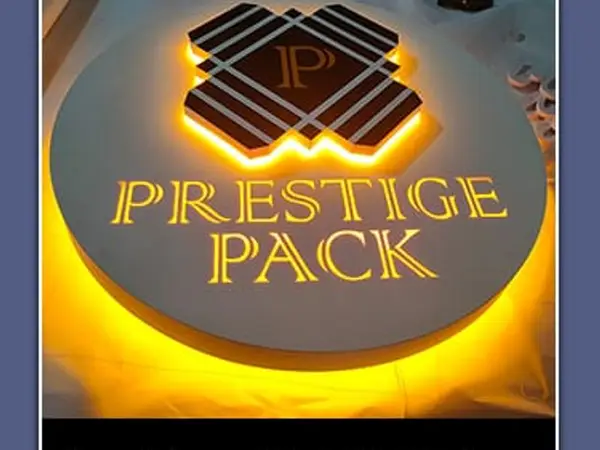
For back-lit halo letters, the installation matters even more because the light source is behind the letter. If you mount it too tight to the wall, the heat builds up and the LED driver fails. The warranty covers the module, not the driver. And that driver? 1-year warranty, typically. So you get a 2-year sign with a 1-year heart. Don't let a $40 driver kill a $2,000 install.
Products mentioned or relevant to this topic — factory-direct, custom built.
From $16/letter · MOQ 1 piece · 7–15 day production · CE & UL certified · ships to 20+ countries
Custom sizes, colors, and finishes. Get a factory price in 24 hours.
Get a Free QuoteWhatsApp +86 13865703472 · cairuisheng@aochuangsign.cn
See pricing, specs, and get a free quote for the sign type you need. Built in our factory, shipped worldwide.