I've watched sign shops pay $800 for a front-lit letter from a domestic fabricator. Same 304 stainless, same Samsung LEDs. We ship that letter for $120.
This isn't Pinterest neon. What matters is what survives a Chicago winter and a strip mall landlord.
Traditional glass neon runs on 10,000-15,000 volts. Beautiful until a tube cracks and you're paying a tech $150 an hour to bend glass on a ladder.
LED neon flex runs on 12 or 24 volts DC. You can cut it with scissors, bend it around a corner, and wire it to a standard driver. The factory price for LED neon flex runs $30-200 per sign. A domestically installed front-lit channel letter runs $200-700. Halo-lit? $400-1,000.
The ugly truth? Most "neon" signs bought today are LED flex. Real glass neon is a specialty trade. If your customer wants the look without the service headache, LED flex wins. If they want a true heritage piece, charge triple and budget for repumping at year seven.
Look, cheap LED neon modules fail in 12-18 months. Quality modules from Samsung, Osram, or Blueview run 5+ years real lifespan. That's the difference between a one-time sale and a repeat customer.
Glass neon is hand-bent. A person blows, heats, and shapes every tube — someone with burns on their forearms. That's why lead times stretch and costs stay high.
LED neon production at our 3,000m² facility follows ten steps: design confirmation in one day, laser cutting at ±0.1mm tolerance in 1-2 days, TIG welding and bending in 1-2 days, grinding and polishing in 1-2 days, acrylic face CNC in one day, LED assembly in 1-2 days, neutral silicone sealing in one day, an 8-12 hour aging test, 100% QC inspection, then export packaging in foam, carton, and plywood crate. Total lead time: about 5-15 days.
Here's what nobody tells you: the aging test is where cheap factories skip. We burn every sign for 8-12 hours before it leaves. If a solder joint's going to fail, it fails on our bench, not your customer's storefront.
I've seen this go wrong: a buyer ordered 50 LED neon signs from a factory that skipped the aging test. Half the power supplies died within six weeks. He saved $8 per sign. He spent $4,000 on service calls. Real smart.
Acrylic light transmittance sits at 90-92%. UV-resistant acrylic from Mitsubishi or Degussa lasts 5-8 years outdoors before noticeable yellowing. Domestic acrylic starts yellowing in 1-2 years. A 2mm face cuts 90% of light output. A 3mm face cuts 92%. Your customer won't notice the 2% difference, but they'll notice the 40% cost bump if you overspec.
Stainless steel is the workhorse for outdoor neon sign backing and letters. 304 stainless steel letters carry 18% chromium and 8% nickel — that buys you a 10+ year outdoor life. 316 stainless adds 2-3% molybdenum for coastal and industrial environments. Costs 20-30% more. For a strip mall in Ohio, 304 is fine. For Miami Beach, pay for 316 or you'll be replacing letters in three years.
Quickest way to spot bad LED modules: look at the solder joints. Dull gray means cheap lead-free solder that won't last 18 months. Shiny silver means proper solder. That one check saves you more warranty claims than any spec sheet.
For acrylic LED letters, the LED chip matters. SMD 2835 delivers 100-150 lumens per watt — that's the industry standard. SMD 5050 gives you RGB capability. SMD 5730 pushes 40-60 lumens per chip for highest brightness. If a factory won't tell you the chip model, walk away.
LED neon flex draws a fraction of glass neon. Where a traditional neon transformer might pull 120 watts for a window sign, an equivalent LED flex pulls 20-40 watts. Over five years, that's real money. Your customer pays for it.
Compliance isn't optional. UL 48 certification costs $4,000-15,000 and takes 4-9 months with quarterly audits. ETL is a legitimate alternative, 10-30% cheaper. CE marking runs 20,000-50,000 RMB and takes 2-8 weeks. For outdoor signs, IP65 is the minimum — dust-tight and protected against water jets. IP66 handles powerful jets for coastal areas. IP68 is submersible, which almost nobody needs unless your sign is in a fountain.
Look, IP65 sounds impressive. It means water jets from any direction. It does NOT mean your sign survives a Florida hurricane. I've seen signs with IP65 stickers ripped off their raceways by 90 mph winds. Don't oversell the rating.
The ugly truth? Most factories will say they have CE marking. Ask to see the certificate with today's date. Watch them sweat. CE costs 20,000-50,000 RMB — plenty of shops never actually file the paperwork. For US installations, NEC Article 600 governs electrical signs. If your installer doesn't know Article 600, find a new installer.
Section 301 tariff on imported signs from China runs about 30%. Your broker needs the correct HTS code for illumination signs. Misclassify it and you'll eat a customs penalty. FOB pricing means you own freight risk once it leaves the factory. CIF means the seller pays freight and insurance to your port. Know the difference before you wire money.
Color temperature is not a style choice. Think psychology. 3000-3500K warm white works for hospitality and restaurants. 4000-5000K neutral hits corporate and retail. 6000-6500K cool is for industrial and highway signage. Pick wrong and your customer's brand looks off.
For acrylic faces over 2.5 meters, step up to 5mm thickness. Anything thinner bows in the sun. Our factory MOQ is one piece. That means you can order a single 4-foot LED neon sign without buying a container. Lead time stays about 5-15 days.
Mounting options are flush, raceway, or freestanding. For front-lit channel letters, a raceway hides the wiring and makes service easier. But raceways look industrial. If your client wants architectural, go with direct-mount halo-lit and run the wiring through the wall.
Warranty is standard at 2 years for LED modules and 1 year for power supplies. That's factory-direct. If a supplier offers 5 years on a power supply, they're lying or they've baked the replacement cost into the price.
Factory-direct pricing saves 50-65% on product versus a domestic distributor. That $800 front-lit letter from a local fabricator? We ship the same 304 stainless, same Samsung LEDs, for $120. That's not a loss leader. That's what happens when you cut out two middlemen.
Shipping is where rookies get burned. Express for small signs runs about 5-15 days at $30-100. Air freight takes about 10 days at $4-12 per kilogram. Sea freight takes about 65 days at $80-200 per cubic meter for LCL, or $1,200-3,000 for a full container.
Here's what nobody tells you: LCL sea freight means your crate gets handled 6-8 times between our dock and yours. Every touch is a chance for damage. That's not in the brochure. If you're shipping 50 letter sets, full container is worth the cost. If you're shipping two signs, pay for air freight and stop crying about the bill.
MOQ is one piece. Certifications are CE, RoHS, ISO 9001. We're in Lu'an, Anhui, China, founded 2010, 50+ skilled workers. The factory floor is 3,000m². That's enough space to store the mistakes buyers made before they found us.
Total cost of ownership over five years is the only number that matters. Cheap LED neon saves $40 up front and costs $300 in service labor when the modules die in 18 months. Quality LED modules with L70 ≥50,000 hours run 5+ years. Traditional glass neon needs transformer replacements every 3-5 years and tube repumping after 7-10.
For coastal installations, 316 stainless costs 20-30% more than 304. That's $12 more per letter. The alternative is rust streaks on a white storefront in year three. I've seen it go wrong: a Miami hotel bought 304 stainless letters to save $800. Two years later they paid $4,000 to remove and replace them.
Power supply failure is the number one service call. That's why we warranty power supplies only one year. They're replaceable. LED modules are not. Seal every penetration with neutral silicone. Water gets in through the raceway, not the face.
If your sign is over 2.5 meters wide, use 5mm acrylic. If it's in a hurricane zone, use IP66 and bolt the raceway to structural steel, not drywall anchors. If it's in a mall, check ADA mounting heights — tactile signs need to sit between 48 and 60 inches with non-glare finish and Grade 2 Braille.
Look, I've been on the factory floor since 2010. I've burned my hands on hot acrylic and argued with suppliers about LED quality. The sign industry runs on relationships. Buy from someone who answers the phone when a power supply dies on a Saturday.
Do I need UL certification for my neon sign?
Only if you're installing commercial signage in the US and your local inspector asks. They will ask. UL 48 costs $4,000-15,000 and takes 4-9 months. ETL is accepted in most jurisdictions and costs 10-30% less. Don't skip it.
Can I install an indoor LED neon sign outside?
No. Indoor signs use non-weatherproofed power supplies and unsealed acrylic edges. IP65 is the minimum for outdoor. I don't care how covered your patio is.
Why is your factory price so much lower than my local sign shop?
Because your local sign shop buys from a distributor who buys from a factory. I am the factory. No magic. Just less markup.
What's the real difference between IP65 and IP66?
About $15 per sign and a lot of warranty claims if you get it wrong. IP65 handles water jets from any direction. IP66 handles powerful jets — think coastal spray or pressure washing. If your sign is within a mile of salt water, use IP66.

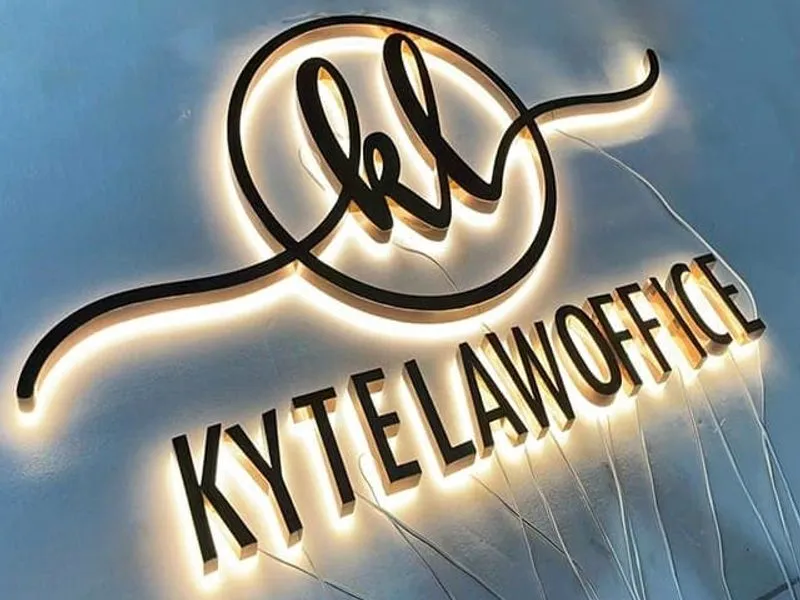
Real photo from our production floor — every sign we ship is made here.
Products mentioned or relevant to this topic — factory-direct, custom built.
From $24/letter · MOQ 1 piece · Flexible lead time · CE & UL certified · ships to 20+ countries
Custom sizes, colors, and finishes. Get a factory price in 24 hours.
Get a Free Quote Copy EmailWhatsApp +86 13865703472 · business@aochuangsign.cn