UL 48 Certification for Sign Manufacturers: The Straight Talk Guide
Let's get one thing out of the way before we dive in. I've been building signs since 2010, shipping worldwide, and I've lost count of how many buyers asked for "UL certified signs" and then couldn't tell me what that actually meant. They just knew it's something you need for the US market. They're not wrong. But they're also not informed.
So let's fix that. This is the guide I wish every customer read before they emailed me asking for a quote. No fluff. No corporate nonsense. Just the facts, the numbers, and the stuff your supplier hopes you never ask about.
UL 48 is the Underwriters Laboratories standard for electric signs — specifically the ones with internal wiring, lamps, and transformers. It covers the construction, performance, and safety of signs meant for indoor and outdoor use. If you're buying channel letters, light boxes, or neon flex signs for a US project, UL 48 is the name of the game in most jurisdictions.
Here's what nobody tells you: UL 48 is NOT a generic "made it through the factory" sticker. It's a certification program. That means a UL inspector visits the factory — your factory, the one in China — audits the production line, tests samples, and then comes back unannounced (or at least periodically) to make sure nothing has changed.
The ugly truth is: many factories slap a "UL Listed" label on a sign without ever having seen a UL inspector. It's one of the most common lies in this industry. I've seen it more times than I can count.
The standard covers things you don't think about until they fail. Wiring insulation, grounding, transformer spacing, temperature rise, even the thickness of the metal enclosure. For outdoor signs, there are rain tests. For neon, there are high-voltage leakage tests. It's boring stuff. But it's what keeps a sign from catching fire or electrocuting a drunk guy on a Friday night outside a bar.
The simple version:
If your sign is just a set of unpainted metal letters with no lights, it's not an electric sign. You don't need UL 48 for that. You need materials that work outdoors, which is a different conversation entirely.
Here's the part nobody wants to hear. Full UL 48 listing for a factory costs between $4,000 and $15,000 — and that's just the application and testing. It takes 4 to 9 months if you do everything right. And it's not a one-time fee. There are quarterly audits, annual follow-ups, and if you change your LED modules or power supply, you often need re-testing.
I've seen this go wrong: a customer demanded UL certification on a $5,000 order of backlit halo letters. The factory said "no problem, we'll do it." What they didn't tell the customer is that they'd been selling uncertified signs with a counterfeit UL sticker for years. The customer paid a premium, got the sign, and then got a nasty letter from US Customs when the shipment was randomly inspected.
Real numbers for the factory side:
For a small factory like mine — we do about 50+ workers and 3,000 square meters — that's a serious chunk of change. We're certified for CE, RoHS, and ISO 9001. We're not UL 48 certified. I'll be straight with you about that.
What we ARE honest about is what our signs actually contain. We use UL-listed components — LED drivers, power supplies, wiring — from quality manufacturers. That's not the same as having the factory itself listed, but it's the responsible middle ground for shops that order from us. If you need true UL 48 factory certification, you need a factory that's done the 9-month dance. I'll tell you up front if that's not us.
Why the cost is what it is:
If you're a sign shop owner or contractor thinking about getting UL 48 for your own facility, or if you're vetting a factory that claims they have it, you need to know what the process actually looks like. Not the brochure version. The real version.
Step 1: Submit drawings and bill of materials You send UL the complete spec — wiring diagrams, enclosure dimensions, component list. They review it for obvious problems before you spend a dollar on testing.
Step 2: Component verification This is the step that kills most cheap factories. Every single electrical component has to be listed or recognized by UL. That means your LEDs, your power supply, your wire nuts, your grommets where wires pass through metal. If your supplier uses random no-name Chinese components, you either source UL-approved ones (which cost more) or you fail.
Step 3: Testing They test the sample. Temperature rise. Dielectric voltage withstand. Ground continuity. Rain test for outdoor signs. If it fails, you fix it and re-test. This eats your timeline.
Step 4: Initial factory inspection A UL inspector physically visits your factory. Checks your production line, your QC procedures, your component sourcing. They take photos and notes. If they find problems, you fix them and schedule another visit.
Step 5: Authorized signatory This is the part that's actually in plain sight but nobody sees. UL issues a follow-up service procedure (FUS) and authorizes someone at the factory — a specific person — to apply the UL Mark. That signature and accountability is loaded. It means someone can go to jail for the company if they fake it.
Step 6: Quarterly audits Once certified, the inspector comes back every 3 months. Unannounced. They pull product from the warehouse, verify components against the FUS, run tests. If the factory swapped to cheaper LEDs without telling UL, the certification gets pulled.
Look, I've seen factories pass the initial audit and then get stripped of their UL status a year later because they "optimized" their supply chain. The quarterly audit is what makes UL 48 real. Without it, the whole system is just expensive paperwork.
Here's a classic rookie mistake. There's a big difference between UL Listed and UL Recognized.
A UL Listed sign is a complete, tested product. It's the whole thing — the housing, the LEDs, the wiring, the face — certified as a unit. That's the gold standard. That's what the building inspector wants to see.
UL Recognized means the individual component is approved for use within a larger system. A UL Recognized LED module is a building block. It doesn't mean the sign it goes into is certified.
The industry lie? Factories say "we use UL components" and let you assume the whole sign is UL Listed. The truth? They might use one UL-listed power supply and a bunch of unlisted Chinese LEDs. The sign as a whole is not compliant, but the factory pointed to that one power supply and called it "UL certified."
Don't be the buyer who falls for that. Ask to see the UL Mark on the actual sign, not just on a component. If they can't show you a photo of the permanently attached UL Label (different from a sticker you can peel off), you're getting smoke blown up you.
Let's be practical. You're a sign shop owner in Ohio who wants to import some front-lit channel letters. You don't need the factory to hold UL 48 if you're handling the listing yourself. That's actually a common path.
Option A: Buy the components, list your own assembly You import the letters, but you use UL-listed LED modules, UL-listed power supplies, and proper NEC wiring methods when you install them. The building inspector signs off on your installation because the dangerous components are certified. This works fine for small shops.
Option B: Use a factory that's already UL 48 listed If the factory has the certification, the signs arrive with the UL Mark already on them. That's the EASIEST from your perspective — no paperwork, no waiting, just a compliant product. But you'll pay a premium because the factory has to cover their 9-month testing investment and quarterly audit fees.
Option C: The gray area (not legal advice) Many smaller signs don't get UL 48 at all. They get an evaluation or variance from the local AHJ (Authority Having Jurisdiction). This happens all the time for custom fabrication. It's not a factory certification — it's a local inspector saying "this specific sign looks safe." Time-consuming, but legal if the inspector approves.
For most orders under $10,000, Option A is the realistic call. It's what I recommend to customers who ask about UL and aren't importing massive quantities.
Enough theory. Let's get practical. Before you place an order — whether it's 5 letters or 500 — here's what you demand in every quote:
1. Component-level certifications "Send me the UL listing numbers for your LED modules, your power supplies, and your wire." If they can't produce those in 24 hours, walk away. A legitimate component manufacturer has registration numbers publicly searchable on UL's site. If they're using off-brand modules, you need to know before you commit.
2. Wiring diagrams Ask for the drawing that shows how your sign is wired. Grounding, insulation rating, wire gauge. If the factory can't provide a clean diagram, they're not running a serious operation.
3. Temperature and weather claims "IP65" means dust-tight and water jets. It does NOT mean your sign survives a Florida hurricane. Ask what specific IP rating your project needs based on your location. A factory that proactively discusses IP66 for coastal installations understands real-world risks.
4. Product liability insurance This protects you, but it also signals that the factory isn't just churning junk. It's something every buyer should ask about, and it's almost never discussed. Factories that care about safety carry insurance.
5. Photos of their QC process Any factory can claim "100% quality inspection." Ask for pictures of their aging test racks. We burn our signs for 8-12 hours before shipping. A factory that skips this is risking a 2 AM failure on your customer's storefront.
Now, about our place. We're Aochuang Sign in Lu'an, Anhui, China — not a megafactory, but a solid 3,000-square-meter production floor with over 50 workers who've been doing this for a while. We don't have UL 48 factory certification, and I'm not going to pretend we do.
What we have is CE, RoHS, and ISO 9001. And more importantly, we build signs that survive. Our stainless steel letters use 304 or 316 steel — not whatever the scrap yard delivers. Our front-lit channel letters run on Samsung or Osram LED modules with a real 5-year lifespan, not the cheap stuff that dies in 12 months. If you ask for component certifications, we'll send them the same day.
I've had customers order back-lit halo letters from us, install them Stateside with their own licensed electrician, and pass inspection with zero issues. Because the components were UL listed, the installation was NEC compliant, and the sign itself was built straight and true.
Let's talk money, because that's why you're reading this in the first place.
A front-lit channel letter installed by a US sign shop runs $200-$700 per letter. That same letter from our factory, shipped and cleared, runs $20-$80. The gap is huge — and it's exactly why importers exist.
But here's the catch with UL: that US sign shop's price includes their responsibility for code compliance. Their liability insurance, their local permits, their call-backs when something fails. When you buy factory-direct, you're taking on some of that responsibility yourself.
If you're not prepared to handle that part of the job, don't buy direct. Seriously. I'd rather you tell me you're not ready than have you order a truckload of signs and then realize you can't pass inspection in your county.
What I see working well: small sign shops that import the raw signs from us, then do their own final wiring, install, and permitting. They've got their own licensed electrician. They buy our acrylic light boxes and neon flex signs, swap in UL-listed internal components if needed, and they're golden. They make their margin, and their customers get a good sign at half the price.
Typical delta:
That's why the import business exists. But the margin only counts if the sign actually works and passes inspection.
One more thing people forget. The US Section 301 tariff on Chinese-manufactured signs is about 30% right now. That's on top of freight and any customs clearance fees. If you're comparing quotes, factor that in BEFORE you get excited about pricing.
Freight is usually $4-$12 per kilogram by air, or $80-$200 per cubic meter for sea freight (LCL). A standard channel letter set might weigh 50-80 kilos. Run the numbers. Still cheaper than buying local? Usually yes. But not as cheap as it looks before the tariff.
Look, I'm not here to sell you on a UL 48 certified factory because I don't own one. I'm here to make sure you don't get burned by the ones who CLAIM they do. The sign industry is full of grey areas, and UL certification is one of the murkiest.
Before you wire money to any factory, verify their claims. Search the actual UL database for their company name and file number. Ask for photos of the UL Label on a finished sign — the permanent one, not a sticker. Call them during their business hours and ask random questions about their QC process. The real deal can answer without stalling.
And if a factory ducks your questions about components or gets angry when you ask for certifications, you've got your answer. Move on.
As for us? We'll keep building solid signs, honest signs, and shipping them worldwide. If you want a quote on aluminum letters or stainless steel letters that won't bend or yellow — or if you just want to ask me directly how your UL situation should work — send me a message. I'll give you a straight answer. That's what I've been doing for 16 years, and I'm not about to change now..

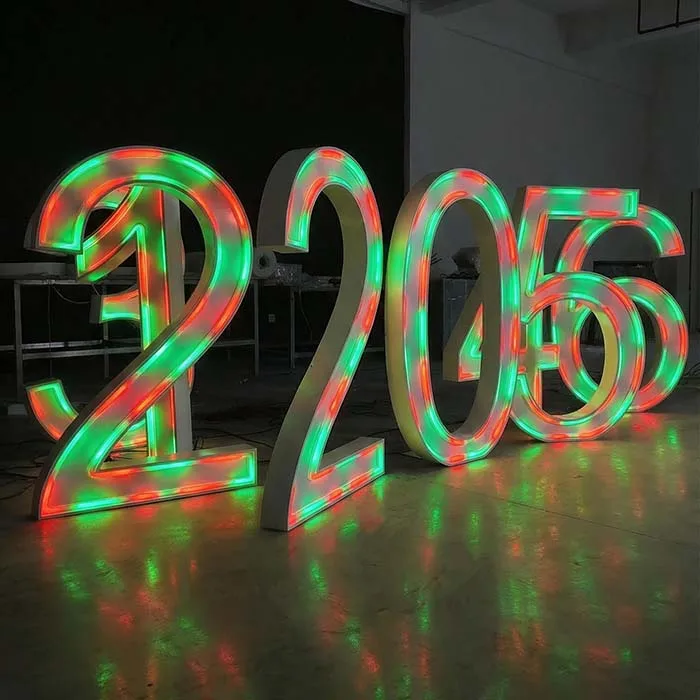
Real photo from our production floor — every sign we ship is made here.
From $24/letter · MOQ 1 piece · Flexible lead time · CE & UL certified · ships to 20+ countries
Custom sizes, colors, and finishes. Get a factory price in 24 hours.
Get a Free Quote Copy EmailWhatsApp +86 13865703472 · business@aochuangsign.cn
See pricing, specs, and get a free quote for the sign type you need. Built in our factory, shipped worldwide.