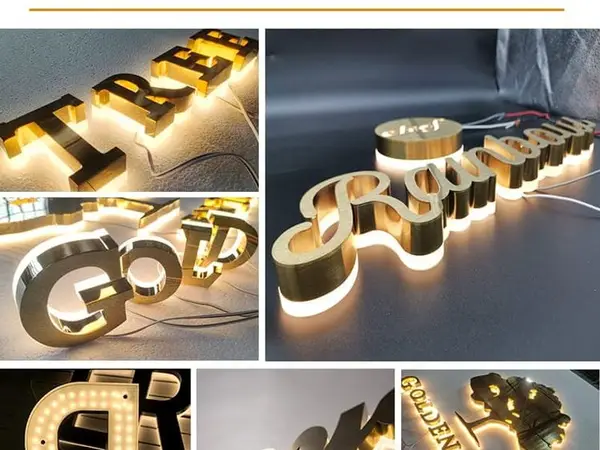
If you think a standard power supply can live inside an outdoor sign, I've got a box of corroded supplies in my shop that says otherwise.
I've spent 16 years on a factory floor in Lu'an, Anhui. I've opened outdoor signs after one winter and found power supplies that looked like they'd been hauled out of a lake. This guide is for sign shop owners and contractors who don't have time for marketing fluff.
At Aochuang Sign, we build in a 3,000m² facility with 50+ workers. We ship worldwide. We're CE, RoHS, and ISO 9001 certified. But none of that matters if the wrong power supply gets installed.
Here's what nobody tells you: a standard power supply isn't just "less waterproof." It's designed to fail outside.
Standard supplies are open-frame units, usually IP20. They're built for indoor signs, in dry ceilings, or inside climate-controlled spaces. They rely on air circulation to stay cool. Put one in an outdoor sign and the first rain finds a seam, a weep hole, a wire entry.
Waterproof power supplies are sealed. Most are potted in thermal resin or have a gasketed enclosure rated IP65 or higher. They don't breathe. They don't care if condensation forms inside the letter cavity.
When I quote outdoor front-lit channel letters, I spec a waterproof power supply as non-negotiable. I don't care if the client "found a cheaper option on Amazon."
Look, IP65 sounds impressive. It means water jets from any direction. It does NOT mean your sign survives a Florida hurricane.
Here's the breakdown we use in the shop:
The ugly truth is most suppliers won't tell you the difference between IP65 and IP66. They'll just say "waterproof" and hope you don't ask for the certificate.
For most outdoor LED signs, IP65 is enough. A channel letter on a storefront in Ohio doesn't need to survive a typhoon. But a sign on a Miami Beach hotel? Pay the extra for IP66 or IP68.
Water doesn't ruin electronics by making them wet. It ruins them by making connections corrode.
Inside a standard supply, you've got exposed terminals, small ventilation slots, and a circuit board waiting to short. Once moisture gets in, corrosion starts. The resistance goes up. Heat builds. Then the supply fails, usually in the dark, at 11 p.m., when the sign is supposed to be lit.
I've seen this go wrong: a sign shop in the Southeast installed a standard supply inside a sealed channel letter. The sign worked fine for four months. Then a temperature swing caused condensation inside the letter. The supply shorted. The sign went dark. The repair required a lift truck and a new supply, and the client was not happy.
Our power supplies carry a 1-year warranty. LEDs carry 2 years. That's not because the supply is worse than the LED. It's because a power supply is the cheapest component to replace, and buyers abuse it by spec'ing indoor units outdoors.
Stop trying to save $10 on a power supply for a sign that costs $2,000 to install.
A front-lit channel letter from us is $20-80 per letter factory direct. A back-lit halo letter is $35-120. The power supply is a fraction of that. Yet I've watched buyers demand the cheapest supply to shave 2% off a project, then pay $400 for a service call six months later.
The real cost difference between a standard and waterproof supply is nothing compared to the labor to replace it. You need a bucket truck, a licensed electrician, and a client who's already angry. That's the math.
Here's another thing nobody tells you: a waterproof supply can still die if you install it like an idiot.
If you mount the supply with the wire entries facing up, water will pool in the connectors. If you don't seal the wire entry holes with neutral silicone, water will follow the wire inside. If you skip the 8-12 hour aging test that we do in the factory, you'll ship a sign that fails on day three.
Factory-direct since 2010. Free quote within 24 hours — no obligation.
Get a Free Quote → Copy EmailMOQ: 1 piece · Flexible lead time · 2-year warranty · Worldwide shipping

Real photo from our production floor — every sign we ship is made here.
See pricing, specs, and get a free quote for the sign type you need. Built in our factory, shipped worldwide.