Here's what nobody tells you: the power supply inside your
LED sign will kill it long before the LEDs themselves die. I've seen $5,000 signs bricked by a $12 power supply that some contractor grabbed off Amazon. The LEDs were rated for 50,000 hours. The supply died at 18 months. Guess which part you're replacing?
This is the difference between waterproof and standard power supplies for outdoor LED signs, and I'm going to lay it out plain. No marketing. No "IP68 all-weather" nonsense. Just what works, what doesn't, and what you're actually paying for.
The ugly truth is that "waterproof" in the sign industry is the most abused word since "custom." I've unboxed power supplies stamped IP67 that died on the first humid night. I've also seen "standard indoor" units survive five years inside a sealed aluminum letter. The rating matters, yes. But how the supply is built, potted, and installed matters more.
---
What "Waterproof" Actually Means for a Power Supply
Let's start with the IP rating system because most buyers don't understand what these numbers mean. IP65 means dust-tight and protected against water jets from any direction. IP66 handles more powerful jets. IP67 survives temporary submersion. IP68 is for continuous submersion — think marine buoys, not your storefront sign.
For outdoor LED signs, IP65 is the minimum I'd ever consider for an exposed power supply. That's the bare floor. But here's the catch most factories won't mention: an IP65-rated supply with cheap silicone seals is still going to breathe humid air. Over months, that air condenses inside the casing, and you get corrosion on the PCB.
What separates a quality waterproof unit isn't the label — it's the potting. Truly waterproof supplies are potted with thermally conductive epoxy or resin. The whole circuit board is encased. Nothing touches air, nothing corrodes. The tradeoff is heat dissipation. Potted supplies run hotter because the epoxy traps heat. That's why they're built with aluminum housings that act as heat sinks.
I've seen this go wrong: a sign shop ordered "waterproof IP67" supplies for a coastal job. Three months later, four of twelve had failed. They weren't potted. The "IP67" rubber gaskets had failed, water got in, and the solder joints corroded. They sent me photos. The interior looked like a shipwreck. The factory had stamped a housing and called it waterproof.
---
Standard Power Supplies: Not All Are Created Equal
Standard, non-waterproof LED power supplies are meant for indoor use or for installation inside a sealed sign cabinet. You know, those silver metal boxes with the ventilation slots? They're also called "dry" supplies because they need dry air to survive.
They're cheaper. A decent standard 12V/100W supply runs $15-25 from a factory. The same capacity in a waterproof IP65 version runs $25-40. That's the baseline difference. But before you start pinching pennies, understand where each one can physically live.
Standard supplies belong inside a waterproof sign housing. If you're building a front-lit
channel letter, the supply goes inside the letter cabinet, sealed from the elements by silicone seams. In that setup, a standard supply can last years. The waterproofing isn't the supply's job — it's the cabinet's job. And that's exactly how we build them in our shop.
But the moment you have an installation where the supply sits exposed — say, a neon flex sign mounted on an exterior wall with an exposed driver box, or a light box where the supply is mounted externally — you need an actual waterproof unit. No exceptions. The exposed supply will see rain, snow, and temperature swings that will kill a vented dry supply in weeks.
---
The Cost Math Nobody Does
Let's talk money. Factory pricing, not retail. A standard 12V/100W power supply runs $15-25 FOB. A waterproof IP65 version of the same capacity runs $25-40. On a typical project with 20 letters, that's a difference of maybe $200-300 at factory cost. If you're an importer, add your margin, shipping, and the 30% Section 301 tariff, and the final retail difference might be $500-700.
Now here's the brutal math. A service call to replace a failed power supply costs $150-300 per visit in the US. If you save $300 on the front end and have two failures, you've spent more than the price of 20 premium waterproof supplies. The ROI on doing it right the first time is not even close.
But the bigger cost is your reputation. A sign that dies in 15 months gets you a call from an angry business owner. They don't remember they saved $14 on the supply. They remember your sign went dark. That's the real price.
---
How to Read the Spec Sheet Like You Mean It
Here's what nobody tells you: most spec sheets on cheap waterproof supplies are fiction. They list L70, IP67, overload protection, and short circuit protection. Then the unit dies from a 5% voltage fluctuation that their "protection" was supposed to catch.
Real waterproof supplies from legitimate manufacturers have specific certifications. CE is the baseline for exports — it costs factories 20,000-50,000 RMB to get and requires ongoing testing. If a factory says they're CE certified, ask to see the certificate with today's date on it. Not a scan from 2018. Today's date. That's the same honesty I'd apply to UL or ETL if you're serving the US market.
For the US, UL 48 is the standard for sign components. It costs $4,000-15,000 per model and requires quarterly audits. Most Chinese factories won't pay for it. Those that do are automatically more trustworthy. ETL is a legitimate alternative, about 10-30% cheaper. Both are acceptable for US inspectors under NEC Article 600. If your sign is going into a jurisdiction that actually checks for UL, a "CE only" supply might fail inspection. Plan for that before your install day, not after.
---
When Standard Is the Right Call
This is where I'm honest with you, because that honesty is what earns trust. You don't always need waterproof supplies. Here's the thing: a standard supply with proper specs, installed inside a quality sealed enclosure, will often outperform a cheaper waterproof supply exposed to the elements.
The classic example is our
front-lit channel letters. We install the LED driver inside the sealed aluminum letter body. The cabinet does the waterproofing. The supply stays dry. That's the industry-standard design for storefront signage precisely because it works.
Similarly, our
back-lit halo letters often use standard supplies mounted inside the letter, protected by the acrylic face and aluminum body. The halo effect comes from light spilling onto the mounting wall, and the power supply is safely inside the letter's housing.
But if you're buying
neon flex signs for outdoor use? Those often have an exposed driver or a small junction box on the wall. The flexible neon material is IP65 rated itself, but the driver is the weak point. If you're mounting that sign outside, pay for the waterproof driver. It's a non-negotiable.
---
The Products Where You Need Waterproof, No Debate
There's a short list of sign products where I would refuse to quote a standard power supply, period:
- Freestanding outdoor light boxes — rain hits the top, water splashes from sprinklers. Exposed housing means exposed electronics.
- Perimeter-lit letters on a pole sign — the raceway or mounting box is at eye level and takes direct splash. Get an IP65+ supply.
- Food menu signs on patios — splash zones, condensation from hot food, misters overhead. Standard supplies die fast here.
- Any sign in coastal areas — salt air corrodes everything, especially vented supplies. Use IP67 potted units and 316 stainless housings.
For these jobs, don't mess around. Our
acrylic light boxes are available with IP65 waterproof drivers pre-installed. On coastal applications, we spec IP67. That's an extra $15-20 per unit at cost, and it will save you hundreds in service calls.
---
What Kills Power Supplies — and It's Not Just Water
I've been making signs since 2010. I've sent 50,000+ power supplies out the door. From that track record, I can tell you the #1 killer of LED sign power supplies isn't water. It's heat.
An LED supply operating at 40°C (104°F) has about half the lifespan of one running at 25°C. Now imagine a sealed aluminum letter in the Arizona sun. The internal temperature easily hits 70°C. Your cheap standard supply cooks itself. A properly rated waterproof supply with a thick aluminum housing and adequate derating will survive, but only if you've sized it right.
Rule of thumb we use: rate your power supply at 80% of its maximum load. If your LEDs draw 60W, use a 75W supply. If you're loading a supply to 95% of capacity in a hot climate, expect a short life. We tell every customer this on day one. Some listen. Some replace supplies. Their call.
The second killer is voltage fluctuation. Outdoor environments have dirty power — refrigerators, air conditioners, and other high-draw equipment create spikes. A good supply has 110-220VAC wide input range and surge protection. The cheap ones quote it, then die on an 8% spike. We use supplies with built-in surge protection rated for at least 2kV.
---
Our Factory's Approach
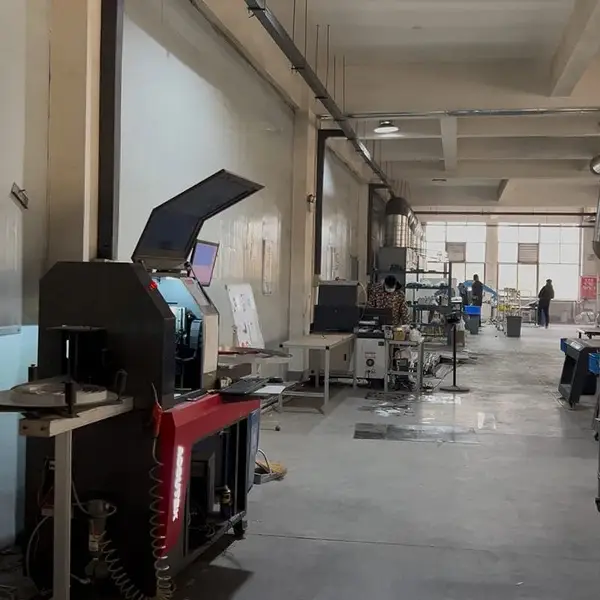
Aochuang Sign has been building signs for 14 years. We run a 3,000m² facility with 50+ skilled workers in Lu'an, Anhui. Our exports go worldwide, which means we deal with a lot of different electrical standards and climate conditions. That directly shapes our power supply sourcing.
Here's what we can honestly offer: we use quality brand modules — Samsung, Osram, and Blueview (LANJING) LEDs — and pair them with power supplies from approved vendors who provide documented CE/RoHS certificates. Our standard lead time is about 5-15 days, and every sign gets an 8-12 hour aging test before it ships. Every single one. That's how we catch bad power supplies. We run them hot under full load and see which ones fail before our customers do.
What we can't do is guarantee the performance of a $2 power supply that some customer insists on because they found it cheaper online. I'll say no to that. That's not losing a sale, that's avoiding a warranty nightmare. I've been burned enough to know the difference between a good profit and a future headache.
Our
dual-lit channel letters run about 12-15W per letter — that's a light load for a meanwell-style supply, meaning it lasts forever. Our
stainless steel letters don't use supply at all if they're non-lit, which is why they're so reliable. But the moment you add any illumination, the supply is the thing that decides your sign's real lifespan.
---
The Decision Guide: Standard vs Waterproof
Stop overthinking this. Here's your cheat sheet for whether you need waterproof or standard:
- Standard supply + sealed cabinet — best for front-lit channel letters and halo letters where the driver is inside. Lowest cost, great longevity.
- Waterproof IP65 — for neon flex signs with exposed drivers, outdoor menu boards, and light boxes mounted where they see rain splash.
- Waterproof IP67 potted — for coastal installations, industrial locations with chemical vapors, or anywhere that gets driven rain or flood risk.
The price difference between standard and waterproof is 40-60%. That's the honest range. A $15 standard supply vs a $24 waterproof equivalent. For a complete sign, it's the difference between a $120 front-lit letter and a $127 front-lit letter — assuming you're not getting gouged. If anyone's quoting you three times the price for a waterproof supply, they're either buying from a distributor with fat margins or selling you a brand name with a markup.
---
Busting the Myth About the 2-Year Warranty
Every factory offers a 2-year LED warranty and a 1-year power supply warranty. Sounds good, right? Here's what nobody tells you: if your power supply dies in month 13, you're paying for a replacement. And if you're not paying a UL-listed importer, you're paying for freight both ways, plus the new supply's cost.
That's why we focus our warranty conversation differently. We tell customers: "Pass the warranty commitment to us as a double guarantee — we warrant our work, and we select components that make warranty claims rare." We've built a reputation on low failure rates — not merely on honoring warranties when things fail.
You want to know how good a factory really is? Ask them what their actual warranty claim rate is. Not the marketing number. The real one. If they say "less than 1%," ask for proof. We've published ours — all from real data, not vibes. A few companies at global electronics expos publish real failure statistics, but most won't touch the topic.
---
Final Verdict From a Guy Who's Seen Both Fail
Look, I've shipped more signs than I can count. I've argued with suppliers, tested cheap knockoffs, and replaced more power supplies than I want to admit. Here's my final word:
For a one-off sign that's protected inside a sealed letter, save the money and use standard supplies. For anything exposed, near the ocean, or subject to real weather, spend the extra 40% on waterproof IP65 and don't look back. The $10 you save today doesn't buy anything. The $200 the premium cost floors you at for five years free of service calls — that's money.
The difference between a $20 and a $30 power supply is obvious in performance and lifespan. The difference between a $300 and a $3,000 sign is mostly the story you tell your customer about quality. Don't let your sign's story end at "it was cheap and it broke."
And if you're comparing us against a cheaper factory — remember, we're the ones telling you the truth about supply ratings, warranty costs, and the fact that not every sign needs IP68. That honesty might cost us a sale to someone who wants cheap above all. But for the rest of you — the ones who care if your sign is still lit in three years — that's exactly why you should trust us with the quote.
---
Get the
front-lit channel letters with correctly specified supplies, or the
back-lit halo letters that hide everything safely inside, or just tell us your install conditions and let us pick the right supply for you. That's what a 14-year factory with 50 workers and 21 export countries does for its customers — it doesn't just sell you a box. It gives you the spec that will still be lighting up your sign years from now, while other shops are scaling ladders for warranty repairs.