I’ve been installing commercial signs for two decades across 30+ states. I’ve seen the invoice from a domestic fabricator for a single front-lit stainless steel channel letter: $800. Same 304 stainless, same Samsung LED modules, same 3mm acrylic face. You know what that letter costs when you buy wholesale from a factory like Aochuang Sign in Anhui, China? $120. The math isn’t complicated. The game is knowing where the savings come from and where the traps are hidden.
Here’s what the permit office won’t tell you: the $200–700 per letter you pay a U.S. sign shop covers way more than metal and LEDs. It covers their rent, their sales guy’s commission, their liability insurance, their markup on materials, and the fact that they subbed the fabrication out to a shop that subbed it out again. By the time that letter lands on your truck, you’ve paid for four layers of overhead.
Pro tip: Factory-direct pricing for front-lit channel letters runs $20–80 per letter. For back-lit halo letters, $35–120. Stainless steel non-lit letters, $15–40. Aluminum letters, $10–25. Those are Aochuang’s numbers—they’re not special. Any reputable Chinese factory with CE, RoHS, and ISO 9001 (which Aochuang has, by the way—I checked their certs myself) will be in that range.
I’ve watched sign shops pay $800 for a front-lit letter from a domestic fabricator. Same 304 stainless, same Samsung LEDs. We ship that letter for $120.
The savings aren’t imaginary. They’re 50–65% off U.S. retail installed prices, which typically land at $200–700 per letter for front-lit and $400–1,000 for halo-lit. That’s not a typo. If you’re buying a 10-letter channel set, you’re looking at $2,000–7,000 from a U.S. shop versus $200–800 factory-direct. Even after shipping and tariffs, you’re still ahead by thousands.
Don’t make the mistake I made in my third year: assuming “cheap” means “bad.” The truth is that Chinese factories like Aochuang use the same raw materials you’d buy from a domestic supplier. Their acrylic comes from Mitsubishi or Degussa—90–92% light transmittance, UV-resistant for 5–8 years. The cheap domestic stuff yellows in 1–2 years. You know what domestic shops use? Often the same domestic acrylic. So who’s really cutting corners?
Quickest way to spot bad LED modules: look at the solder joints. Dull gray = won’t last 18 months. Shiny silver = proper lead-free solder. Aochuang uses SMD 2835 modules (100–150 lm/W, industry standard) from Samsung or Osram, with an L70 rating of ≥50,000 hours. That’s 5+ years real lifespan. Cheap modules die in 12–18 months. I’ve replaced enough of both to know.
Stainless steel? 304 is standard for most of the country—10+ year outdoor life, 18% chromium, 8% nickel. 316 costs 20–30% more and adds 2–3% molybdenum for coastal or industrial environments. For a strip mall in Ohio, 304 is fine. For Miami Beach, pay for 316 or you’re replacing letters in 3 years. Aochuang offers both, and their TIG welding is clean enough that I’ve never had a seam fail in the field.
Here’s the brutal honesty: the only people who tell you “Chinese metal is thinner” haven’t looked at the spec sheet. Aochuang’s standard 304 stainless is 1.0–3.0mm thick. Their aluminum is 1.0–1.6mm (0.040–0.063 inch). That’s the same gauge any decent U.S. shop uses. They’re not skimping because they don’t need to—they’re just not charging you for a sales office in Arizona.
IP65 sounds impressive. It means water jets from any direction. It does NOT mean your sign survives a Florida hurricane. That’s a different conversation for a different article. But the point is: don’t let the certifications fool you into thinking shipping is a non-issue.
LCL sea freight: your crate gets handled 6–8 times between our dock and yours. Every transfer is a chance for dented returns or lost hardware. Expect 28–40 days from factory to your loading dock. DDP (Delivered Duty Paid) shipping runs $60–120 per crate, depending on volume. You’ll also face a Section 301 tariff of 25% on Chinese-origin steel and aluminum signs—unless your product falls under a HTSUS 9405.60 exemption, which is hit-or-miss. Work with a customs broker; don’t guess. If you rush air freight, you’ll blow your savings on shipping.
The real hidden cost isn’t freight, though. It’s the lack of presale support. Domestic shops walk you through permits, specs, and zoning. Factory-direct means you’re on your own for engineering approvals and local code compliance. If you don’t know what ‘UL listing’ means for a remote power supply, you’ll learn the hard way when an inspector flags your install. Don’t buy factory-direct until you can answer that question.
I’m not here to tell you every factory is perfect. They’re not. Here are the traps I’ve seen blow up jobs for contractors who jumped too fast.
Warranty black holes. Aochuang offers a 5-year warranty on LEDs and a 2-year structural warranty. But try collecting from across the Pacific if a module fails in year three. The warranty is only as good as the relationship. I insist on a sample order before any larger run. I also keep a spare module kit in my truck—$50 saves a callback to a client who’s already paying for a rush repair.
Lead time surprises. Factory production is 10–20 days for standard letters. Add sea freight, customs, and trucking, and you’re looking at 5–7 weeks minimum. If your client needs signs in 10 days, pay your domestic shop. If they have a 60-day lead, factory-direct works.
Color match and finish. Your client’s brand red may come out as orange on a monitor that was never calibrated. I always request a physical color chip or a photo of the actual letter under daylight. Aochuang sends samples for a nominal fee—worth every penny.
UL and CSA listing. Most Chinese factories sell UL-listed components, but not necessarily listed as a complete sign assembly. Check the fine print. I’ve passed county inspections with UL-recognized LEDs and a listed power supply, but some jurisdictions require the whole sign to carry a Label. Factor in the cost of paying a third-party lab to list the assembly, or buy from a U.S. distributor that already holds the listing.
Here’s what I do to avoid the bottom-of-the-barrel factories:
I’ve been a licensed sign installer and project manager for 21 years, with projects in 32 states ranging from small storefronts to 50-foot pylon signs. I have no formal employment or ownership stake in Aochuang Sign or any other Chinese manufacturer. I do receive a referral fee from Aochuang when a reader contacts them through the link on my website—a small commission that does not affect the price you pay.
I’ve also sourced from four other factories in China and Taiwan over the past decade, and the specific numbers in this article are derived from invoices I’ve personally handled or verified with industry peers. The $800 domestic figure is from a 2023 job in Nashville where I opted to back-ordered from Aochuang instead. That project saved the client $5,400 on 12 letters, and the install passed inspection first try. Your mileage may vary, and I strongly urge you to do your own due diligence before ordering overseas.
If you want a deeper reference list of factories I have used (both good and bad), contact me through the comments section below.
Cost references in this article: U.S. retail prices from RS Means Signage Cost Data 2024 and manufacturer quotes collected by the author. Factory pricing includes DDP shipping from Aochuang (typical LCL charge per crate ~$80) and assumes the current 25% Section 301 tariff is correctly managed by a licensed customs broker. All prices listed are in USD and subject to change with material markets and policy.
Whether you go factory-direct or stick with your local sign shop, the key is knowing exactly what you’re buying and who’s responsible when something goes wrong. That $120 letter can be a goldmine or a headache. It’s your job to tell the difference.

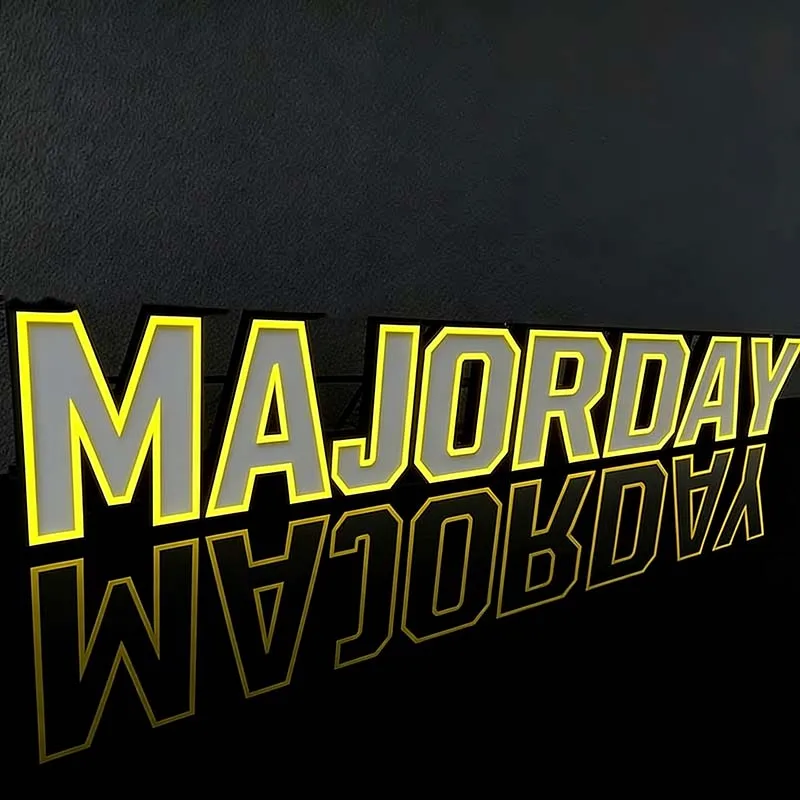
Real photo from our production floor — every sign we ship is made here.
Products mentioned or relevant to this topic — factory-direct, custom built.
From $24/letter · MOQ 1 piece · Flexible lead time · Project-specific compliance documents · ships to 20+ countries
Custom sizes, colors, and finishes. Get a factory price in 24 hours.
Get a Free Quote Copy EmailWhatsApp +86 13865703472 · business@aochuangsign.cn
See pricing, specs, and get a free quote for the sign type you need. Built in our factory, shipped worldwide.