Look, I'm going to say this once: 304 and 316 aren't just numbers on a spec sheet. They're the difference between a sign that looks pristine after a decade and one that turns into a pitted embarrassment in 18 months. I've watched both happen. The alloy you pick decides whether your client calls you for the next project or calls their lawyer.
Both grades live in our factory right now. We cut them on the same fiber laser, TIG-weld them on the same benches, and polish them with the same grit progression. 304 holds an 18% chromium, 8% nickel recipe. 316 adds 2-3% molybdenum. That tiny dose of moly is the entire game. It repels the chloride ions that ride in on sea spray, de-icing salts, and industrial fallout. Without it, even 304's passive layer breaks down under sustained attack.
Here's what nobody tells you: the finish you choose is as important as the alloy. Mirror #8 on a 316 letter in Miami Beach looks spectacular for about six months. Then salt haze and micro-pitting turn it into a cloudy mess. Brushed #4 finish, same alloy, hides the early stages of corrosion and looks intentional. I've swapped mirror for brushed on three coastal hotel projects in the last year. Each time the client thanked me when they saw the mockup next to the competitor's pitted shiny sign down the boardwalk.
The ugly truth is, plenty of sign companies sell “316” that’s really 304 with a fresh polish and a fake mill cert. I’ve cut open letters that were rusting from the inside because the supplier used 304 backs and 316 faces. You need documentation. When we ship 316, we staple the original mill test report from the steel plant to the packing list. No report, no trust. I once saw a contractor in Destin, Florida, eat a $15,000 replacement bill because his “marine grade” letters started bleeding rust through the paint in under a year. The factory had shipped 304 with a clear coat. The clear coat failed. The owner sued. Don't be that guy.
Let's talk real-world geography, because the 304-vs-316 decision depends more on wind direction than you'd think. If your site sits within three miles of breaking surf—or within a mile of a brackish bay that steams in August—pay for 316. That salt mist doesn't need a hurricane to travel. Prevailing onshore winds carry it. I've pulled 304 letters off a restaurant two miles inland from Galveston that looked like they'd been sandblasted with brine. Meanwhile, a 304 storefront sign in Dallas, 300 miles from the nearest saltwater, still looks factory-fresh after nine years.
Inland industrial zones throw another curve. Chemical plants, paper mills, wastewater treatment facilities—they pump chlorides and sulfides into the air. 316 earns its keep there too. A 304 sign near a fertilizer plant in Iowa will pit faster than one on a beach in San Diego. So don't just think “coastal.” Think “corrosive atmosphere.” Grade 316's molybdenum handles both.
Now, cost. We sell non-lit stainless steel letters—cut, welded, polished, and packed—for $15 to $40 a piece depending on size and complexity. That's 304 pricing. For 316, add 20 to 30 percent. A 12-inch brushed capital letter that costs you $26 in 304 becomes $33 in 316. Over a full storefront set of twenty letters, you're looking at a $140 premium. Compare that to the $800-per-letter installed price a US sign shop charges for the same 316 letter. You're protecting a $6,600 investment with an extra $140. That's cheap insurance. Our
stainless steel letters leave our Anhui factory with all edges deburred, studs mounted, and surface protected for shipping. We don't care if it's one letter or five hundred; MOQ is one piece.
Thickness matters just as much as the alloy when you're mounting outdoors. A 1.0mm face on a 30-inch letter will oil-can in the wind, fatigue the welds, and crack the paint. We default to 1.5mm for anything over 18 inches, and 2.0mm when the letter spans more than 36 inches. For coastal installations where wind loads hit hard, I spec 2.0mm minimum regardless of size. The extra $4 in steel cost saves a callback when a tropical storm rolls through. Stainless is dense—7.93 grams per cubic centimeter. A 3-foot letter in 2.0mm 316 weighs around 18 pounds. Your mounting pattern better account for that.
Let's talk about what "marine grade" actually means. It means the alloy contains molybdenum. It does NOT mean the sign is maintenance-free. Bird droppings, tree sap, and industrial soot all trap moisture and chlorides against the surface. If you let that sit for six months, even 316 will pit. I tell my customers to wash their coastal signs with fresh water and a microfiber cloth every quarter. It takes ten minutes. The ones who listen still have brilliant signs after ten years. The ones who don't call me complaining about "cheap Chinese steel" when the problem is neglect.
Rust never sleeps. Not on 304. Not on 316. But 316 sleeps a lot harder.
I've seen this go wrong: a specifier chose 316 but insisted on mirror #8 because the architect wanted a “luxury beacon.” Within two years the hotel's ocean-facing letters looked like they caught buckshot. The pitting showed every speck of corrosion because the perfectly flat surface had nowhere to hide. We replaced them with brushed #4 316 letters six months ago. Same alloy, different finish, zero complaints. The architect now specifies brushed on all coastal jobs. He learned a $9,000 lesson.
When you don't need 316, don't buy it. It's that simple. A signage project in Phoenix, Albuquerque, or Denver can run 304 for two decades and never see a spot of rust. You're just wasting money if you pay the molybdenum premium. And if you're chasing a really light weight solution with natural corrosion resistance for a dry climate, look at our
aluminum letters. They're one-third the weight, they won't rust ever, and they cost half as much as 304 stainless. For most inland retail signs, aluminum makes more sense than any stainless grade. But when the design demands the heft and brushed gleam of steel, stick with 304. Save 316 for the salt.
At Aochuang Sign, we stock both grades in thicknesses from 1.0mm to 3.0mm. Our laser cuts to ±0.1mm, and our welders have been fusing stainless for over a decade. We can turn a drawing into finished letters in 7 to 15 days. No 30-piece minimum. No “we only run 304 this week.” We'll weld up a single 316 letter for a beach bar or a thousand 304 letters for a national retail rollout. The process is the same: 10 steps from design confirmation to plywood-crated export packaging, including an 8- to 12-hour powered aging test if the letters have LEDs.
Speaking of LEDs: if you want those
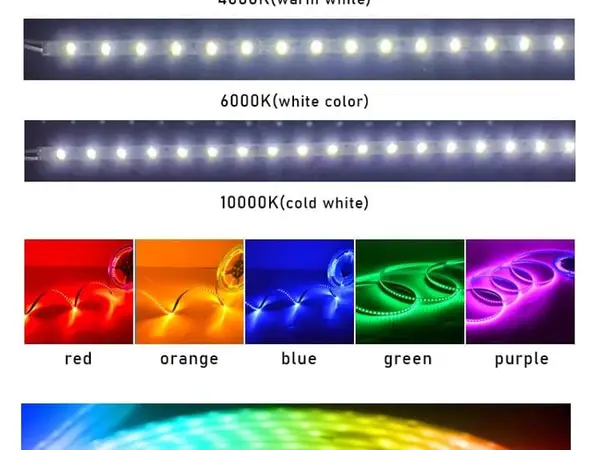
back-lit halo letters in coastal-grade steel, we build the returns and faces from 316 and seal the modules with neutral-cure silicone. The LED compartments get IP65-rated waterproofing. The combination of brushed 316 and warm 3000K halo light is what high-end resorts put above their porte-cochères. It's also what I'd put on my own beach house, if I had one.
Shoot me your artwork and I'll quote both grades side by side. I'll show you the real numbers on a 304 letter, a 316 letter, and exactly where the 20-30% lands for your specific sizes and thicknesses. I'll also tell you honestly if 316 is overkill. We ship via air or sea, fully insured, with VCI corrosion-inhibiting paper wrapping every metal surface. Your letters will arrive dry, shiny, and ready to mount. And if they're for a site within a mile of saltwater, they'll stay that way.