I've watched a 304 stainless channel letter on a Miami storefront turn into a pitted mess in 18 months. The owner swore it was "marine grade" because his local shop told him so. It wasn't. The letter had no molybdenum in it. That's the whole ballgame.
You're here because you need to spec stainless letters or sign cabinets that won't embarrass you in three years. Maybe you're a contractor who's been burned before. Maybe you import custom signage and got a shipment of "316" that rusted like mild steel. I run a factory floor. I've been cutting, bending, and polishing stainless for outdoor signs since before LED modules were a thing. Let's kill the marketing fluff and talk metallurgy the way your installer needs to hear it.
At our plant in Lu'an, Anhui, we fabricate both 304 and 316 stainless letters every week. We ship worldwide, from dry Arizona strip malls to salt-sprayed resorts in the Maldives. The difference between a 10-year sign and a 2-year regret often comes down to one number: the molybdenum content. Here's how to get it right.
304 stainless contains 18% chromium and 8% nickel. That's standard. It forms a passive chromium oxide layer that resists rust in most environments. But that layer gets attacked by chlorides — the stuff in seawater, road salt, and industrial fallout.
316 adds 2-3% molybdenum. That tiny addition plugs the microscopic pits where chlorides eat through. Think of it like a repair crew constantly patching the oxide layer. Without it, in a coastal zone, the chromium film breaks down, and you get pitting corrosion — tiny deep holes that spread like acne on a teenager.
Here's the ugly truth: You can't see the difference with your eyes. 304 and 316 look identical. Same density, same magnetic response (or lack of it), same color. The only proof is a mill test certificate showing the chemical composition. Without that, you're gambling.
I've seen this go wrong: a resort in Phuket installs brushed 304 letters on a beachfront entrance. Beautiful. Six months later, brown freckles appear around the mounting studs. By month 12, the custodian is wiping rust stains off the marble façade every week.
If your sign sits within 500 meters of breaking surf, pay for 316. No debate. Salt mist doesn't just land on the sign; it dries and leaves concentrated chloride crystals. Morning dew re-dissolves them. You get a repeating cycle of micro-corrosion that eats 304 alive.
Look, I don't care if the building is "shielded" by a seawall. Wind carries salt kilometers inland. In places like Dubai, Singapore, or Miami, I've seen pitting on 304 letters three kilometers from the beach. The chloride concentration in the air is still high enough to attack welds and scratches. If you can smell the ocean, spec 316.
Our factory price for 316 nonsmoking—I mean non-lit—stainless letters is about 20-30% more than 304. So a 24-inch letter that costs $60 in 304 might run $78 in 316. Over a ten-year building lease, that's less than two bucks a year per letter. Cheaper than replacing double-faced tape every season.
A strip mall in Dallas, a corporate headquarters in Atlanta, a warehouse sign in Chicago — 304 will outlast the LED power supply. With proper passivation and a good brushed finish, 304 gives you 10-15 years outdoors without significant corrosion. I've got installs in Phoenix that look new after eight years.
The chlorides inland come from road de-icing salts, not the ocean. Unless the sign sits directly next to a highway that gets salted heavily every winter, 304 holds up. For most US and European inland locations, spending on 316 is like buying a four-wheel-drive truck to commute on paved roads. Nice, but not necessary.
That said, watch out for industrial zones with chemical exhaust. Sulfur dioxide from factories turns into sulfuric acid in rain. It attacks stainless almost as aggressively as salt. If your client is a chemical plant or paper mill, 316 might still be worth the upgrade, even far from the coast.
I'll tell you this even though it might lose me a sale: a mirror-polished 316 letter on a beachfront hotel is a maintenance nightmare. Yes, the metal won't pit, but the surface will cloud. Salt crystals act like micro-sandpaper. Every breeze scours that mirror finish until it looks like a hazy brushed surface after two years. You'll get callbacks complaining about "rust" when it's just surface dulling.
For coastal signs, stick to brushed #4 finish or PVD coating. Brushed scatters light and hides the gradual change. PVD (Physical Vapor Deposition) adds a titanium-based color layer that's tougher than the stainless itself. It costs more — about 15-20% on top of the letter — but it keeps a gold, black, or rose gold look intact for a decade. If you insist on mirror #8, tell the client to budget for quarterly polishing. Nobody does, of course.
Here's what nobody tells you: many suppliers will slap a "316" sticker on 304 and hope you don't test it. They know most sign buyers don't carry a handheld XRF analyzer. So the paperwork matters more than the metal's appearance.
Demand a mill test certificate (MTC) that matches the heat number on the shipment. The MTC must show molybdenum content between 2.0% and 3.0%. If it's missing or the supplier "forgot" to include it, walk away. At our factory, every batch of 316 sheet metal arrives with EN 10204 3.1 certificates. We can email you the PDF before you pay a cent.
Chemical spot tests exist — a drop of molybdenum detection solution turns red in 30 seconds on 316, stays yellow on 304. But that tells you only about the surface, not whether the core is the same. The real security is a long-term relationship with a factory that knows its supply chain. Our steel comes from TISCO or Baosteel mills, not some recycled scrap with invented chemistry.
If weight matters more than the premium metallic look, we steer clients toward aluminum letters. They're one-third the weight of stainless and naturally rust-proof without any alloy tricks. A 30-inch aluminum letter might weigh 4 pounds; the same in stainless hits 12 pounds. That matters when you're mounting on ACM panels or old facades that can't hold much load.
Aluminum won't give you the mirror sparkle of polished stainless, but with powder coating or anodizing, it holds up 8-12 years outdoors. For high-rise signs where wind load is critical, or for massive channel letters with deep returns, aluminum is often the smarter choice. And it costs less: factory-direct aluminum letters run $10-25 per piece, compared to $15-40 for 304 stainless.
But if you need that cold, heavy, premium steel feel that screams "bank" or "law firm," you can't fake it. Stainless steel letters have a gravity that aluminum can't match. We just want you to match the grade to the job site, not the sales brochure.
Our factory offers a standard 2-year warranty on LEDs and 1 year on power supplies for illuminated signs. For non-lit stainless letters, there's no "corrosion warranty" that any honest manufacturer will give you. Anyone promising a 10-year rust-free guarantee on outdoor stainless is lying or charging you upfront for three replacement sets.
What we do guarantee is material conformity. If you order 316, you get 316. Mill certs match. We'll replace any letter that fails due to our fabrication error — cracked welds, wrong dimensions, failed inserts. But if the environment is harsher than you predicted, or the installer uses steel wool that embeds iron particles into the surface, that's on you.
One installation truth that gets ignored: stainless needs to be passivated after fabrication. Welding burns off the chromium oxide layer at the seam. We passivate every letter in a nitric acid bath before packaging. If your local shop welds up a retrofit and doesn't re-passivate, the weld will rust within months, even on 316. A cheap passivation paste costs thirty bucks. Use it.
A US sign shop will quote you $400 to $700 for a 24-inch front-lit channel letter with a 304 stainless face. For 316, add 30-40%. Our factory-direct price for the same letter, with Samsung LEDs and a Mean Well power supply, starts around $120 for 304 and $150 for 316. You're saving 50-65% even after air freight and the Section 301 tariff.
Look, I'm not saying every letter should come from China. Rush jobs or ultra-complex custom shapes might justify a local fabricator who can visit the site. But for volume orders of standard letters, the math is brutal. Two hundred letters for a shopping center? You're saving enough to cover the entire installation labor budget.
We ship LCL sea freight for large orders: $80-200 per cubic meter, delivered in about 65 days. Air freight for small batches runs $4-12 per kilo and arrives in about 10 days. Even with the 30% US tariff on Chinese signage, the landed cost beats domestic by a wide margin. The key is planning ahead. Don't call us three weeks before the grand opening and expect 316 letters with PVD coating.
316 is better than 304 in salt. But 316 is not invincible. In enclosed, unventilated sign cabinets, condensation cycles concentrate chlorides until even 316 pits. Drain holes matter. Standoffs that allow airflow behind the letter matter. A $500 stainless letter mounted flush against a concrete wall that wicks moisture will fail faster than a $150 letter on a proper grid system.
I've also seen 316 corrode from the inside out because the shop used leaded brass mounting studs. Galvanic corrosion — different metals in contact with an electrolyte (rainwater) — turns the stainless into the sacrificial anode. Stick to 304 or 316 studs, or use nylon isolation washers. This is Signmaking 101, but I've repaired hundreds of signs where nobody bothered.
If the site is within 500 meters of saltwater, on a coastal highway, or in a hurricane zone: 316 stainless, brushed finish, with 316 studs, passivated. Period. If you're on a budget for a coastal restaurant, consider aluminum letters with a high-quality powder coat — they'll shrug off salt better than 304 and cost half as much.
For everything inland — retail centers, medical buildings, corporate parks — 304 gets the job done. Spend the savings on better LEDs or a UL-certified power supply instead. The sign will look pristine far longer than the tenant's lease.
Our project managers review your site photos and advise on material and finish before you commit. We'll tell you if your design is gorgeous but impractical. We'll send the mill certs. And if you need 6-inch 316 letters with a PVD rose gold face for a beach resort, we'll make them without pretending 304 is "just as good."
You've got a project on the table. Send us the specs. We'll quote 304, 316, and aluminum side by side. Then you decide where you want to be in five years: answering a client's angry call, or watching that sign gleam through the sea mist.
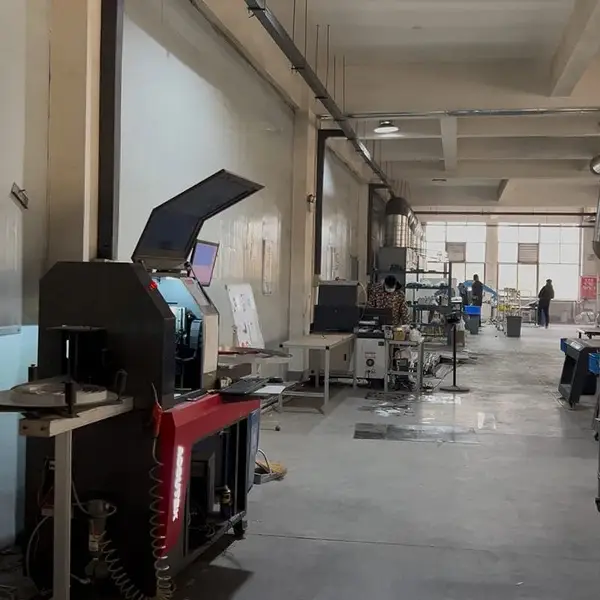
Real photo from our production floor — every sign we ship is made here.
Products mentioned or relevant to this topic — factory-direct, custom built.
From $24/letter · MOQ 1 piece · Flexible lead time · CE & UL certified · ships to 20+ countries
Custom sizes, colors, and finishes. Get a factory price in 24 hours.
Get a Free Quote Copy EmailWhatsApp +86 13865703472 · business@aochuangsign.cn
See pricing, specs, and get a free quote for the sign type you need. Built in our factory, shipped worldwide.