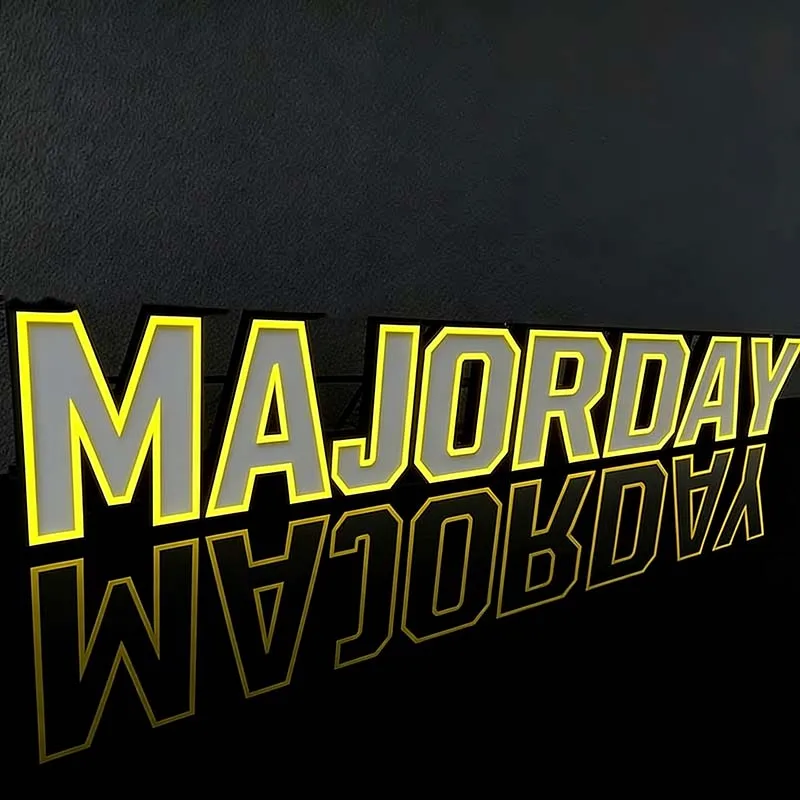
Look, I’ve seen more signs fail from sloppy installation than from a missing digit in an IP code.
IP stands for Ingress Protection. First number is solids: 6 means dust‑tight, zero entry. Second number is liquids: 5 is water jets from any direction, 6 is powerful jets, 8 is continuous submersion. That’s the crib sheet. But here’s what nobody tells you: the rating card on a spec sheet means exactly nothing if the electrician drills a hole for the power cord and doesn’t seal it. I’ve watched a $15,000 monument sign fill up with rainwater because the installer used a regular romex connector instead of an IP‑rated gland. The letters were stamped IP66. Didn’t matter.
A sign’s real waterproofness lives in the silicone joints, drain holes, gasket compression, and cable entry – not just the label. I’ve been on the factory floor 16 years. I’ve burned my hands on hot acrylic and argued with suppliers about LED quality. The ugliest phone calls start with “But it said IP68…”
IP65 is our standard for every outdoor illuminated sign that leaves Aochuang.
It means the enclosure is dust‑tight and can handle water jets from a 6.3mm nozzle at 12.5 liters per minute from any angle. That’s a hard rain with wind, a pressure washer at polite distance, or a Midwest thunderstorm. For a standard storefront channel letter mounted under an awning in Denver or Dallas, IP65 covers it. The acrylic face is sealed with neutral‑cure silicone, the LED modules are potted, and we run an 8‑to‑12‑hour aging test where the whole sign runs wet. If it fogs or flickers, it goes back to the bench. Our front-lit channel letters ship with that test record stapled to the work order.
The ugly truth is, a lot of factory IP65 ratings don’t survive the first year. Why? Cheap acid‑cure silicone that smells like vinegar. It off‑gasses acetic acid and corrodes the LED leads. I’ve ripped apart a competitor’s letter where the silicone turned crisp and cracked after one summer. Our spec is neutral silicone, always. It costs 30% more but doesn’t eat the metal. Another rookie mistake: no drain hole. Condensation forms inside any sealed box with temperature swings. Without a tiny weep hole at the lowest point, water pools and kills the power supply. We add those as standard. IP65 isn’t complicated, but skipping the details turns it into a lie.
IP66 handles powerful water jets. Think pressure washer direct hit or sideways monsoon.
For a sign on a Miami Beach hotel facade, saline spray and hurricane‑driven rain demand it. For an industrial park sign that gets washed quarterly with a high‑pressure nozzle, IP66 stops water from blasting past the gasket. We can build to IP66 on any aluminum or stainless steel sign. The cost goes up 15‑20%, mostly in labor for double‑lip gaskets and extra sealing around the acrylic return. The material doesn’t change, the process does.
Here’s what nobody tells you: 316 stainless steel isn’t part of an IP rating, but it matters just as much. IP deals with enclosure ingress, not corrosion of the body itself. A sign with IP66‑rated LEDs but a 304 stainless face will still pit near the ocean after a few years. I always pair IP66 with stainless steel letters in grade 316 for coastal jobs. That alloy has 2‑3% molybdenum, and yes, it costs 20‑30% more than 304. But if your client’s sign is facing salt air, the cheap option corrodes into disappointment within 18 months. Aochuang keeps 316 in stock for exactly these orders, and we offer brushed #4 or mirror #8 finishes that don’t trap salt crystals.
I’ve seen this go wrong: a contractor ordered 50 back‑lit halo letters for a restaurant in Galveston, Texas. Spec said IP65. He insisted IP65 was enough. Two years later the screws rusted, the acrylic faces warped from trapped humidity, and the entire set had to be ripped out. The replacement job cost triple. We built the new set to IP66 with 316 bodies and IP66‑rated Samsung LED modules. That was six years ago. Still glowing.
IP68 means continuous immersion at a depth and duration the manufacturer declares.
For channel letters? Almost never necessary. Unless your sign is mounted inside a fountain basin or in a flood zone where it will actually be underwater, IP68 is an expensive solution to a problem you don’t have. I’ve seen a contractor demand IP68 for a sign in Scottsdale, Arizona. The total extra engineering added $2,400 to a $6,000 sign. The deepest water that sign has ever seen is a sprinkler overspray. That money would have bought a thicker acrylic face and a 10‑year LED warranty, but instead it bought a number on a sticker.
The ugly truth is, many factories slap an IP68 label on a light module that survived a 30‑minute dip in a lab, but the silicone gaskets crack after two summers of UV exposure. The rating is temporary, and nobody comes back to re‑certify it. I’ve had suppliers send me “IP68” LED strips with hot‑glue sealing. Hot glue. In a sign that bakes to 60°C on a July afternoon. That’s not engineering, that’s wishful thinking. A true IP68 outdoor illuminated sign would need hermetically welded stainless steel housings, potted electronics, and glass‑to‑metal seals. The cost would dwarf the client’s budget. So when someone asks me for IP68, I don’t quote it. I ask what problem they’re actually trying to solve. Nine times out of ten, IP66 plus the right material selection does the job, and I sleep better knowing I didn’t sell them a lie.
Our factory holds CE, RoHS, and ISO 9001. We can show you today’s certificate.
CE marking for signage runs 20,000‑50,000 RMB per model family and takes 2‑8 weeks at an accredited lab. We test in Shenzhen. You pay for the report, not just a stamp. But I’ve seen competitors flash a decade‑old expired CE certificate like it’s still valid. Ask for the test report number and the lab name. If they can’t give it, walk. For the US market, UL 48 is the real monster. $4,000‑$15,000, 4‑9 months, plus quarterly factory audits. Aochuang doesn’t carry full UL listing on every component because frankly, most importers refuse the cost. What we do is build with UL‑recognized LED modules and power supplies, and we can get an ETL field evaluation for specific projects. ETL is 10‑30% cheaper than UL and equally accepted in most jurisdictions.
Here’s the brutal honesty: an IP test certificate for one sign costs about $500‑800 at a third‑party lab. We provide it for large orders. But that piece of paper doesn’t guarantee the installer will use correct cable entry. I’ve shipped IP66‑tested channel letters to a site where the electrician caulked the wire hole with bathroom silicone that failed in three months. The sign leaked. The client blamed us. The rating held up; the installation didn’t.
UV‑resistant acrylic is the spine of every front‑lit letter.
We use Mitsubishi or Degussa acrylic with 90‑92% light transmittance. It won’t yellow for 5‑8 years, even in direct sun. Domestic acrylic looks clear at first, but I’ve seen it turn the color of old piano keys in 18 months. The thickness matters too. Anything under 2.5 meters can use 2‑3mm. Over 2.5 meters, you need 5mm or the face will bow in the wind and crack at the seams. For metal, aluminum is naturally rust‑proof and weighs a third of steel – perfect for aluminum letters on historic buildings where you can’t add heavy anchor loads. But aluminum in a salty environment still corrodes, pitting under the powder coat. Stainless 304 gives you 10‑plus years inland. Stainless 316 is 15‑plus years marine grade. Density 7.93g/cm³, no shortcuts.
LED modules are where most sign failures begin. We run SMD 2835 chips at 100‑150 lumens per watt. Samsung and Osram diodes on quality aluminum PCBs last 5‑plus real years. Cheap no‑name modules with thin copper traces and low‑grade silicone potting die in 12‑18 months. Heat cycling kills them, and IP ratings don’t account for condensation inside a sealed letter if there’s no drain. Our warranty reflects this: 2 years on LEDs, 1 year on power supplies. That’s honest, not flashy. I’ve seen competitors offer 5‑year warranties and fold the company before the claims come in. I’ve been here since 2010. We’ll still be here.
Look, no genuine IP66 sign comes with sharp internal burrs, exposed wire nuts, or a bead of hot glue.
Open a sample letter. Smell the sealant. If it stings your nose with vinegar, that’s acetoxy silicone. It’ll eat the copper in your LEDs. Check for a separate driver compartment with a silicone gasket, not just foam tape that compresses and fails. Tilt the letter. If you don’t see a discreet 2‑3mm drain hole at the lowest return edge, water will pool and kill the power supply. Some factories omit it because they think no drain means better sealing. That’s dead wrong. Condensation from thermal cycling will collect and short the board. Every properly engineered outdoor sign has a weep hole. Ask if the LED modules have independent IP65 rating – separate from the sign body. We use potted modules where the PCB sits inside an injected silicone shell. The wire exits through a sealed connector, not a bare soldered joint.
I’ve seen a sample letter where the “IP67” rating came from a glob of hot glue around the LED wire. In the sun, hot glue softens at 70°C and the wire pulls out. The client paid for double‑lit channel letters, ended up with single‑lit after the back side filled with water. Our dual-lit channel letters go through thermal imaging during the aging test. If a hot spot shows up, we tear it down. Fake ratings are easy to spot if you know where to look.
I’ve shipped perfect letters that failed within a year because the installer skipped five simple steps.
First: cable entry. Use an IP‑rated nylon gland or strain relief, not a knock‑out with a plastic bushing. The seal must compress around the outer jacket. Second: junction box. Every remote power supply splice needs to sit in a NEMA 3R box, sealed with duct seal or a gasketed lid. Third: after mounting, run a bead of neutral silicone around the bracket penetrations. Drilling into the back of a channel letter opens a water path straight to the acrylic face. Fourth: orientation. The weep drain hole must be at the lowest point. If the sign mounts on an angle, water pools at the wrong end. Fifth: maintenance. Every 12 months, check the sealant lines for cracks and clear the drain hole of insect nests. It sounds basic, but I’ve excavated mud dauber nests from drain holes more times than I can count.
If your installer skips these, the IP rating on the box is worthless. I tell every sign shop: buy the best letter, but hire a sign electrician who understands water management, not a general contractor who treats it like a piece of siding.
At Aochuang, the 10‑step process is tight: laser cut to ±0.1mm, TIG welding, grinding, polishing, CNC‑routed acrylic, LED assembly with 3M VHB thermal pads, neutral silicone sealing, 8‑12 hour wet aging test, and 100% QC inspection. Export packaging is foam plus carton plus plywood crate. From design confirmation to crating takes 7‑15 days. We export worldwide. This is what we control.
We don’t control the installer. We don’t control the Florida sun that bakes a black‑painted return to 80°C and accelerates sealant aging. We don’t control the building manager who pressure‑washes the sign three times a year with a turbo nozzle from six inches away. So I won’t sell you a 10‑year all‑weather guarantee. I’ll sell you a 2‑year LED warranty and a 1‑year power supply warranty, which is fair and defendable. I’ll give you material certs for the stainless steel, light transmittance reports for the acrylic, and lumen maintenance curves for the LEDs. That’s data, not marketing.
Here’s what nobody tells you: a sign with an honest factory behind it will always outlive a sign with a fake rating and a bullet‑point warranty that won’t be honored. I answer emails personally. If a LED driver fails in month 11, we air‑ship a replacement, no argument. That’s the real rating that matters.
For a suburban strip mall storefront under a canopy, front-lit channel letters to IP65 with 304 stainless returns and 3mm Mitsubishi acrylic. Done. $20‑80 per letter factory, shipped to your door. For a luxury hotel entrance, back-lit halo letters with 316 stainless faces, IP66 internal LED modules, and 4000K neutral white. $35‑120 per letter, and the halo glow against the stone facade justifies every penny. For a drive‑thru menu board that gets cleaned with a pressure washer, use an acrylic light box with an aluminum frame, IP66 gasketed access panel, and internal drain channels. We keep those boxes between $80‑250 per square meter, built with the same discipline.
Need something with that modern neon look but no glass? Our neon flex signs use silicone‑jacketed LEDs, inherently waterproof to IP65, and we form them to match any logo. Restaurants love the food menu signs in illuminated light boxes – readable day and night, IP65 rated, and they survive the kitchen humidity if you don’t block the ventilation.
If you’re still unsure what rating your environment needs, send me a photo of the mounting location and the nearest body of salt water. I’ll give you a straight answer, even if it means I lose an upsell to IP68. I’d rather you trust the factory that told you “no” than the one that said “yes” to everything.
IP ratings aren’t magic. They’re a test result that holds only as long as the weakest joint.
Aochuang will build you IP65 or IP66 signs with backed‑by‑data materials. We won’t sell you an IP68 fantasy for a parking lot sign. We’ll show you the CE cert, the acrylic batch reports, and the LED aging test log. And we’ll remind you that the best rating in the world dies at the tip of an installer’s drill if they don’t seal the hole.
I’ve been on this factory floor since 2010. 3,000 square meters, 50‑plus skilled workers, no marketing degrees. Just honest signs that stay lit. If that sounds like what your next project needs, I’m here.

Real photo from our production floor — every sign we ship is made here.
From $24/letter · MOQ 1 piece · Flexible lead time · CE & UL certified · ships to 20+ countries
Custom sizes, colors, and finishes. Get a factory price in 24 hours.
Get a Free Quote Copy EmailWhatsApp +86 13865703472 · business@aochuangsign.cn
See pricing, specs, and get a free quote for the sign type you need. Built in our factory, shipped worldwide.