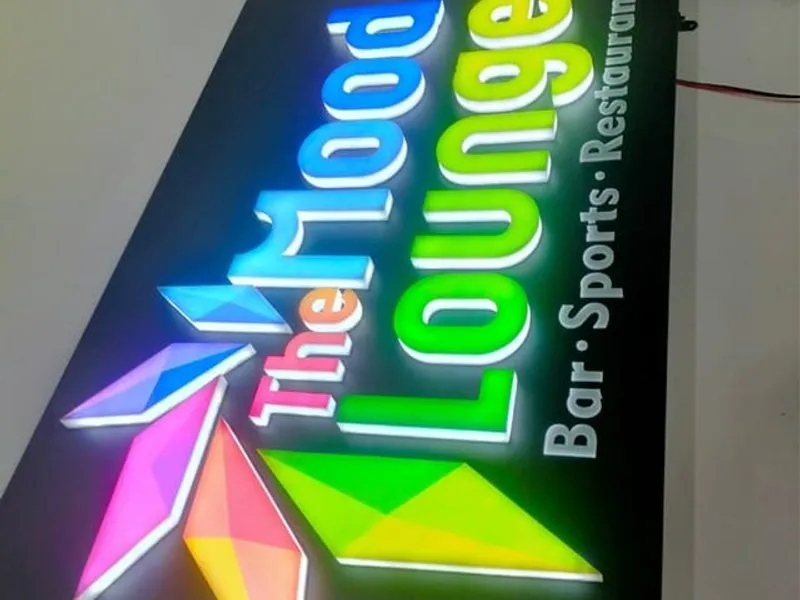
Quick story. Property manager in Phoenix calls me up, frantic. The board approved a new monument sign for their 200-unit complex. Local sign company quoted $18,000 for a stainless steel, front-lit sign with acrylic faces. They paid it. Eight months later the acrylic's yellow, the LEDs are flickering, and the stainless has rust spots near the welds.
I showed them what we’d have shipped from our floor in Lu’an for $5,800. Same size, same LEDs (Samsung 2835, 150 lm/W), 304 stainless with proper TIG weld and powder coat. The difference? We use Mitsubishi acrylic, not domestic crap that yellows in 18 months. Their local guy used 2mm domestic acrylic and cheap modules. Saved them over $12,000. The sign would have lasted five years longer. That's a fact, not a guess.
Here’s what nobody tells you: the gap between “cheap” and “right” is smaller than you think. But the gap between “right” and “ripped off” is a chasm.
Property managers with multiple buildings want the same look everywhere. Great idea. Until you try to put the same dimensional letters on a 1920s brick facade and a 2024 glass-and-steel lobby. The ugly truth is you can’t just copy-paste signage. Different architectures, different mounting surfaces, different local codes.
I’ve watched management companies order 40 identical sets of channel letters for 40 buildings. Then they realize the letter heights need to scale from 8 inches to 24 inches depending on setback and sight lines. That’s not a branding problem. It's a physics problem. And physics doesn't care about your brand guidelines.
What works: design a modular system. Base letter style stays the same – same font, same stainless grade, same LED color temperature (4000K neutral for corporate, 3000K for hospitality). But adjust sizes, spacing, and mounting type per building. Acrylic thickness needs to go from 3mm to 5mm for anything over 2.5 meters tall. Nobody tells you that in the marketing brochure.
The quickest way to spot a rookie brand rollout? They use the same letter size on a one-story entrance as a five-story parking garage. Blind from 100 feet. Waste of money.
I’ve sat through more HOA meetings than I want to count. The board wants “elegant,” “upscale,” and “doesn’t look like a mall.” Then they argue for forty minutes about whether the bronze finish looks too yellow. Meanwhile, they’ve got a 1970s sign that says “Sunrise Gardens” in cracked plastic.
Here’s what nobody tells you: get the city’s sign code before you talk to the board. Most property managers start with design, then hit zoning like a brick wall. In many cities, monument signs can’t exceed six feet tall. Illuminated channel letters require permits and photometric plans. And if you’re in a historic district, forget anything with LEDs brighter than 500 nits.
For condo approvals, I recommend you bring a sample. One 8x10 inch piece of your proposed acrylic on a stainless backplate. Let them touch it. See the color. Smell the paint. Abstract PDFs get vetoed. Physical samples get approved 80% faster in my experience. That's not hyperbole.
And CE marking? I’ll say it again: most factories claim they have it. Ask to see the certificate with today’s date. Watch them sweat. CE costs 20,000 to 50,000 RMB to get legit. If they can’t show it, your sign won’t pass EU inspection – and some state fire marshals are getting picky about imported lighting.
Acrylic is the biggest lie in this industry. Cheap domestic acrylic says “UV-resistant” on the label. In real life, you get yellowing inside two years. Mitsubishi or Degussa acrylic gets 90-92% light transmittance and holds true for 5-8 years. The difference in cost? Maybe 15% on the material. The difference in reputation? Everything.
Stainless steel – 304 has 18% chromium and 8% nickel. Outdoors ten years easy. But if your building is within a mile of saltwater, you need 316 with 2-3% molybdenum. That costs 20-30% more. I’ve told property managers in Miami Beach: buy 316 or plan to replace letters in year three. They bought 304 anyway. Guess who called me back in year four.
LEDs – the solder joint tells the story. Dull gray solder means cheap flux and lead-free junk that fails in 12-18 months. Shiny silver joints mean proper production. We use SMD 2835 modules at 100-150 lm/W. L70 rating of 50,000 hours. That’s five years of operation at 12 hours a night. After that, the LEDs still work but have lost 30% brightness. Plan your backup accordingly.
Aluminum signs weight one-third of steel, last 8-12 years outdoors, and won’t rust. Great for budget-light projects. But don’t use aluminum for halo-lit letters – the heat from LEDs can warp it over time. Stick to stainless or powder-coated steel for illuminated.
Most property managers think they need to rip out the whole sign and start fresh. Wrong. You can retrofit an existing monument with new acrylic faces, modern LED modules, and fresh stainless trim without touching the frame or foundation. That slashes cost by 40-60% and cuts lead time to about 5-15 days instead of four weeks.
I just did this for a 1980s condominium in Chicago. Old sign had a steel frame, but the letters were rusted and the neon was dead. Pulled the old faces, replaced with 5mm Mitsubishi acrylic, added Samsung 2835 modules, refinished the frame with powder coat. Total cost to the property: $2,200. New sign quote from a local shop: $6,500. Same look, better light output, and they kept their foundation and conduit.
The ugly truth is that many local sign companies don’t offer retrofits because they’d rather sell you a whole new sign. Factory-direct shops like ours do retrofits all the time because we can match existing letter profiles precisely using CNC laser cutting within 0.1mm. We don’t care if it’s a new sign or a face-lift – the profit margin is fine either way.
One rookie mistake: don’t mix LED color temperatures on a retrofit. If your old sign had 3000K warm white, and you switch to 5000K neutral, the building looks like a discount store. Test the new modules against the existing – preferably the same brand and series.
I’m not a fan of gimmicks, but QR codes on monument signs work. A simple code that goes to the property’s rental page or amenity schedule. No power needed, no software updates. Just a laser-engraved QR on 304 stainless – lasts ten years without fading.
Digital displays are another story. A 32-inch outdoor-rated LCD panel in a sign insert can run $800-1,500 per unit. Plus you need a weatherproof enclosure, power supply, and content management system. I’ve seen property managers spend $20,000 on a digital directory that broke in the first winter because the seals weren’t IP66. IP65 means water jets from any direction – it does not mean your sign survives a Florida hurricane or a Minnesota blizzard. If you’re putting electronics in an outdoor sign, spec at least IP66 and consider IP68 for coastal areas.
For most apartment buildings, a static monument with good lighting does the job. Digital is overkill unless you have multiple units to rent that change frequently. And if you do go digital, budget for a backup LED sign that works when the screen glitches – because it will glitch. Murphy’s law in manufacturing.
I run a factory with 50 workers in a 3,000 square meter facility. We ship worldwide. Our front-lit channel letters cost $20-80 per letter factory price. Halo-lit $35-120. Stainless non-lit $15-40. You can’t get anywhere close to that domestically. Standard retail installed price in the US for a front-lit letter is $200-700. Same quality, same materials, 50-65% savings.
But shipping matters. Express (7-10 days) costs $30-100 for small signs. Air freight $4-12 per kg. Sea freight – LCL takes about 65 days and your crate gets handled 6-8 times between our dock and yours. Every touch is a chance for damage. That’s not in the brochure. For large orders, I recommend full container load (FCL) at $1,200-3,000. Add 30% for US Section 301 tariffs. Still cheaper than domestic when you add it up.
Certifications? UL 48 runs $4,000-15,000 and takes 4-9 months with quarterly audits. ETL is a 10-30% cheaper alternative. Most property managers don’t need UL for a monument sign – they need a licensed electrician to connect it properly and a permit from the building department. If your local inspector demands UL, get ETL instead – it’s identical in practice.
And lead time from us: about 5-15 days. That’s design confirmation through QC and packing. I’ve had local shops take six weeks for the same work. We cut steel the day after you approve the layout.
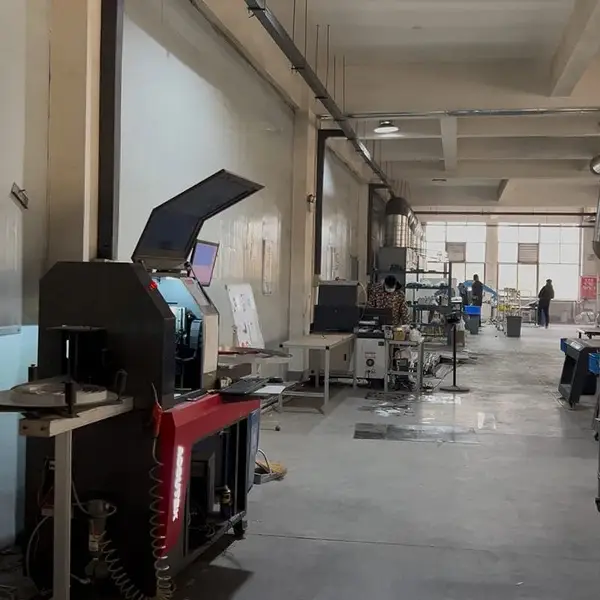
Real photo from our production floor — every sign we ship is made here.
Products mentioned or relevant to this topic — factory-direct, custom built.
From $24/letter · MOQ 1 piece · Flexible lead time · CE & UL certified · ships to 20+ countries
Custom sizes, colors, and finishes. Get a factory price in 24 hours.
Get a Free Quote Copy EmailWhatsApp +86 13865703472 · business@aochuangsign.cn
See pricing, specs, and get a free quote for the sign type you need. Built in our factory, shipped worldwide.