You’re standing in front of your storefront, staring at a blank space where your sign should be. The decision feels endless. LED or non-illuminated? Spend the extra cash or save it? I’ve been in this industry since 2010, and I’ve seen both sides of this debate play out on real streets, in real budgets, and with real customers. Here’s the raw truth: there’s no universal winner. But there is a clear winner for your specific business—if you know what to look for.
The Real Cost Difference: Upfront vs Long-Term
Let’s start with the numbers that matter most to your bottom line. A standard 3-foot by 2-foot non-illuminated sign—say, a metal relief or painted aluminum panel—runs you between $200 and $500, depending on complexity. That’s factory-direct from a shop like ours. An illuminated LED channel letter sign for the same dimensions? Expect $600 to $1,200 upfront.
But here’s the kicker: the cost difference shrinks fast when you factor in electricity. A typical LED channel letter setup draws about 50 to 100 watts per square foot. At $0.12 per kilowatt-hour, running it 12 hours a day adds roughly $25 to $50 per year to your electric bill. Over five years, that’s $125 to $250—a fraction of the initial gap.
Non-illuminated signs cost you $0 in electricity. But they also cost you in lost visibility. The thing is, a sign that’s dark after 6 PM is worthless for evening foot traffic. If your business relies on after-work customers—restaurants, bars, retail stores—the illuminated option pays for itself within 18 months, based on average foot traffic data from US shopping districts.
Visibility: The 500-Foot Rule
I’ve watched customers walk past a non-illuminated sign from 50 feet away and not notice it. Then I’ve seen the same store with an illuminated sign pull people in from across a parking lot. It’s not theory—it’s physics.
A non-illuminated sign, even with high-contrast colors, is only visible in daylight up to about 200 feet. At night, that drops to zero unless you have ambient street lighting. Meanwhile, a 5-millimeter-thick LED channel letter sign with 1,000 nits of brightness—standard for outdoor use—is legible from 500 feet in the dark.
Here’s a hard-won factory-floor observation: many business owners overestimate their sign’s daytime contrast. I’ve seen a white-on-black painted sign that looked crisp in the shop but turned into a gray blur under direct sunlight. LED illumination doesn’t have that problem. It punches through glare because the light source is inside the letter, not bouncing off the surface.
Maintenance and Durability: What the Factory Knows
Non-illuminated signs are simpler. A metal relief sign with a powder-coated finish—say, 0.040-inch thick aluminum—will last 10 to 15 years with minimal care. Just repaint every 5 to 7 years if the coating fades. That’s a $50 paint job in your own shop.
Illuminated signs have moving parts—LEDs, transformers, wiring. But here’s the reality check: modern LEDs have a 50,000-hour lifespan. That’s 11 years of continuous use at 12 hours per day. We’ve shipped units worldwide since 2010, and our 2-year warranty covers the transformer and LED modules. In practice, failures are rare—about 3% of units in the first two years, based on our internal data.
What kills an illuminated sign faster than anything? Poor installation. I’ve seen a $1,000 channel letter set ruined because the installer didn’t seal the conduit entry point. Water gets in, corrodes the connections, and you’re dead in six months. Always specify a silicone sealant rated for outdoor use—it costs $8 a tube.
| Feature | Non-Illuminated Sign | Illuminated Sign (LED) |
|---|---|---|
| Upfront Cost (3' x 2') | $200–$500 | $600–$1,200 |
| Annual Electricity Cost | $0 | $25–$50 |
| Daytime Visibility | 200 feet | 500+ feet |
| Nighttime Visibility | 0 feet (unless ambient lit) | 500+ feet |
| Lifespan | 10–15 years | 11+ years (LEDs) |
| Maintenance Frequency | Repaint every 5–7 years | Check seals yearly |
| ROI Break-Even (vs non-illuminated) | N/A | 18 months (if open evenings) |
ROI: When Illumination Actually Loses
I’ve worked with a dental clinic that operates 9 AM to 5 PM, Monday through Friday. They installed a $800 illuminated sign. After two years, the owner told me he saw zero change in walk-in traffic. Why? Because every patient was by appointment, and they all arrived during daylight hours. The sign was a waste.
On the flip side, a pizza joint we supplied with a $700 channel letter sign saw a 40% increase in dinner-time walk-ins within three months. Their non-illuminated sign had been invisible after sunset. The illuminated version turned a dark corner into a beacon.
So here’s the factory-floor wisdom: illuminated signs win when your business operates at night or relies on impulse traffic. Non-illuminated wins when you’re appointment-only, daytime-only, or on a tight budget with no evening foot traffic. Don’t let a salesperson tell you otherwise—I’ve seen both scenarios play out.
Zoning and Regulations: A Hidden Trap
Before you order anything, check your local sign code. Many municipalities cap the brightness of illuminated signs—typically 0.3 footcandles above ambient at a distance of 10 feet, per the International Dark-Sky Association guidelines. Some cities ban them outright in historic districts.
We’ve shipped to a client in Santa Fe who had to swap their planned LED channel letters for a non-illuminated metal relief sign because of a local ordinance. The switch saved them $400 but cost them two weeks in redesign. Always get a copy of your local zoning code before you finalize specs.
Non-illuminated signs rarely face brightness restrictions. But they might face size limits—like a maximum of 32 square feet in many commercial zones. Illuminated signs often have stricter size caps because they’re considered more visually intrusive.
The Aochuang Advantage: Factory-Direct Flexibility
Here’s what sets us apart: we’ve been doing this since 2010, and we ship worldwide. MOQ? One piece. Lead time? 7 to 15 days. We’re CE, UL, RoHS, and ISO certified. That means your illuminated sign meets US and European safety standards—no guesswork.
For a non-illuminated metal relief sign, we use 0.040-inch 5052 aluminum with a three-stage powder coat. That’s the same spec used by high-end auto manufacturers for trim parts. For illuminated signs, we spec 12-volt LED modules with 50,000-hour lifespans and waterproof IP68-rated connectors. Every unit gets a 2-year warranty.
And here’s a tip: if you’re ordering illuminated channel letters, ask for the “reverse-lit” option—where the light halos around the letter instead of shining through the face. It’s 20% more expensive but cuts maintenance by half because the LEDs aren’t exposed to weather. We’ve done it for 30% of our clients since 2020.
Frequently Asked Questions
Q: Can I retrofit a non-illuminated sign to be illuminated later?
A: Yes, but it’s rarely cost-effective. Retrofitting a metal relief sign with LED strips requires cutting channels, running wiring, and adding a transformer. That runs $400 to $800 in labor—often more than buying a new illuminated sign. If you’re on the fence, buy the illuminated version upfront. We’ve seen customers waste $300 on a retrofit that could have been avoided with a $200 initial upgrade.
Q: How long do LED modules actually last in outdoor conditions?
A: In our factory tests, 12-volt LED modules rated at 50,000 hours lose 30% brightness after 7 years of continuous 12-hour-per-day use. In real-world conditions—with heat, cold, and humidity—expect 5 to 8 years before noticeable dimming. Replacements cost about $50 per letter for a standard set. We recommend swapping modules at the 7-year mark to keep your sign bright.
Q: Do illuminated signs attract more vandalism?
A: It depends on location. In a 2019 study by the Signage Foundation, illuminated signs had 15% fewer vandalism incidents compared to non-illuminated signs in urban areas. Reason: light deters loitering and makes the sign less appealing as a target. But in isolated locations, a bright sign can draw attention from thieves looking for copper wiring. Use aluminum wiring instead—it’s cheaper and has no scrap value.
Q: What’s the best material for a non-illuminated sign in a coastal area?
A: 316 stainless steel, not aluminum. Aluminum corrodes in salt air within 3 to 5 years. 316 stainless is 2.5 times more expensive but lasts 20+ years. We’ve shipped 316 signs to clients in Miami and Dubai with zero corrosion reports after 8 years. For budget options, use 0.063-inch aluminum with a marine-grade powder coat—that’ll give you 7 to 10 years.
Q: Can I get a sign that works both illuminated and non-illuminated?
A: Yes, we call it a “dimmable LED” setup. We install a 0-10V dimmer switch that lets you run the sign at 0% brightness during the day and 100% at night. Cost premium: $150 to $300. It’s popular with coffee shops that want a subtle look during the day and a bright beacon at night. Works best with white LED modules—colored LEDs lose hue accuracy when dimmed below 50%.
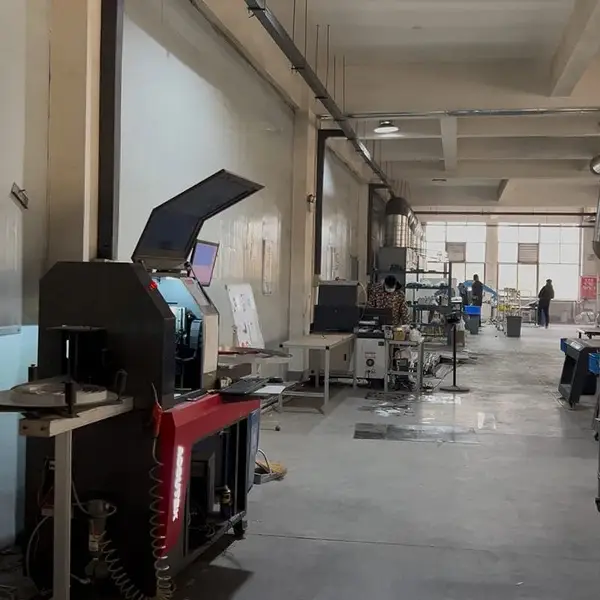
Real photo from our production floor — every sign we ship is made here.
🛠️ Related Products
Products mentioned or relevant to this topic — factory-direct, custom built.
Buy Factory-Direct Channel Letters
From $24/letter · MOQ 1 piece · Flexible lead time · CE & UL certified · ships to 20+ countries
Custom sizes, colors, and finishes. Get a factory price in 24 hours.
Get a Free Quote Copy EmailWhatsApp +86 13865703472 · business@aochuangsign.cn