I got a call last Tuesday from a contractor in Tampa. He’s screaming that the 48-inch cast bronze letters we shipped look “dull as dishwater” compared to the sample. I asked him one question: “Did you clean the mold release off?” Dead silence. There’s your first lesson. Cast metal letters come out of the sand or investment mold coated in refractory gunk that’ll kill any patina. Fabricated metal letters just need a wipe with acetone. I’ve made both for two decades, and the choice isn’t about which one’s “better.” It’s about which mistake you’d rather fix at 10 p.m. on a Saturday.
Cast metal letters are born in a mold. Molten aluminum or bronze gets poured, cooled, and knocked out. The final letter is solid, dense, and heavy. You can feel the heft. A 12-inch cast aluminum letter weighs about 2.3 pounds. The same letter fabricated from 0.063-inch aluminum sheet? Maybe 6 ounces. Fabricated letters are built from flat stock. We laser-cut the face, trim a return, weld or bond it, and grind everything flush. The process is additive. The result is hollow, sharp-edged, and precise to ±0.1mm—our fiber laser doesn’t care if you want a swooping script font or a rigid sans-serif.
Here’s what nobody tells you: fabricators love fabricated letters because they can turn a drawing into a physical letter in 48 hours with no tooling. Cast letters require a pattern, a mold, and at least three days of foundry work before you see the first piece. If you need six bronze letters with a 55Ra micro-inch surface finish by next Friday, you’re getting fabricated. I don’t care what the salesman says.
The ugly truth is most sign companies treat all metal letters like they’re the same hunk of shiny. They are not. Fabricated letters are overwhelmingly made from stainless steel or aluminum. Stainless 304 gives you 10+ years outdoors—18% chromium, 8% nickel, won’t rust unless you install it in a saltwater wading pool. Aluminum weighs a third of steel and is naturally rust-proof, though after 8-12 years in direct sun the anodized finish starts to chalk. I’ve shipped fabricated stainless steel letters worldwide. Not one has come back because the metal failed—only because some electrician drilled a weep hole straight through an LED module.
Cast letters open up different materials. You can pour brass (warm, classic, turns green if you don’t lacquer it), bronze (forever material, costs like a used car), and aluminum that’s actually thick enough to survive a delivery truck bumper. Cast metal letters have a grainy, organic surface that feels substantial, like a bank building in 1927. Fabricated letters are slick, modern, and angular. One isn’t better than the other. But if your client wants a “timeless, heritage” look and you give them welded mirror-polished 304, they’ll think you’ve never been inside a courthouse.
Look, I’ve seen this go wrong: a chain restaurant ordered fabricated 316 stainless for a coastal location because it resists pitting. Smart. But the spec called for 2mm thickness and they mounted the letters with 1-inch standoffs against a stucco wall. First tropical storm, the wind caught the returns like a sail, ripped five letters clean off. Cast 316 letters would have been too heavy for that to happen, but the architect cheaped out because “they both say stainless.” Weight is a feature, not a bug.
Here’s the factory-floor math: a 15-inch fabricated stainless steel letter from our floor costs $25-40, no mold needed. A cast bronze letter the same size—you’re looking at $55-80 just to cover pattern amortization and foundry labor. But for 200 letters? That mold cost gets swallowed fast. At volume, cast letters can be 15-20% cheaper per piece because you’re not paying a welder to tack 400 returns. I’ve watched big hospitality projects save $12,000 by switching from fabricated aluminum to cast aluminum for the bulk of their lobby signage. The lead time went from 10 days to 15. They survived.
Don’t forget finishing. Fabricated letters need grinding, polishing, or powder coating on every visible edge. We hit them with five grits of abrasive before buffing. Cast letters come out of the mold with a surface that’s ready for a quick media blast and patina. One less labor step. That said, if you want a brass letter with a mirror finish, fabricated is the way. Polishing a cast brass surface to a #8 mirror takes forever—the porosity from the sand cast fights you. Fabricated brass starts flat, so we can buff it to a chrome-like shine in 20 minutes.
Fabricated metal letters mount with studs we weld onto the back. Those studs snap sometimes—rookie welders go too hot and embrittle the joint. Cast letters usually have bosses or threaded inserts cast right into the back, much stronger. I’ve driven a forklift tine into a cast aluminum letter (don’t ask) and it dented but stayed on the crate. Do that to a hollow fabricated letter and it’s a crumpled soda can. If your sign is going to be within arm’s reach of the public—think lobby walls, storefronts below 10 feet—weight and durability argue for cast. If it’s above the awning and only pigeons will touch it, fabricated is lighter and easier to hoist.
One more thing: environmental sensitivity. Casting pours molten metal, which emits fumes. You can’t cast brass without ventilation that costs more than the letters. Fabrication uses cold processes. We cut with a laser and weld with TIG—no foundry mess. So if your project has LEED requirements or a corporate sustainability checklist they actually read, fabrication might be your only option. Nobody tells you that until the RFQ gets rejected.
Choose fabricated metal letters when you need speed, a modern crisp look, or a thin-profile letter that hugs the wall. We ship fabricated stainless letters in about 5-15 days, and the finish is exactly the same from letter to letter. If you’re matching a corporate PMS color on the face, we can powder coat a fabricated aluminum letter like a car part. Cast letters have a slight texture difference between pieces—that’s part of the charm, but a branding manager will lose her mind.
Go with cast metal when the letter needs to feel like it belongs on a monument. When weight and solidity communicate the brand’s promise. A law firm with cast bronze letters isn’t just advertising; they’re saying “we’ve been here for 100 years and we’ll be here tomorrow.” That 2.3-pound heft I mentioned matters. Also, if your letters are going to be within 3 miles of saltwater, cast 316 stainless or bronze laughs at the spray. Fabricated 316 works, but the welds are always the weak point. I’ve repaired enough pitted returns on fabricated letters to say that with certainty.
And here’s the hardened truth I tell every young designer: if the font has serifs thinner than 3mm, do not order fabricated metal letters. The laser will cut them, but the welder will melt them. The grinder will snag them. You’ll get a call on install day and it won’t be pleasant. Cast letters can hold a fine serif because the metal flows into the detail. Your calligraphy font is safe—so long as you’re not married to LED illumination, which is a whole different nightmare.
Can I light up cast metal letters?
You can, but you’re fighting physics. Cast letters are solid. To make them glow, you have to mill out the back and insert LEDs, or build the letter as a hollow shell with a cast front face. Either way, you’ve doubled the cost and created a thermal trap. A back-lit halo effect is easier with fabricated letters because we can set the face forward

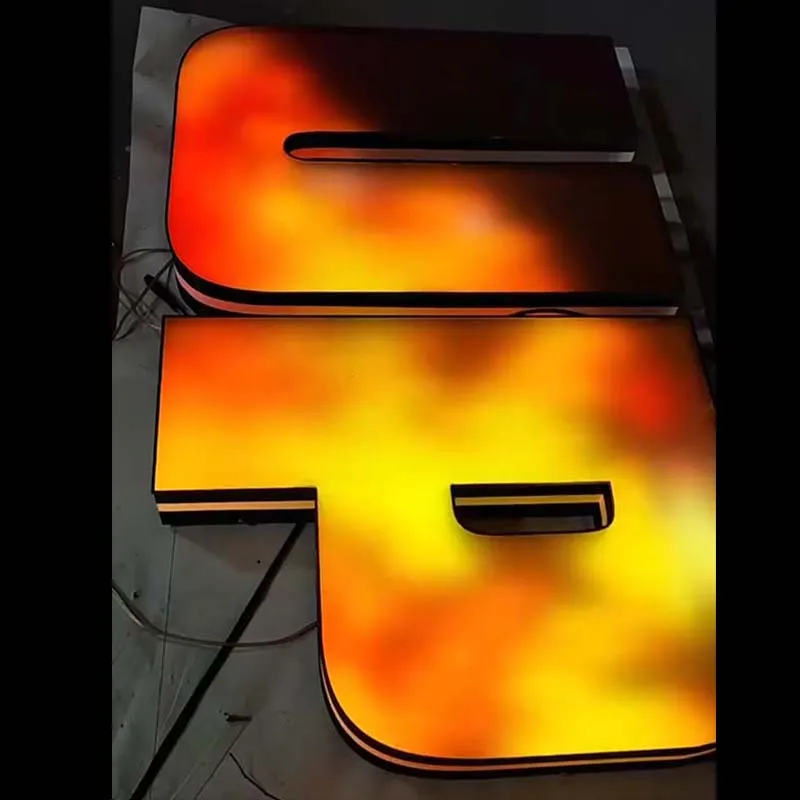
Real photo from our production floor — every sign we ship is made here.
Products mentioned or relevant to this topic — factory-direct, custom built.
Factory-direct since 2010. Free quote within 24 hours — no obligation.
Get a Free Quote → Copy EmailMOQ: 1 piece · Flexible lead time · 2-year warranty · Worldwide shipping
See pricing, specs, and get a free quote for the sign type you need. Built in our factory, shipped worldwide.