One involves molten metal poured into a mold. The other starts with a flat sheet of steel, aluminum, or brass and a skilled guy on a brake press. That’s it. The difference between cast and fabricated metal letters isn’t subtle—it’s the entire manufacturing philosophy. Cast letters are born from fire and sand. Fabricated letters are bent, welded, and polished into shape. I’ve been on this factory floor for 16 years, and here’s the thing: we don’t cast a single letter here at Aochuang. We fabricate sheet metal into stainless steel letters, aluminum, and brass all day. But I’ve installed enough cast bronze and aluminum signs to know exactly where each method shines and where it costs you money for no reason.
Here’s what nobody tells you: cast metal letters have a minimum thickness. Usually 1/4" (6mm) at the thin point, often much thicker on the face. You can’t get that delicate 1mm edge without breaking the mold, literally. Fabricated metal letters? We work with 304 stainless down to 1.0mm and aluminum as thin as 0.040". That thin edge gives a razor-crisp shadow on a wall that cast metal can’t touch. And if you want hollow backs for LED halo lighting, cast letters are a nightmare. They’re solid hunks of metal. You’d have to core them out, which costs more than the letter itself. Fabricated letters are hollow by default. They’re born ready for lighting.
I’ve seen too many spec sheets call for “cast bronze” when what they needed was fabricated 304 stainless with a brass-like PVD coating. The ugly truth is: cast metal limits your alloy choices because not everything pours well. Bronze and aluminum are the cast favorites. Steel? Rarely cast for signs—too much shrinkage, too much finishing work. With fabrication, you get the full menu. 304 stainless for 10+ years outdoors. 316 stainless for coastal salt spray, which costs 20-30% more but won’t pit after a single hurricane season. Aluminum that weighs a third of steel and naturally won’t rust. And brass for that luxury hotel look, which we bend and polish right here.
Look, I’ve handled cast aluminum letters that felt like a boat anchor and had porosity pinholes you could spot from the sidewalk. Our aluminum letters are formed from sheet, so the surface is consistent, no bubbles, no pits. Cast bronze can develop a patina beautifully, but if you want a mirror finish without pores soaking up polish, fabricated brass letters from flat stock give you a flawless reflective surface. The numbers don’t lie: 304 stainless density 7.93g/cm³, same whether cast or sheet, but the cast letter is often 5-10 times thicker to hold its shape, so a medium-sized letter can weigh 80 pounds. Fabricated stainless letter with a 1.5mm face and a 0.8mm return? Maybe 8 pounds. Shipping costs drop. Installation anchors shrink. Your wall stays intact.
Cast metal letters are inherently expensive for short runs. The mold alone for a custom font, logo, or unusual shape will set you back $300-800 per mold, and that’s before you pour an ounce of metal. Then each letter needs grinding, sanding, and hand-chasing to clean up the casting marks. We quote fabricated stainless steel letters at $15-40 per letter factory-direct, non-lit. That’s laser-cut from sheet, TIG-welded returns, and polished, no mold fee. A similar-sized sand-cast aluminum letter? Any foundry will charge you $60-120 per letter, plus the mold, plus a longer lead time. And if you want lighted? Forget it with cast.
Here’s what nobody tells you: many sign shops mark up fabricated letters as if they were cast because clients don’t know the difference. I’ve watched $35 factory-fabricated letters get sold for $600 installed, and the customer thinks they got “premium cast metal.” They didn’t. They got a hollow sheet-metal letter that’s still fantastic, but the price was inflated by a sales rep who whispered “hand-cast” like a magic spell. Our factory-direct pricing saves 50-65% on the product itself. A 20-inch front-lit channel letter with a 304 stainless face costs you around $80 from us. That same letter at US retail, installed, can hit $700. The mold fee for a cast equivalent? Doesn’t exist because you can’t cast a lit channel letter. Not practically.
I’ve seen this go wrong: a restaurant chain in Florida ordered cast aluminum letters for their patio wall. Looked gorgeous. Two years later, a dishwasher backed a cart into the letter “O” and it snapped clean off at the thinnest point. Cast metal is brittle. Drop it, hit it with a ladder, and you get cracks, not dents. Fabricated 304 stainless will bend like a tough bumper. It might warp under severe impact, but it won’t shatter. For storefronts with pedestrian traffic or clumsy maintenance crews, that’s a huge advantage.
Corrosion is another story. A properly cast bronze with a good patina laughs at rain. A cast aluminum with a powder coat can last decades. But a bad batch of cast aluminum with hidden impurities will develop white fluffy corrosion in 18 months. You can’t see that coming. Fabricated aluminum from certified 5052 or 6061 sheet is consistent. We anodize or powder coat it, and you’re getting 8-12 years outdoors, minimum. 316 stainless fabricated letters, 15+ years even in sea spray. With cast, you’re at the mercy of the foundry’s alloy mix and quality control. I trust the mill certification on my sheet stock. I can’t say the same for every mom-and-pop foundry’s backyard crucible.
Cast letters can deliver 3D depth you just can’t get from bending sheet metal. If you want a raised-relief lion crest with nostrils and flowing mane, cast is the only way. Deep undercuts? Cast. Sculptural dimensional signs that look like carved stone? Cast all day. But for corporate sans-serif fonts, thin script, or anything under 6 inches tall, fabricated letters are sharper. Our laser cuts within ±0.1mm. A sand-cast mold will struggle with a delicate 1/8" serif stroke. It’ll fill poorly and look blobby. The ugly truth is: many “high-end” cast letter jobs I’ve seen up close have wavy edges and flat spots where the grinder chased the parting line too deep. They’re heavy, expensive, and still need 10 feet of distance to look perfect.
Look, if your project is a historical restoration where the original 1920s letters were sand-cast bronze in a specific art-deco font with texture, go cast. I’ll tell you that outright. We don’t do it, and I won’t pretend we can. Find a specialty foundry, budget $200-300 per letter, and wait 8-12 weeks. But 90% of the commercial signage I quote—storefronts, corporate lobbies, medical buildings, restaurant facades—are better served with fabricated metal letters that can be lit, can be mounted with hidden studs, and can be produced in about 5-15 days from our 3,000m² facility with 50 skilled workers. We ship worldwide. We have CE, RoHS, ISO 9001. The speed and logistics just work.
I’ve been asked to quote cast stainless letters. That’s a red flag. Stainless steel is a beast to cast because it shrinks almost 3% as it cools, requiring monstrously complex gating and risk of cracking, and the finishing eats hours of labor. We won’t do it. It’s a losing game. Anyone offering “budget cast stainless steel letters” is likely lying and sending you fabricated ones anyway, or they’re selling you pot metal with a stainless moniker. We’ll fabricate stainless every day and beat any cast quote on price, weight, and turnaround. That’s honest advice, not a sales pitch.
Another scenario: a client wanted small, 2-inch tall script letters in cast aluminum, flush mounted with no visible fasteners. The letters were so thin that the stud bosses on the back of the cast would have cracked during installation. We recommended high-density foam letters with a metallic face, or fabricated aluminum with a 3mm face and a chemically bonded stud boss. They fought us, ordered cast from someone else, and three letters broke while being mounted. The sales rep then blamed the installer. I’ve seen that movie too many times. Small cast letters are fragile garbage unless they’re practically medallion-thick. Don’t do it.
Cast letters often come with protruding pins cast into the back. If those pins are misaligned, the template is off, and you’re drilling extra holes in a $50,000 stone wall. Fabricated letters use welded or bonded studs that are positioned with CAD precision relative to the laser-cut face. Our 10-step process includes a physical mounting template with every order. Cast letters rarely include a proper template—just a sketch and a prayer. I’ve watched installers spend an extra half-day per door entrance fixing cast letter alignment. That labor cost wipes out any supposed premium value.
Weight is the other killer. A cast bronze letter 20 inches tall can easily weigh 40 pounds. You need stainless steel anchors, epoxy, and possibly reinforcement behind the wall surface. Our fabricated stainless letter of the same size weighs under 10 pounds. It mounts with standard anchors and structural silicone. The mounting holes are smaller, the liability lower. For high-rise exterior signage where wind load calculations matter, fabricated letters win on physics alone.
You can’t backlight a solid cast letter. End of story. You can only pin-cast translucent acrylic into a cast metal frame, which is an engineering mess. Fabricated letters are hollow vessels waiting for LEDs. Our back-lit halo letters project light onto the wall, using a transparent acrylic back with a metal face. Our front-lit channel letters have an acrylic face and lit interior. Our dual-lit channel letters do both. All built from fabricated metal returns, not cast metal. The LED modules we use—Samsung and Osram—deliver L70 ≥50,000 hours, which translates to 5+ years of real lifespan. 8-12 hours aging test before they leave here. None of that applies to cast letters. If illumination is even a remote possibility, you skip cast and go fabricated.
Request the precise spec. “Cast aluminum” means nothing. Ask for the alloy (A356? 319?), the mold type (sand, investment, die?), and the minimum section thickness. Then ask for a photo of a similar finished project, not a polished sample that spent 10 hours in post-processing. For fabricated letters, specify the material grade: 304 or 316 stainless, 5052 aluminum, alloy 260 brass. Thickness: 1.2mm, 1.5mm, 2.0mm. Finish: #4 brushed, #8 mirror, PVD coating, powder coat. And ask for the mounting template. That alone separates professional factories from back-alley welders.
Look, our MOQ is 1 piece. You can test us with a single stainless steel letter for $15-40, non-lit, plus shipping. We stock 304 and 316 in 1.0mm to 3.0mm. We pack it in foam, carton, and a plywood crate. It arrives without dings. If you’re comparing cast vs fabricated, I’d tell you to order one basic fabricated letter from us and one cast sample from a foundry. Place them on your wall under the same light. You’ll see the sharpness difference. You’ll feel the weight. And you’ll realize the fabricated letter cost you a fraction, with a 7-15 day lead time instead of months. That’s the reality check no brochure will give you.
If you need deep sculptural relief, a historic recreation, or a one-off monument sign where weight isn’t an issue, cast metal has a place. Budget $150-400 per letter and 6-12 weeks. It won’t be hollow, it won’t be easily lit, and installers will curse you. For everything else—storefront letters, lobby logos, exterior building signage, illuminated channel letters—fabricated metal is the answer. It’s lighter, sharper, faster, and when done right, just as durable.
Here’s what nobody tells you: the phrase “cast metal” sells. It sounds premium. Marketers love it. But fabricated 316 stainless with a mirror finish looks richer and will still be there after a category 3 hurricane. We weld TIG seams that disappear under a microscope. Our factory runs a 100% QC inspection, an 8-12hr aging test for lit signs, and then ships with full export packaging. That’s actual quality, not a romanticized manufacturing method. You want results on a wall, not a story about molten metal.
The ugly truth is: I’ve buried too many cast letters in scrap metal bins because a specifier chose “authentic” over “appropriate.” Buy the right process for the job. And if that process is fabricated metal letters, you know where we are. Lu’an, Anhui, China, with 3,000 square meters of badass fabrication equipment and 50 workers who don’t miss. Contact us, give me the project details, and I’ll give you a quote that doesn’t hide behind mold fees and foundry fairy tales.
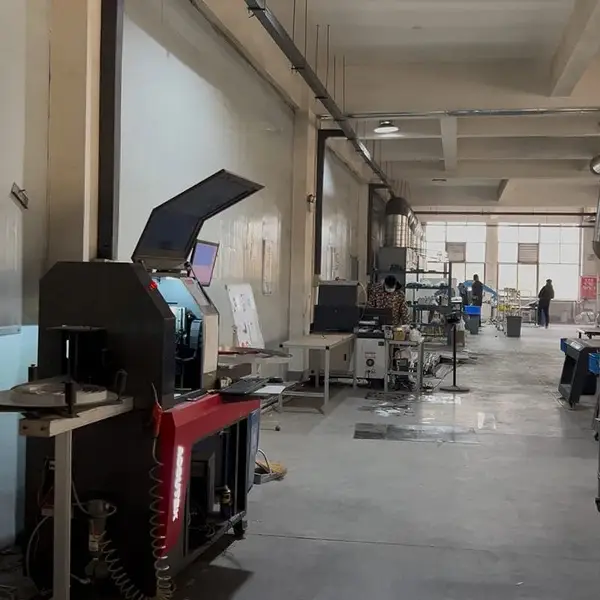
Real photo from our production floor — every sign we ship is made here.
Products mentioned or relevant to this topic — factory-direct, custom built.
Factory-direct since 2010. Free quote within 24 hours — no obligation.
Get a Free Quote → Copy EmailMOQ: 1 piece · Flexible lead time · 2-year warranty · Worldwide shipping
See pricing, specs, and get a free quote for the sign type you need. Built in our factory, shipped worldwide.