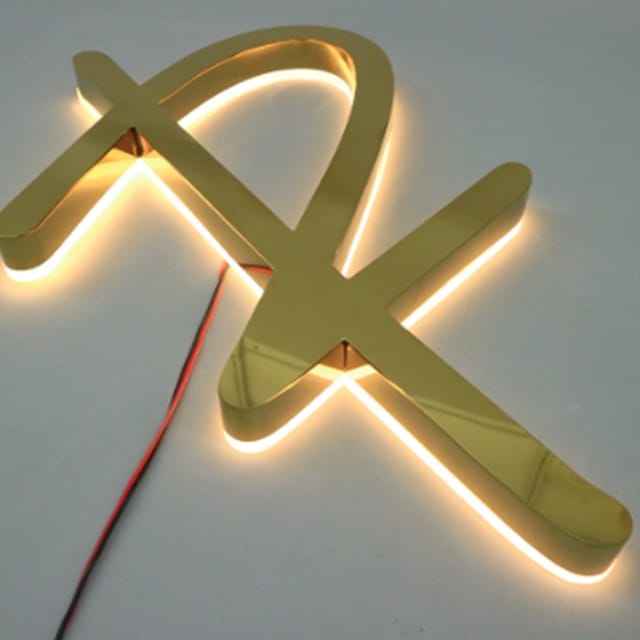
You want a price per letter? Fine. But if anyone quotes you a flat rate without asking about size, depth, mounting, and local permits, hang up.
Look, the first thing you need to understand is that a channel letter quote is never just materials. You're buying a stack of labor, LED systems, finish work, compliance paperwork, and shipping risk. If I sell you a 24-inch front-lit letter for $60 from my factory, that price covers laser cutting, bending, welding, grinding, polishing, CNC acrylic face, LED assembly, silicone sealing, an 8-to-12-hour aging test, 100% QC inspection, and export packaging in foam, carton, and plywood crate. That same letter, if a domestic sign shop installs it? You're looking at $200 to $700 per letter. The gap is labor and overhead, not magic.
Here's what nobody tells you: the quote you get from a US fabricator usually includes design, permitting, installation, and a project manager's salary. A factory quote includes none of that.
I've watched sign shops pay $800 for a front-lit letter from a domestic fabricator. Same 304 stainless, same Samsung LEDs. We ship that letter for $120. But the shop still has to install it, pull the electrical permit, and stand behind the warranty locally. That local service isn't worthless. But you'd be a fool to think the product itself costs $800.
So a real cost breakdown looks like this: material 30–40%, fabrication labor 25–35%, LED system 10–20%, finish and paint 5–10%, and then a pile of costs that don't show up on the quote until later — permits, UL inspection, freight, tariffs, and installation.
Every legitimate channel letter quote has three buckets. Bucket one is production cost: the actual aluminum coil, acrylic sheet, stainless returns, LED modules, power supplies, and the labor to cut, bend, weld, and seal them. Bucket two is logistics: packing, freight, duties, and the 30% Section 301 tariff if you're importing from China to the US. Bucket three is local: permits, UL field inspection, installation hardware, and the lift or crane rental that your customer never thinks about.
The ugly truth is that most buyers only compare bucket one and ignore the other two. Then they scream when the $80 letter becomes a $400 installed unit. I don't blame them, but the math doesn't change.
Factory-direct pricing per letter gives you an anchor. Front-lit channel letters run $20–80 per letter from a factory like ours. Back-lit halo letters run $35–120. Stainless steel non-lit letters run $15–40. Those are real product prices from our floor in Lu'an, Anhui. If you're ordering front-lit channel letters for a storefront, that $20–80 range covers most standard sizes and finishes, with LEDs, power supply, and a 2-year warranty on the LEDs and 1-year on the power supply.
But that price doesn't include freight. Express shipping for small orders runs $30–100 and takes 7–15 days. Air freight is $4–12 per kilogram and takes 10–20 days. Sea freight for LCL is $80–200 per cubic meter and takes 50–70 days. A full container runs $1,200–3,000. Add the 30% US tariff and you're not looking at a $60 letter anymore. You're looking at $85 before it hits your dock.
That's the cost structure nobody puts in the brochure.
Size is the first driver. A 12-inch letter uses roughly a quarter of the material and LED count of a 24-inch letter. But that relationship isn't linear. A 36-inch letter needs a structural brace inside the return so the face doesn't sag. That adds labor and material. A 48-inch letter? You're now cutting multiple acrylic panels, adding internal supports, and possibly splitting the letter for shipping. The price jumps in steps, not a smooth curve.
Depth matters more than most buyers think. A standard 3-inch deep channel letter is easy to fabricate and easy to install. Drop to 2 inches and you're fighting to fit an LED module and power supply without shadowing. Go to 5 inches or deeper and you're using more aluminum for the returns, more acrylic, and more labor to bend and weld. Deep letters also catch more wind load, which means heavier mounting hardware and possibly an engineer's stamp.
Stroke width is the third factor. A thin stroke letter — say 1.5 inches on a script font — limits your LED placement and forces you to use smaller modules. That's fine, but small modules cost more per lumen. A wide block letter lets you use standard SMD 2835 modules at 100–150 lumens per watt with generous spacing. The wide letter actually costs less per inch of letter height because the LED density is lower relative to the face area.
Here's what nobody tells you: the cheapest letter to build is a 18-to-24-inch, 3-inch-deep, medium-stroke sans serif letter. That's the sweet spot for material yield, LED spacing, and shipping dimensions. If your design uses a thin script or an oversized logo, don't expect the per-letter price to scale neatly. It won't.
Also, if the face is over 2.5 meters, use 5mm acrylic minimum. A 3mm panel on a 3-meter letter will bow in the sun. I've seen it happen in Phoenix. The face looked like a potato chip after one summer. That's a rookie mistake: specifying 2mm or 3mm acrylic on a large face to save $15. The replacement costs $400.
LED is the default for a reason. SMD 2835 modules put out 100–150 lumens per watt and have an L70 rating of at least 50,000 hours. Quality modules from Samsung, Osram, or Blueview will run 5+ years real-world. Cheap modules from a no-name supplier? 12–18 months before they start flickering and you're on a lift replacing them. Quickest way to spot bad LED modules: look at the solder joints. Dull gray? Won't last 18 months. Shiny silver? Proper lead-free solder. I've opened up cheap letters where the solder looked like oatmeal. Rookie mistake, expensive consequences.
SMD 5050 modules are RGB capable. SMD 5730 modules push 40–60 lumens per chip and are the highest brightness. If you need acrylic LED letters that have to punch through a bright storefront window, 5730 is worth the upcharge. For most channel letters, 2835 is fine.
Color temperature matters. 3000–3500K warm white is hospitality. 4000–5000K neutral is corporate and retail. 6000–6500K cool white is industrial and highway. The wrong color temp makes a law firm look like a gas station. I've seen it.
Neon flex is retro and cheap to run, $30–200 per sign for the neon itself, but it's not a channel letter. That's a different product. If a client wants real glass neon, they're going to pay for gas, glass bending, and a high-voltage transformer. And then they'll pay again when someone breaks a tube. I don't miss glass neon.
Non-lit metal letters are the cheapest option, $15–40 per letter from a factory. 304/316 stainless steel letters with a brushed or mirror finish will last 10+ years outdoors. No LED, no power supply, no wiring. Solid metal. If the sign doesn't need to be seen at night, non-lit is the smart play. If it does need to be seen at night, buy the LED letter and stop trying to light a non-lit letter with a spotlight. That looks cheap and washes out in rain.
The face is usually acrylic. Acrylic has 90–92% light transmittance. UV-resistant acrylic from Mitsubishi or Degussa will last 5–8 years before yellowing. Domestic acrylic? 1–2 years. Let that sink in. A 2mm face transmits 90% light output. A 3mm face transmits 92%. Your customer won't notice the 2% difference, but they will notice the 40% cost bump if you spec 3mm when 2mm is fine. For a standard 24-inch letter, 2mm acrylic is perfectly good. For a 36-inch or larger, go 3mm. For anything over 2.5 meters, 5mm minimum.
The returns are the sides of the letter. Aluminum is the workhorse: weighs one-third of steel, naturally rust-proof, 8–12 year outdoor life. Common thickness is 1.0–1.6mm. Stainless steel returns are heavier and cost more, but if the letter is going on a coastal building, you want 316 stainless for the returns and the face trim. 316 contains 2–3% molybdenum and costs 20–30% more than 304. For a strip mall in Ohio, 304 is fine. For Miami Beach, pay for 316 or you're replacing letters in 3 years.
The back of a channel letter is either solid aluminum, open with a clear polycarbonate backing for halo lighting, or perforated for a special effect. A back-lit halo letter runs $35–120 from a factory, double or triple a front-lit letter. Why? The factory machines the back panel, positions the LEDs differently, and offsets the mounting hardware from the wall to create the halo. That's a premium look, but the price premium is real.
Here's the brutal honesty: most customers don't know the difference between brushed #4, mirror #8, PVD, or powder coated finishes. They just want it to look expensive. Brushed #4 is the most forgiving because it hides scratches. Mirror #8 shows every fingerprint and bird dropping. PVD color is gorgeous but if it scratches, you can't touch it up. Powder coated is the best for any RAL color match. I've had clients demand mirror finish because it looks like a jewelry store, then call back three months later complaining about water spots. You can't win.
Finish costs are usually included in the per-letter price: paint, powder coat, brushed, mirror, PVD. But if you're doing a custom RAL color on baked paint, add 5–10% because the shop has to clean the powder line and run a small batch. Gold or chrome electroplating is a different animal. That's a per-square-inch upcharge and it needs to be clear-coated for outdoor use or it'll oxidize in a year.
Mounting is where quotes fall apart. A flush mount with silicone and screws is cheap. A stud mount with a raceway is more expensive but easier to service. A pad mount with an acrylic backer is the cheapest for new construction but looks dated. And if you're mounting halo letters, you need standoff hardware that keeps the letter 1–2 inches off the wall. That hardware is not free. Neither is the crane rental to install a 20-foot sign on a second-story facade. I've seen quotes where the mounting hardware cost more than the letters themselves. That's not price gouging. That's physics.
Compliance is the silent line item. UL 48 certification costs $4,000–15,000 and takes 4–9 months with quarterly audits. ETL is a UL alternative and runs 10–30% cheaper. CE marking costs 20,000–50,000 RMB and takes 2–8 weeks if the factory actually did it. Most factories will say they have CE. Ask to see the certificate with today's date. Watch them sweat. Here's the ugly truth: a CE mark on a cheap power supply from a no-name factory means nothing. We do CE and RoHS and ISO 9001 because we export to Europe and the Middle East. I can show you the certs. If a factory can't produce a dated CE certificate, you're buying a sticker.
IP ratings are another trap. IP65 sounds impressive. That rating means dust-tight and protected against water jets from any direction. That doesn't mean your sign survives a Florida hurricane. IP66 is powerful jets, IP68 is submersible. For outdoor channel letters, IP65 is the minimum. But even IP65 won't save you if the installer leaves a gap in the silicone seal. That's a workmanship issue, not a rating issue. I've seen more failures from bad installation than bad components. The factory can't fix a sloppy local installer.
NEC Article 600 covers electric signs in the US. You need to mount ADA tactile signs 48–60 inches high, non-glare, with Grade 2 Braille. If you're doing a wayfinding system for a hospital or university, the compliance cost isn't optional and it's not small. Factor it in before you quote the client.
A US sign shop pays $200–700 per letter to have front-lit channel letters installed. A wholesaler pays $80–150 per letter from a factory like ours, then marks it up 30–50% to the sign shop. The sign shop marks it up again for the end client. A contractor who buys factory-direct saves 50–65% on product costs. That's the simple math.
But going factory-direct means you own the logistics, the quality control, the permitting, and the warranty. If a letter shows up with a cracked face, you're the one filing the freight claim. If the LED dies in 6 months, you're the one swapping it out and eating the labor. That's not for everyone. I tell small shops: buy from a US wholesaler if you can't handle the risk. I tell larger sign companies and contractors: buy factory-direct from a factory that has a real QC process and a 2-year LED warranty. The margin is worth it.
I've seen this go wrong: a one-man shop ordered 40 letters factory-direct to save $8,000. The crate arrived with three letters dented because LCL sea freight handles your crate 6–8 times between our dock and theirs. Every touch is a chance for damage. That's not in the brochure. The shop didn't have the tools or the time to fix the letters, and the end client was on site waiting. He ended up paying a local fabricator $600 to repair the damage. He saved nothing.
Here's what nobody tells you: if you're doing one restaurant sign, factory-direct probably isn't worth the headache. If you're doing ten retail locations or a strip mall rebrand, it absolutely is. The savings on ten storefronts can pay for a used box truck. I've seen it happen.
Forget the bottom line for a second. Ask each supplier for an itemized breakdown. If they won't give it to you, walk away. A real quote shows material type and thickness, LED brand and model, power supply brand, finish, mounting method, IP rating, and compliance certs. A fake quote shows a lump sum and a handshake.
When you compare, check these things. Acrylic: is it UV-resistant imported or domestic? Domestic will yellow in 1–2 years. LED: is it Samsung, Osram, or Blueview, or is it "equivalent"? Equivalent means cheap. Stainless: is it 304 or 316? If the job is coastal, 316 or you'll be back in three years. Power supply: is it Mean Well or a generic? Mean Well costs more but lasts. Warranty: 2 years on LED and 1 year on power supply is the minimum from a factory. Less than that and they know their components are junk.
Also ask about the aging test. We run every sign through an 8–12 hour burn-in before it leaves the factory. That catches dead modules before you're on a ladder. If a factory doesn't do a burn-in test, you're the one doing it on site. And your customer is watching.
The ugly truth is that most buyers don't know what questions to ask. They see $60 per letter and think it's a bargain, then pay $300 per letter for rework. A channel letter is a 10-step process: design confirmation, laser cutting within ±0.1mm, bending and TIG welding, grinding and polishing, CNC acrylic face, LED assembly, neutral silicone sealing, an 8–12 hour aging test, 100% QC inspection, and export packaging. Skip any step and the price drops. But so does the lifespan.
So here's the annoyed FAQ section, because I've answered these questions too many times.
Why is there a 30% tariff on my letters? Because the US government decided to put a Section 301 tariff on Chinese-made signs. That's 30% of the declared value, not the retail price. Pay it or source from a US fabricator and pay three times more for the same product. Your call.
Can I get a lower MOQ? We already have an MOQ of 1 piece. One. Uno. If a factory says their MOQ is 50 pieces, they're not a factory, they're a trading company adding margin. Unless you need 500 letters for a national rebrand, don't overcomplicate it.
What's the difference between IP65 and IP68? IP65 is dust-tight and can handle water jets from any direction. IP68 means you can submerge it. You don't need IP68 for a storefront sign in Denver. You need IP65 and a good silicone seal. Stop paying for IP68 unless the sign is going in a fountain.
Can I install the letters myself? If you know how to pull an electrical permit, bond the power supply, and mount a 60-pound letter on a brick wall without hitting a gas line, sure. If not, hire a licensed sign installer. The factory can't help you with local code, and your insurance won't cover a DIY sign that falls on a car. That's not a warranty issue, that's a liability issue. I've seen it go wrong.
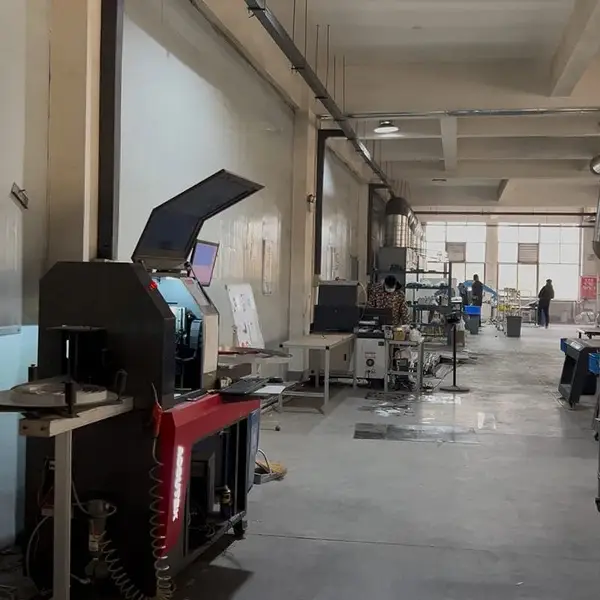
Real photo from our production floor — every sign we ship is made here.
Products mentioned or relevant to this topic — factory-direct, custom built.
From $24/letter · MOQ 1 piece · Flexible lead time · CE & UL certified · ships to 20+ countries
Custom sizes, colors, and finishes. Get a factory price in 24 hours.
Get a Free Quote Copy EmailWhatsApp +86 13865703472 · business@aochuangsign.cn