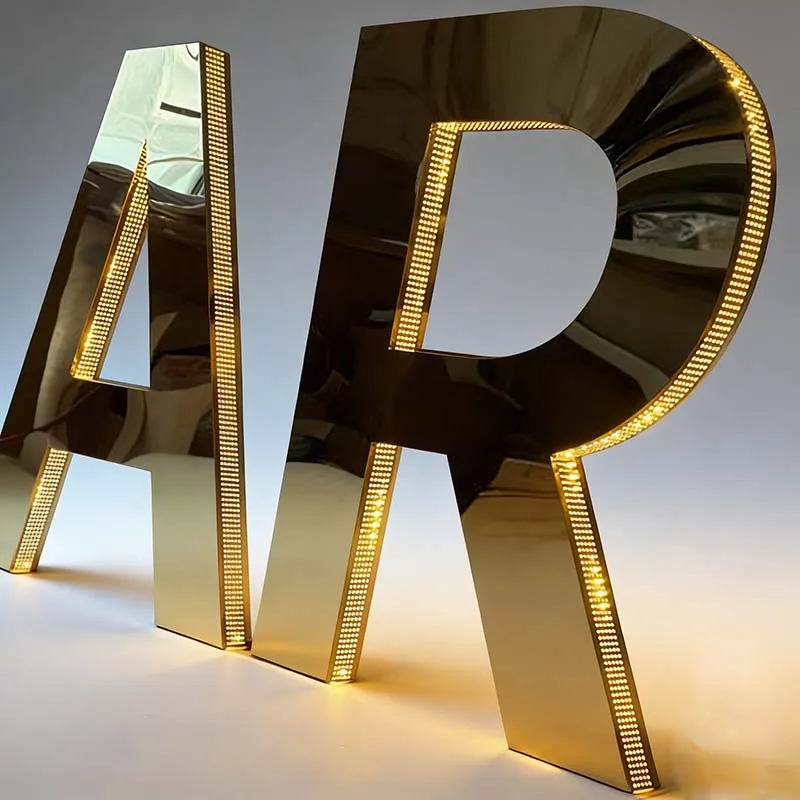
Eleven at night and I'm still answering emails from a contractor who can't tell 304 from 316 stainless. Fine. I'm at Aochuang Sign in Lu'an, Anhui. I've been on this factory floor since 2010. Let's talk signage suppliers like grown-ups.
You need a supplier, not a middleman. Here's what matters.
Look, most supplier websites show you 200 product photos and tell you nothing about the shop behind them. Backwards. Start with what the factory physically builds every day.
We run a 3,000-square-meter plant with 50+ skilled workers. That's not a garage operation. But it's also not a 50,000-square-meter mega-plant that'll ignore your 20-letter order because you're small. We'll ship one piece if you need one piece. That's the MOQ. I still get calls from buyers who've been told $10,000 minimums by domestic shops. Ridiculous.
For channel letters, you want a supplier with dedicated stations for laser cutting, bending, welding, and LED assembly. Our laser cuts to ±0.1mm. If a factory can't tell you their tolerance, they don't know it. Ask. Then ask again.
Then match the sign type to the line. We build front-lit channel letters every day — those are the workhorse storefront signs. If you're doing an architectural job, back-lit halo letters need a different backplate and standoff assembly. And if you need exterior metal, you'd better be looking at 304/316 stainless steel letters, not painted aluminum for a coastal install.
Nobody tells you this: acrylic isn't just acrylic. Imported Mitsubishi or Degussa UV-resistant acrylic holds 5-8 years before yellowing. Domestic sheet? One to two years if you're lucky. We quote both. Most suppliers don't. That's the difference between a sign that looks new for a decade and one that looks like a cigarette stain by year three.
Light transmittance runs 90–92% for good cast acrylic. Face thickness matters too. A 2mm face transmits about 90% of the light; a 3mm face transmits about 92%. Your client won't notice that 2% difference, but a 3mm face costs a lot more. Don't upsell yourself into a smaller margin for nothing. If a face spans over 2.5 meters, that's when you need 5mm or thicker. Otherwise it'll sag under its own weight.
For metal, 304 stainless is 18% chromium and 8% nickel. Density is 7.93g/cm³. It'll hold up 10+ years outdoors in normal conditions. If you're within spitting distance of salt water, spec 316. It has 2-3% molybdenum and runs 20-30% more. I've watched shops in Miami buy 304 because it was cheaper. They're back in three years replacing letters.
Aluminum weighs a third of steel and won't rust. It'll give you 8-12 years outside. But for an industrial area with airborne chemicals, don't cheap out on the finish.
Most buyers scroll to the price and skip the material spec. Then they call me angry when their sign fails. Read the data sheet. Then read it again.
LEDs: SMD 2835 at 100-150 lm/W is the industry standard. SMD 5050 is RGB-capable. SMD 5730 is the highest brightness per chip. Quality modules from Samsung, Osram, or Blueview last 5+ years real. Cheap modules? 12-18 months. You'll see the solder joints go dull gray before they die. Shiny silver joints mean proper lead-free solder. That's the quickest field check you can do.
I've seen this go wrong: a customer got a great price on channel letters, then the inspector asked for UL listing. The supplier said "we have CE." Not the same thing. Not even close. CE lets manufacturers self-declare for many products in Europe. UL 48 is a listed standard that costs $4,000 to $15,000 and takes 4 to 9 months with quarterly audits.
We hold CE, RoHS, and ISO 9001. Those are fine for most international markets. But if you're installing in the US and your AHJ demands UL, ask for the actual certificate number and the current file. A CE mark runs you 20,000 to 50,000 RMB. Most factories will say they have it. Ask to see the certificate with today's date. Watch them sweat.
For outdoor signs, IP65 is the minimum. It means dust-tight and protected against water jets from any direction. It does not mean your sign survives a Florida hurricane. That's IP66 for powerful jets or IP68 for submersible. Know your code — NEC Article 600 covers electric signs in the US.
Don't let a supplier hand you a one-page "certificate" and call it done. Request the full test report. If they won't send it, they don't have it. Period.
The unit price on a quote is almost never the number you actually pay. I've watched sign shops pay $800 for a front-lit letter from a domestic fabricator. Same 304 stainless, same Samsung LEDs. We ship that letter for $120. The difference is invisible until you add freight, tariff, and your time.
Factory-direct savings run 50–65% off what a US shop charges installed. On the factory floor, front-lit channel letters cost $20 to $80 per letter. Back-lit halo runs $35 to $120. Light boxes run $80 to $250 per square meter. If you're getting quoted far above that from an overseas supplier, someone's adding margin.
Freight changes the math. Express small parcel runs $30 to $100 and lands in about 5-15 days. Air freight is $4 to $12 per kilogram and takes about 10 days. Sea freight costs least but takes longest: about 65 days, $80 to $200 per cubic meter for LCL, or $1,200 to $3,000 for a full container.
What they don't tell you: LCL sea freight means your crate gets handled 6 to 8 times between our dock and yours. Every touch is a chance for damage. That's not in the brochure. If your letters arrive bent, the cheap unit price doesn't matter.
Then you've got the Section 301 tariff on US imports from China. That's about 30%. Add that before you compare to a domestic supplier. And don't forget crating. We use foam, carton, then a plywood crate. Cheaper suppliers skip the plywood. Guess what shows up crushed.
Truth is, lead times on a supplier's website are usually a fantasy. Ours is 7 to 15 days from design approval to export packaging. That's real, because we run a 10-step process: design confirmation, laser cutting, bending and TIG welding, grinding, CNC acrylic face, LED assembly, silicone sealing, an 8-to-12-hour aging test, 100% QC inspection, then crating. You can't compress that without cutting corners.
But volume changes things. A one-piece sample might ship in 7 days. A 200-letter job with 50 halos and a double-sided lightbox could push 15 days, not because we're slow but because every LED module has to burn in for 8-12 hours before we seal the face. Factories that skip the aging test hit faster lead times. Six months later, you're on a ladder replacing modules. Your call.
Peak season? Add a buffer. Chinese New Year shuts down production for a couple weeks. If your storefront opening is March 1st, don't call me January 20th and expect a miracle. Plan your order for early December. You'll thank me.
For logistics, express air is fast but brutal on big signs. Air freight is the sweet spot for medium jobs that can't wait a month. Sea freight is best for large projects, but book about 65 days out and assume the crate will get thrown around.
Listen, if you're buying from three suppliers and only comparing price, you're not vetting anything. Build a scorecard. Here's mine.
Give points for documented process. If a factory can't walk you through the 10 steps, subtract 10 points. If they show you tolerance data (laser cutting at ±0.1mm), add 10. Check their certifications: CE, RoHS, ISO 9001. But verify the cert number, don't just accept a logo on a PDF.
Ask about their LED sources. Samsung, Osram, Blueview — those earn points. No-name modules from "our partner factory" lose points. Ask about solder joints. I'm serious. Ask for a close-up photo of the LED board. Dull gray joints mean they'll fail in 12 to 18 months. Shiny silver means lead-free soldering that'll last.
Check packaging. Foam, carton, plywood crate. If they say "we'll wrap it well," subtract 20 points. That's how you get scratched acrylic and dented returns.
Warranty matters. We back LEDs for 2 years and power supplies for 1. If a supplier offers a 5-year warranty on cheap modules, they're lying to you. No one covering cheap modules for five years is still in business. I've seen it go wrong more times than I can count.
Finally, order samples. Not photos. Samples. A sample letter costs $30 to $100 shipped express. You'll learn more in five minutes than fifty emails. If the sample shows visible glue squeeze-out or rough welds, walk away.
Do I really need UL for every US sign? No. But if your AHJ requires it, you need it. CE is not a substitute. UL 48 certification costs $4,000 to $15,000 and takes 4-9 months. If a supplier says "CE is fine for the US," hang up.
What's a realistic lead time for a 100-letter channel letter order? about 5-15 days production, assuming no design changes and materials in stock. Then add shipping: about 5-15 days by express, 10-20 by air, or 50-70 by sea. If someone quotes 3 days for 100 letters, they're not building your letters. They're drop-shipping someone else's.
Why is 316 stainless worth the extra 20-30%? Because it has 2-3% molybdenum and is marine grade. If you're within a mile of salt water, 304 will pit and rust. You'll replace letters in 3 years. That's not a warranty issue. That's a spec issue.
Can I trust a supplier's "IP65" rating without seeing a test report? No. IP65 means dust-tight and water jets from any direction. It does NOT mean hurricane-proof. Ask for the test report. If they won't send it, assume it's IP54 or just a sticker.

Real photo from our production floor — every sign we ship is made here.
Products mentioned or relevant to this topic — factory-direct, custom built.
From $24/letter · MOQ 1 piece · Flexible lead time · CE & UL certified · ships to 20+ countries
Custom sizes, colors, and finishes. Get a factory price in 24 hours.
Get a Free Quote Copy EmailWhatsApp +86 13865703472 · business@aochuangsign.cn