Why Your Sign Shop Bill Makes Me Laugh
I've watched sign shops pay $800 for a single front-lit
channel letter from a domestic fabricator. Same 304 stainless, same Samsung LEDs. We ship that letter for $120. That's not a typo.
Here's what nobody tells you: the standard US retail installed price for a front-lit letter runs $200–700 per letter. Multiply that by 10 letters and you're looking at $2,000 to $7,000 for a basic storefront sign. Factory-direct on the same spec? 50–65% less. For a typical strip mall job, that means $800–1,200 for the product, plus shipping. You do the math.
The ugly truth is that most "wholesale" sign suppliers in the States are buying from factories like mine anyway. They mark it up, add a brokerage fee, and call it a quote. When you come direct to a shop like Aochuang — 3,000m² floor in Lu'an, Anhui, 50+ guys who've been doing this since 2010 — you cut out the middleman. We export worldwide. MOQ is one piece. Lead time 7–15 days. No one tells you that.
Breaking Down the Real Cost of a Sign
Let's talk dollars on materials because the markup on materials is where most sign shops make their real margins.
For
front-lit channel letters, our factory prices per letter: $20–80 for front-lit, $35–120 for back-lit halo, $15–40 for stainless steel non-lit, $40–120 for 3D fabricated ones.
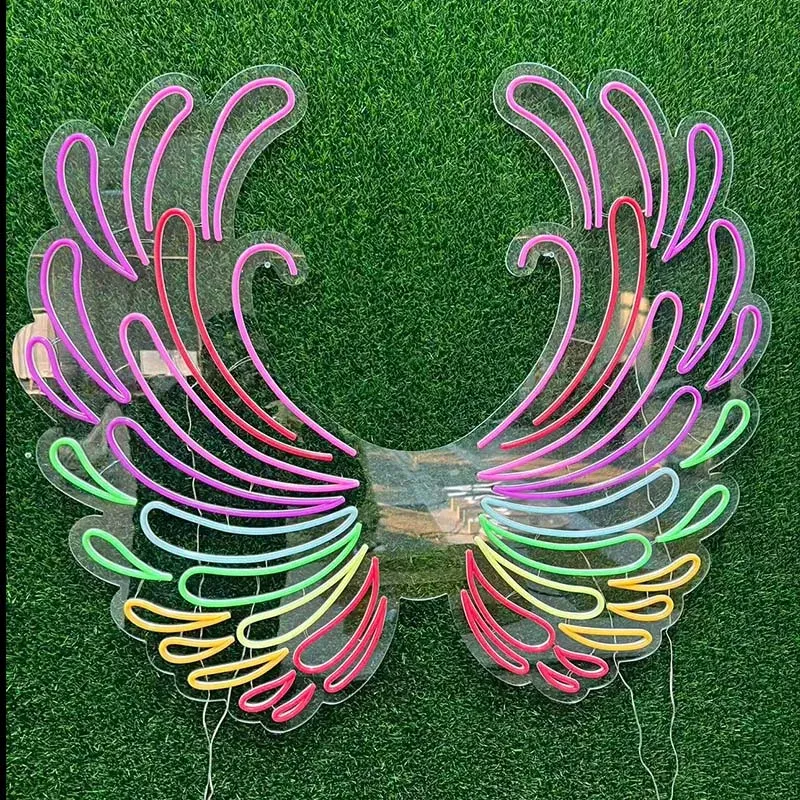
Light boxes run $80–250 per square meter. Neon flex signs $30–200 per sign. These are real numbers from our price sheets.
I've seen this go wrong: a customer once insisted on 3mm acrylic because "2mm looks cheap." The truth? A 3mm acrylic face cuts 92% light transmittance. A 2mm face cuts 90%. Your customer won't notice the 2% difference, but they'll notice the 40% cost bump. Pick the right thickness for the application. Under 2.5m tall? 2mm is fine. Over that? Step up to 5mm.
Here's another hard fact: the LED modules matter more than the housing. Quality modules — Samsung/Osram or proven Chinese brands like Lan Jing — last 5+ years real. Cheap LEDs from Alibaba? 12–18 months. Quickest way to spot bad modules: look at the solder joints. Dull gray = won't last. Shiny silver = proper lead-free solder. I learned that pulling dead modules off a 2019 strip mall sign in Phoenix. Don't be that guy.
You Can't Rush Production — And You Shouldn't Try
Our production process runs ten steps. Design confirmation takes one day. Laser cutting (±0.1mm accuracy) one to two days. Bending and TIG welding another one or two. Grinding, polishing, acrylic face CNC, LED assembly, sealing with neutral silicone — each step gets its own day. Then an 8–12 hour aging test on every single sign. Plus a 100% QC inspection. Total: 7–15 days.
Look, I've had clients ask if we can do it in three days. My answer: sure, if you want lights that die in a year and seams that leak after six months. We don't ship junk. That's why we offer 2 years on LEDs and 1 year on power supply. Cheap Chinese factories will match that warranty on paper but won't honor it. We've been at this since 2010, exporting worldwide. We can't afford bad references.
The aging test catches the early failures. We run all LEDs at full brightness for 8–12 hours. If one module flickers, we pull it. If the silicone seal shows a bubble, we redo it. That doesn't happen in a three-day rush job.
Shipping and Tariffs — The Hidden Fee Nobody Prepares For
Here's what nobody tells you about factory-direct: the shipping can eat your savings if you're not smart.
Express shipping (DHL/FedEx) runs 7-10 days, $30–100 for small orders. Air freight about 10 days, $4–12 per kg. Sea freight about 65 days — $80–200 per cubic meter LCL, or $1,200–3,000 for a full container. For most commercial building signage, LCL is the sweet spot. But here's the kicker: LCL sea freight means your crate gets handled 6–8 times between our dock and yours. Every touch is a chance for damage. That's not in the brochure.
Packaging matters. We use foam, then a carton, then a plywood crate. It adds weight but it saves your sign. I've seen letters arrive dented because the buyer cheaped out on packaging. Don't.
Now the painful part: US Section 301 tariffs add roughly 30% on Chinese-made signs. That's real. But even after that tariff, factory-direct still beats domestic pricing by 30–40%. Do the math on a $3,000 order: domestic fabricator wants $8,000. Factory-direct is $1,200 plus $300 shipping plus $360 tariff = $1,860. Still saving $6,140. That's not a game-changer — that's just math.
Material Choices — Don't Let the Salesman Bullshit You
The ugly truth is that 90% of commercial building signs don't need marine-grade materials. But if you're coastal, you better pay up.
304 stainless steel letters last 10+ years outdoors. Density 7.93g/cm³, 18% chromium, 8% nickel. For a strip mall in Ohio, that's fine. 316 stainless adds 2–3% molybdenum for marine corrosion resistance — 20–30% cost premium. For Miami Beach, pay for 316 or you're replacing letters in 3 years. I've watched that happen. Salt air eats 304 in coastal environments within two years if it's not maintained.
Acrylic: UV-resistant Mitsubishi/Degussa lasts 5–8 years before yellowing. Domestic acrylic? 1–2 years. The price difference is maybe 20% on material cost. Don't cheap out on the face. A $200 sign with bad acrylic looks like $20 in six months.
Back-lit halo letters give that premium architectural look. The reverse channel lighting creates a halo effect. For corporate headquarters or high-end retail, it's the right choice. For a budget dry cleaner on a side street? Front-lit will do the job and save you $40–60 per letter.
Certifications — Which Ones Actually Matter
Here's what nobody tells you: CE marking costs 20,000–50,000 RMB. Most factories will say they have it. Ask to see the certificate with today's date. Watch them sweat.
We've got CE, RoHS, ISO 9001. These are real. Clients in the EU won't touch a sign without CE. US buyers often ask for UL. UL costs $4,000–15,000 per sign type, takes 4–9 months, plus quarterly audits. If you want UL, we can do it, but you're paying for that certification. ETL is a UL alternative that runs 10–30% cheaper. For IP ratings: IP65 (dust-tight, water jets from any direction) is minimum for outdoor. IP66 for coastal or heavy rain. IP68 for submersible — overkill for a building sign unless it's in a flood zone.
NEC Article 600 covers electric signs in the US. And if you're doing ADA-compliant wayfinding, remember: tactile signs must be mounted 48–60 inches above floor, non-glare finish, Grade 2 Braille. That's not negotiable.
FAQ — Stuff I Can't Believe I Still Have to Explain
How much does a commercial building sign cost factory-direct?
For a typical 10-letter front-lit channel letter sign with 304 stainless returns and Samsung LEDs, expect $200–800 for the entire sign, plus shipping and tariff. That's per sign, not per letter. Domestic would be $2,000–7,000 installed. Yes, that big a difference. No, you're not getting ripped off — you're getting wholesale.
What's the minimum order with Aochuang?
One piece. We do one sign, one letter, whatever. MOQ 1. No stupid minimums. I've shipped a single $40
stainless steel letter to a bar in Denver. We don't judge.
How long will my sign last outdoors?
With 304 stainless and quality LEDs (Samsung/Osram), 10+ years easily. LED modules rated L70 at 50,000 hours — that's about 5.7 years of 24/7 operation. Real-world on 8–12 hours a day? 10 years. Acrylic faces with UV-resistant material hold up 5–8 years before yellowing. Replace the face, and the sign is good for another 5–8. Cheap LEDs die in 12–18 months. That's not a guess — that's pulling them out of a sign I built in 2019.
Do I need UL certification for my sign?
Not legally unless your local municipality requires it or the sign is for a chain store that demands it. But if you ever file an insurance claim after a fire, and your sign wasn't UL-listed? Good luck. For most independent shops and small commercial buildings, UL isn't necessary. CE is sufficient for most export markets. If your client insists on UL, add $4,000–15,000 to the project cost and 4–9 months to the timeline. Factor that into your quote.
How do I get a quote?
You send me the specs. Letter height, quantity, material (stainless vs acrylic vs aluminum), LED color temperature (3000K warm, 4000K neutral, 6500K cool), mounting type, and whether you want front-lit, back-lit, or non-illuminated. I email you back within 24 hours with a price that's real. No games.