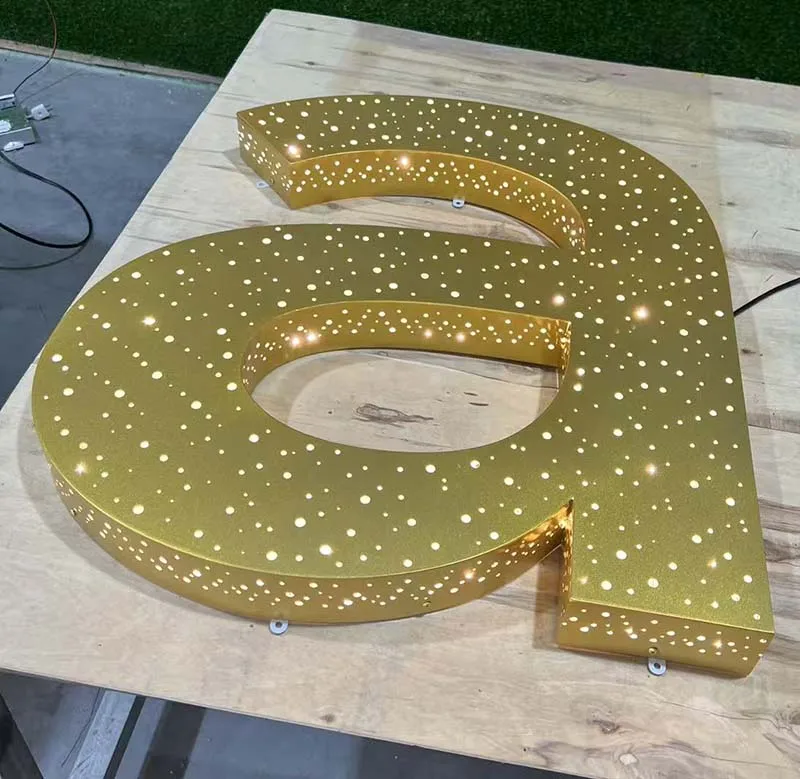
First Impressions Don't Come Cheap — But They Shouldn't Burn Your Budget
I've stood in more lobbies than I've had hot dinners. And let me tell you: the sign above the reception desk is the first thing a client sees. Not the fancy couch, not the marble floor. The letters. You blow that, and you've already lost half the trust before anyone says a word.
The ugly truth is: most corporate reception ghosts are walking around with signs that were sold to them by people who've never touched a TIG welder. Vendors throw around words like "architectural grade" and "precision-crafted" while sticking you with 1.5mm aluminum that'll dent if a cleaning lady sneezes on it.
I've seen this go wrong: a tech company in Austin dropped $12,000 on a set of halo-lit channel letters for their lobby. Six months in, the LEDs flickered, the acrylic yellowed, and the stainless started pitting. They paid a premium for "domestic fabrication" and got the same cheap modules I could have shipped them for $3,000. The difference? My factory tests every letter for 8 to 12 hours before it leaves the floor. Theirs skipped QC because they were behind schedule.
Here's what nobody tells you: the material spec sheet your architect gave you is probably overkill. You don't need 316 stainless for a lobby in Phoenix. That's for Miami Beach seawater. For an interior sign, 304 stainless with a brushed #4 finish will outlast your lease. And domestic acrylic from Mitsubishi or Degussa? It's good for 5–8 years without yellowing. But the cheap stuff — the stuff most sign shops use — starts turning piss-yellow in 18 months.
Material Matters: What Actually Holds Up in a Lobby
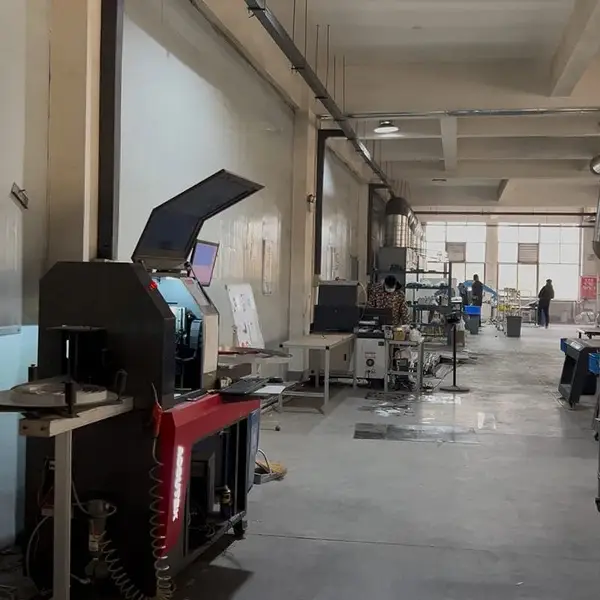
Look, I've got a 3,000m² factory in Lu'an, Anhui. We push 50 skilled guys across 10 steps — laser cutting at ±0.1mm, TIG welding, grinding, polishing, CNC routing the acrylic faces, then LED assembly and sealing with neutral silicone. That sounds like a lot. It's not. It's the bare minimum for a sign that doesn't look like garbage after a year.
**Stainless Steel 304** — 10-plus years outdoors, but inside it's basically forever. 18% chromium, 8% nickel. Density 7.93g/cm³. Common thicknesses: 1.0 to 3.0mm. For lobby letters that are 6 to 12 inches tall, I'd spec 1.5mm. That's rigid enough. Don't let anyone talk you into 1.0mm unless your letters are tiny — it'll warp when the building settles.
**Stainless 316** — Marine grade. Contains 2–3% molybdenum. Costs 20–30% more than 304. If your lobby faces an ocean, or you're in a chemical plant, go 316. Otherwise, you're burning cash.
**Aluminum** — Weighs one-third of steel. 8 to 12 years outdoors, but inside it'll last till the next renovation. Go with 0.063" (1.6mm) minimum. Finishes: anodized or powder coated. Natural rust-proof, but you still need a clearcoat if you want to keep the shine.
**Acrylic** — Here's the dirty secret: 92% light transmittance from the good stuff (Mitsubishi, Degussa). The domestic acrylic? Maybe 85% and it yellows in 1–2 years. A 3mm face cuts 92% output. A 2mm face cuts 90%. Your customer won't notice the 2% difference, but they will notice the 40% cost bump. So unless you need structural rigidity for large letters, go with 2mm.
I've watched sign shops pay $800 for a front-lit letter from a domestic fabricator. Same 304 stainless, same Samsung LEDs. We ship that letter for $120. That's not a discount. That's a fair price.
Lighting: The Difference Between “Professional” and “Cheap”
The quickest way to spot bad LED modules: look at the solder joints. Dull gray means cheap lead-free solder that'll crack in 12 months. Shiny silver means proper processing — like our SMD 2835 chips that push 100–150 lumens per watt. We use Samsung and Osram when the client cares. Otherwise, Lan Jing modules are fine and last 5-plus years.
Color temperature matters. 3000–3500K for hospitality: warm, inviting. 4000–5000K for corporate: clean, bright. 6000–6500K for industrial: cold, harsh, don't use in a lobby unless you want people to feel like they're in a warehouse.
Most lobby signs are back-lit (halo). That means the letters are mounted off the wall, and light spills from behind. Costs more — $35–120 per letter factory price — but it looks expensive. The alternative is front-lit, which is $20–80 per letter and still professional.
Here's what nobody tells you: IP65 is not a guarantee of survival. It means water jets from any direction. It does NOT mean your sign survives a Florida hurricane. For interior lobby signs, you don't even need IP65. You need proper sealing against dust and occasional cleaning spray. Most factory seals are good enough. If your sign is going on an exterior wall of the lobby entrance, spec IP66. That handles powerful jets.
I've seen this go wrong: a company in Seattle put an interior-rated sign in a covered outdoor alcove. Rain splashed in. The LEDs died in three months. They blamed the manufacturer. I blame the spec writer who didn't know the difference between interior and exterior.
The Dirty Secret About “Custom” Sign Pricing
The ugly truth is: the sign industry is full of middlemen who add 200–400% markup and call it "design consultation". A front-lit channel letter from a US fabricator installed can run $200–700 per letter. That's insane. Factory-direct, that same letter is $20–80. Even with shipping and the ~30% Section 301 tariff, you're still saving 50–65%.
But shipping has its own realities. LCL sea freight means your crate gets handled 6 to 8 times between our dock and yours. Every touch is a chance for damage. That's not in the brochure. Air freight is about 10 days at $4–12/kg. Express for small orders is 7-10 days at $30–100 total. For a single lobby sign with maybe 20 letters, express is your best bet.
Lead time? 7–15 days from design confirmation to packed crate. That's real. Most US fabricators quote 4–6 weeks and still miss it.
Certifications? CE costs 20,000–50,000 RMB and takes 2–8 weeks. Most factories say they have it. Ask to see the certificate with today's date. Watch them sweat. UL is $4,000–15,000 and takes 4–9 months with quarterly audits. If your sign needs UL for a US building code, expect to pay for it. ETL is a cheaper alternative — 10–30% less. But for a lobby sign? Unless your local inspector has a hard-on for UL, CE plus a competent factory is fine.
Don't Let Your Architect Design Your Sign
Architects think in renderings, not manufacturing tolerances. I've seen specs call for 5mm acrylic on letters that are 8 inches tall. That's overkill — 5mm is for letters over 2.5 meters. Or they spec 316 stainless when 304 is perfect. Or they demand PVD coating in a color that doesn't exist in a durable finish.
The rookie mistake is thinking that thicker always means better. A 2mm aluminum letter properly fabricated will last longer than a 3mm letter that was cut too fast and left with burrs. Laser cutting at ±0.1mm matters more than metal gauge.
Look, you need a sign that meets ADA requirements if it's a directory or directional sign. That means tactile characters 48–60 inches from the floor, non-glare finish, Grade 2 Braille. But for purely decorative lobby letters (like the company name above reception), ADA doesn't apply. Yet I still see people spending extra on Braille they don't need. Stop that.
Shipping Reality: How to Not Get Screwed
Here's what nobody tells you: that low sea freight rate includes a lot of "surprises." A 20-foot container (FCL) costs $1,200–3,000 and takes about 65 days. That's fine for 50 signs. For a single lobby set, LCL at $80–200 per cubic meter works. But your crate will get stacked, shoved, and possibly dropped.
I've seen this go wrong: a crate of acrylic-faced letters arrived with a forklift hole through the middle. The buyer didn't specify "fragile" handling in the packing instructions. We pack standard: foam + carton + plywood crate. But if you're shipping LCL, ask for double-layer foam and strapping. It costs an extra $20. Worth it.
Customs? Section 301 tariffs add roughly 30% on Chinese-made signs. Factor that into your budget. Your customs broker should know the HTS code for illuminated signs. If they don't, educate them or get a new broker.
FAQs (Because I Keep Getting Asked This)
Q: Why is my factory quote way lower than the local sign shop?
Because the local shop is buying from a factory like mine and adding 200% markup. Or they're making it themselves with older equipment and higher labor costs. I've watched sign shops pay $800 for a front-lit letter that we sell for $120. The work is the same. The only difference is overhead.
Q: Can I skip UL certification to save money?
Depends on your local building code. Many cities don't require UL for interior signs. But if your insurance company demands it, or if your architect spec'd it, you're stuck. ETL is a solid alternative — 10–30% cheaper than UL and accepted by most jurisdictions. Don't let a salesman convince you that "only UL is safe." That's BS.
Q: How long will my sign really last?
With quality 304 stainless, Samsung LEDs (L70 ≥50,000 hours), and proper silicone sealing? Let's say 10 years indoors, easily. The LED driver is the weak point — we warranty 2 years on LEDs, 1 year on power supply. If you want 5-year assurance, ask for Mean Well drivers. They cost more but they don't die. Cheap drivers fail in 18 months. I've seen it.
Q: My sign arrived with a scratch. What do I do?
Take photos immediately with a reference object (