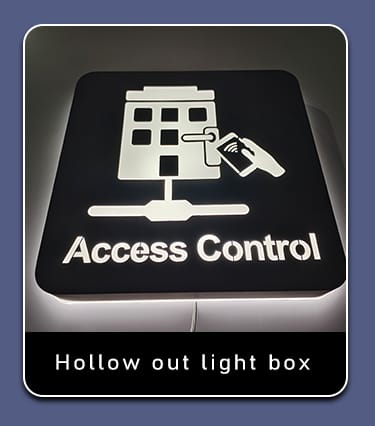
Look, I’ve spent 16 years bending metal and lighting acrylic. If you’re after a real custom building signage exterior quote and not sure what information to provide, this is the blunt version of what I tell every contractor who calls.
If your email says “exterior building sign, need price,” I can’t help you. And honestly? Neither can most factories that take your money.
Here’s what nobody tells you: “exterior building sign” means forty different things. A 300mm front-lit channel letter on a brick wall isn’t the same as a 2.4-meter stainless logo on a glass curtain wall. The price swing is $100 to $25,000.
So send me the stuff that actually matters. Not a long story. Just specs.
I don’t need your business plan. I need this:
Send that and I’ll turn a real quote in 24 to 48 hours. Most of the time it’s 24.
And no, I don’t need a deposit to quote. That’s a red flag if a supplier asks for one.
The ugly truth is most people obsess over acrylic color and forget the wall. That’s backwards.
Brick or concrete lets us stud-mount letters with standoffs. That’s simple. Glass or ACM panels need raceways or non-penetrating mounts. That adds cost and engineering.
I’ve seen this go wrong: a contractor in Toronto ordered 14 front-lit letters sized for a brick facade. Turned out the building was EIFS over foam. We had to redesign with a raceway and extra structural support. The change order was $2,400.
Your wall dictates hardware, not just aesthetics. Tell me what’s behind the sign.
Letter height decides material thickness. A 300mm letter can use 2mm acrylic and 1.0mm stainless no problem. A 2.5-meter sign face needs 5mm+ acrylic. Go thinner and it flexes, cracks, or bows in wind.
Here’s what nobody tells you: if you spec “around 24 inches tall” and the actual wall only fits 18 inches, you’re not getting a smaller quote. You’re getting a redesign fee, because the face layout changes and LED density changes.
Measure the wall. Measure twice. Then add 1 inch of breathing room per side for mounting.
For storefront visibility, 300–600mm (12–24 inches) letters work at 10–30 meters. That’s a hard fact from years of install sites.
If you say “metal letters,” I’ll show you three prices. 304 stainless runs $15–40 per non-lit letter. 316 marine grade runs 20–30% more. Aluminum runs $10–25. Brass is higher.
For a strip mall in Ohio, 304 stainless is perfectly fine. It’ll last 10+ years outside. For Miami Beach or a chemical plant, pay for 316.
Acrylic is the same story. Imported UV-resistant acrylic from Mitsubishi or Degussa holds up 5–8 years without yellowing. Domestic acrylic? 1–2 years in direct sun before it starts looking like old headlights. If the sign faces west in Phoenix, don’t cheap out.
We build front-lit channel letters starting at $20 each. Back-lit halo letters run $35–120 depending on LED spec. If you want non-lit metal, stainless steel letters are the workhorse. And aluminum letters make sense when weight is a concern — they’re a third the weight of steel.
But don’t bury material choice. It drives 40–60% of the quote.
I’ve seen this go wrong: a contractor ordered “white LED” for a steakhouse. The factory shipped 6500K cool white. The restaurant looked like a gas station at night. He saved $8 per letter and spent $3,000 re-lamping.
Tell me the color temperature. 3000–3500K warm for hospitality. 4000–5000K neutral for corporate and retail. 6000–6500K cool for industrial or highway signage.
Also ask for the module brand. Quality modules from Samsung, Osram, or Blueview run 5+ years. Cheap no-name modules last 12–18 months, then half the letter is dead and it looks like a meth clinic.
SMD 2835 is the industry standard at 100–150 lumens per watt. If you need RGB, that’s SMD 5050. If you need maximum brightness for a pylon sign, SMD 5730 pushes 40–60 lumens per chip.
L70 rating should be at least 50,000 hours. If a supplier won’t tell you L70, walk away.
For outdoor use, IP65 is the floor. Not a bonus. IP66 if it’s exposed to driving rain or coastal salt spray. IP68 only if the thing is getting submerged or pressure washed daily.
If you want visible acrylic during the day and glowing at night, ask for dual-lit channel letters.
Raceway or stud mount? If the wall is brick or concrete, stud-mount is cleaner and cheaper. If the wall is cluttered, uneven, or made of glass, a raceway hides the wiring and gives one mounting point.
Power access is another thing. Where’s the nearest 120V circuit? How far is the sign from the panel? If it’s 50 meters from power, you need thicker wire or a remote driver. That’s not free.
For US jobs, NEC Article 600 applies. If you need a UL-listed sign, tell me before quoting. UL 48 certification costs $4,000–15,000 and takes 4–9 months with quarterly audits. ETL is an accepted alternative and runs 10–30% cheaper.
We have CE, RoHS, and ISO 9001. Those cover most international orders. If you need UL/ETL, we can quote it, but the lead time changes. Don’t assume every sign has it.
We’re in Lu’an, Anhui, China. That’s not a secret. It means if you need a sign in two weeks, you’re paying air freight or express. Sea freight takes 50–70 days from our dock to most US ports.
Express small packages run $30–100 and take 7–15 days. Air freight costs $4–12 per kilogram and takes 10–20 days. Sea LCL is $80–200 per cubic meter, 50–70 days. Full container runs $1,200–3,000.
US Section 301 tariffs on signs are about 30% right now. That’s on top of product and shipping. Factor it in, or you’ll get a nasty bill before customs releases it.
Still, factory-direct pricing beats US retail by 50–65% on product. A front-lit letter that costs $200–700 installed retail often leaves our floor at $20–80. That’s not a marketing line. That’s the floor price with the same 304 stainless and Samsung LEDs.
MOQ is one piece. Lead time is 7–15 days for production. Warranty is 2 years on LEDs, 1 year on power supplies.
Factory-direct since 2010. Free quote within 24 hours — no obligation.
Get a Free Quote → Copy EmailMOQ: 1 piece · Flexible lead time · 2-year warranty · Worldwide shipping
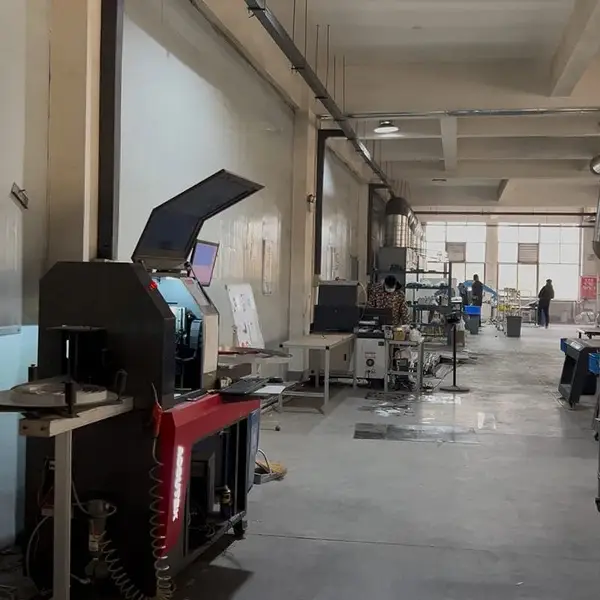
Real photo from our production floor — every sign we ship is made here.
See pricing, specs, and get a free quote for the sign type you need. Built in our factory, shipped worldwide.