I've spent 16 years in this industry. I've watched sign shops pay $800 for a front-lit letter. Same 304 stainless, same Samsung LEDs. We ship that letter for $120. That's not magic — that's just cutting out three layers of middlemen who never touched a sheet of acrylic in their lives.
Here's what nobody tells you about custom sign pricing: the $200 quote and the $900 quote often come from the same factory. The difference is whether you're talking to a trading company or the actual manufacturer. One of them owns the laser cutters. The other owns a laptop and a Google Voice number.
Let's break down what you're actually paying for.
The Real Cost of Materials
The acrylic for a front-lit channel letter runs $8-15 per square foot depending on thickness. Mitsubishi and Degussa acrylics run 90-92% light transmittance and hold their clarity 5-8 years. Domestic Chinese acrylic? You'll see yellowing in 18-24 months. That's the difference between a sign that looks new at your customer's five-year anniversary and one that looks like it was rescued from a burning building.
Stainless steel pricing is straightforward if you know what you're looking at. 304 stainless with 18% chromium and 8% nickel runs 10+ years outdoors. For coastal installations, 316 marine grade adds 2-3% molybdenum and costs 20-30% more. Here's what nobody tells you: most strip mall landlords don't need 316. For a Miami Beach storefront? Pay for it. For a Kansas City auto shop? You're burning money.
Aluminum comes in at roughly one-third the weight of steel with an 8-12 year outdoor life. It's naturally rust-proof, which is why we push it for budget-conscious clients who want durability without the stainless price tag. A set of brushed aluminum letters will run you 20-40% less than their stainless equivalents.
LED Quality: The Make-or-Break Millionaire's Decision
SMD 2835 modules deliver 100-150 lumens per watt and are the industry workhorse. Quality modules from Samsung, Osram, or Blueview run 5+ years in real-world conditions. Cheap generic modules? They're dying in 12-18 months.
I've seen this go wrong a thousand times: a customer gets quoted $3,000 for a sign, then a competitor comes in at $1,800. The sign company installs it, collects the check, and disappears. Eighteen months later the LEDs start flickering. The customer calls and the warranty's "void" because an electrician looked at it wrong. Don't be that customer. Don't be that sign shop.
The Honest Breakdown: What Each Sign Type Actually Costs
Your average front-lit channel letters from a factory — not a middleman — run $20-80 per letter. For a standard storefront, figure on $500-2,000 for the complete sign package. A US sign shop will resell that installed at $200-700 per letter.
Back-lit halo letters are where the profit margin gets interesting. Factory cost runs $35-120 per letter, which sounds steep until you consider what customers pay for that premium architectural look. Most US shops sell halo-lit installations for $400-1,000 per letter. Do that math.
For the high-end stuff — stainless steel letters without illumination — we're at $15-40 per letter from the factory. Non-lit metal letters are the sleeper product. High profit margin, zero electrical liability, and they never have a "bad LED day."
For the budget end, acrylic light boxes run $80-250 per square meter. Blank. That's the whole unit — cabinet, face, LED modules, and wiring. For a 3x6-foot light box, you're looking at roughly $350-450 factory-direct.
The True Cost Breakdown for Custom Signs
Here's what nobody tells you about custom sign pricing — the labor and overhead data that most buyers don't think about. Your factory quote covers more than just materials:
Shipping and Tariffs: The Hidden Price Surprise
Your factory quote means nothing if you don't know the landed cost. Express shipping for small signs runs $30-100 and gets there in about 5-15 days. Air freight runs $4-12 per kilogram, taking about 10 days. Sea freight? $80-200 per cubic meter for LCL (less than container load), and you're waiting about 65 days.
The ugly truth: US Section 301 tariffs add roughly 30% to your product cost. That's a surprise for many first-time importers who quote based on factory FOB pricing alone. I've seen sign shop owners do the full dance — find a cheap supplier, place a rush order, realize they forgot the tariff, and eat a $2,000 loss on a $6,000 order.
"Just ship it with a lower declared value," they say. Yeah, that's customs fraud. Don't do that.
The Production Timeline: What "7-15 Days" Actually Means
Our production cycle runs like a well-oiled machine — design confirmation takes one day, then laser cutting with ±0.1mm precision runs 1-2 days, then bending and TIG welding, then grinding and polishing, then CNC work on the acrylic faces, then LED assembly, then sealing with neutral silicone, then an 8-12 hour aging test on every single sign, then 100% QC inspection, then export packaging. Total: about 5-15 days, depending on the complexity.
Here's what nobody tells you: rush jobs are where factories make their real money. Some Chinese suppliers quote 20 days for production, then deliver in 5 days for double the price and claim it's a "special express service." That's not magic, it's just slack in their schedule.
The Certification Debate: Are You Buying a Paperweight?
IP65 means dust-tight and protected against water jets from any direction. It's the minimum for outdoor signs. IP66 handles powerful jets — coastal, marine, and industrial. IP68 means submersible. For a sign in Monsoon Asia or hurricane country, don't accept less than IP66.
Here's the part nobody likes talking about: UL certification. True UL 48 certification costs $4,000-15,000 and takes 4-9 months, with quarterly factory audits. ETL is accepted as a UL alternative and runs 10-30% cheaper.
CE marking costs 20,000-50,000 RMB and takes 2-8 weeks. Most factories say they have it. Ask to see the certificate with today's date. Not a scan from 2019. An actual current certificate. I've had salespeople from competitor factories show me expired certificates with the validity dates blurred out.
The 18-Month Gap
The single biggest price difference in a sign comes from component quality. Cheap LED modules cost $3-6 per square foot. Quality Samsung or Osram modules cost $8-15. Digital printed vinyl costs $3-5 per square foot. Quality cast vinyl runs $8-12. That's where a $2,500 sign quote becomes $4,500 — and that's where the sign that looks great at month three still looks great at month 24.
"Can You Do It?" — The Honest Answers
We export worldwide from our 3,000m² facility in Lu'an, Anhui. We've been doing this since 2010, run 50+ workers, and hold CE, RoHS, and ISO 9001 certifications. MOQ is one piece — singular. Yes, we'll build you one letter if that's what you need.
What we can't do:
The "Direct" Pricing Table You Actually Need
For the shop owner who needs to quote a job today:
| Product | Factory Price (USD) | Materials & Notes |
|---|---|---|
| Front-lit channel letters | $20-80/letter | Stainless or aluminum, Samsung LED modules |
| Back-lit halo letters | $35-120/letter | Premium architectural, 5+ year LED |
| Stainless non-lit letters | $15-40/letter | 10-year outdoor life, 304 grade |
| 3D fabricated letters | $40-120/letter | Dimensional, custom shapes |
| Aluminum letters | $10-25/letter | Lightweight, rust-proof |
| Acrylic lightboxes | $80-250/m² | Complete unit with LED modules |
| Neon flex signs | $30-200/sign | Runs on low power, custom shapes |
What You Spend When the Check Clears
Factory-direct savings run 50-65% compared to US retail. That's not hyperbole — the US installed market sits at $200-700 per letter for front-lit and $400-1,000 for halo-lit. Our prices cover the product. Your local installer handles the rest.
Wait, that's not the actual calculation. The math for the user is: Cost per letter × number of letters + wiring + installation + local electrical + permits = total installed cost by the local contractor. With the factory price, you're paying $20-80 for the product itself, not $200-700. The difference is your profit margin, or your customer's savings if you're the business owner.
How to Actually Source a Sign (Without Getting Burned)
The Design Technology Shift
We're now using CNC routing more than ever — the 3D fabrication process has gotten cheaper. A rimless channel letter or dual-lit channel letter gives that clean, modern look us sign folks call "expensive." It costs 20-30% more in materials but commands 50-100% more on a quote.
Meanwhile, neon flex signs are cutting into classic neon's market share at $30-200 from the factory. They're LED technology in a flexible tube — no glass to break, no gas to leak, lower power consumption, and they survive shipping much better than real glass neon.
The Final Verdict
To get a quote, you're not going to find a better balance of factory pricing, honest guidance, and real manufacturing capability than talking directly to us at Aochuang Sign. We've shipped worldwide, we'll tell you when you don't need the premium option, and we'll meet the production timeline we promise.
But here's what nobody tells you about this industry: the factory is only as good as the communication. You need a partner who understands American electrical codes, British signage regulations, or Australian weather requirements. You need someone who'll tell you "that design won't work with 2mm acrylic at that size" before you waste $500 on samples.
We do that. We're blunt. We've been doing this since 2010. We'll be here in 2030 with the same phone number and the same commitment to shipping signs that don't fall apart.
The custom business sign cost question isn't just about finding the cheapest quote. It's about finding the quote that arrives on time, gets installed without issues, and doesn't trigger a callback in month 14.
That's the whole game. Most sign shops in the US, UK, and Australia get this right by sourcing directly from folks like us — then they don't look over their shoulder when a warranty call comes in.
If you're ready to spec a sign and want an honest number, get in touch with us. We'll talk about design specifics, material quality, and how to get your sign built and shipped without the middlemen eating your margins..

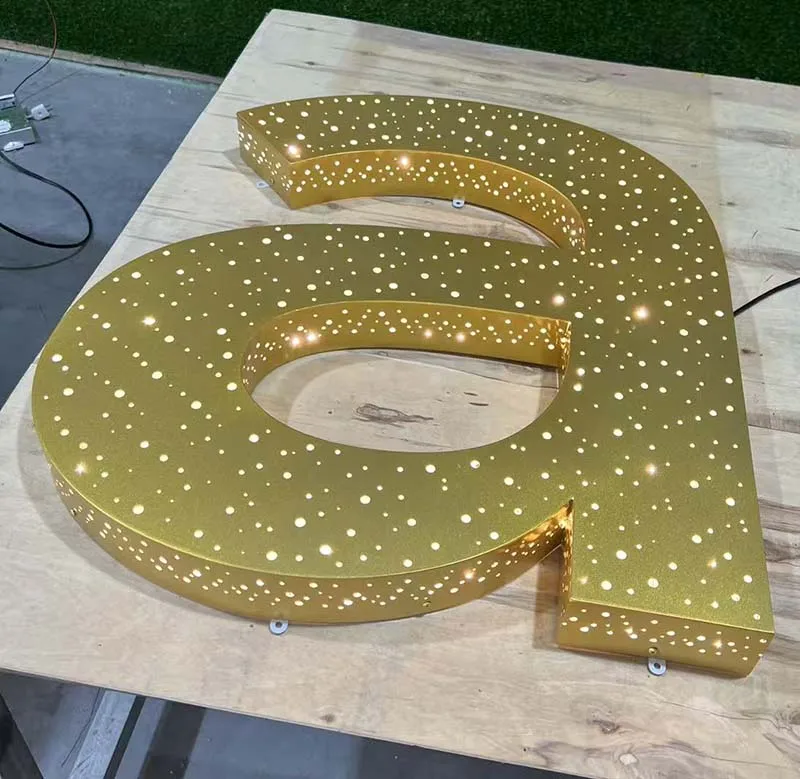
Real photo from our production floor — every sign we ship is made here.
From $24/letter · MOQ 1 piece · Flexible lead time · CE & UL certified · ships to 20+ countries
Custom sizes, colors, and finishes. Get a factory price in 24 hours.
Get a Free Quote Copy EmailWhatsApp +86 13865703472 · business@aochuangsign.cn
See pricing, specs, and get a free quote for the sign type you need. Built in our factory, shipped worldwide.