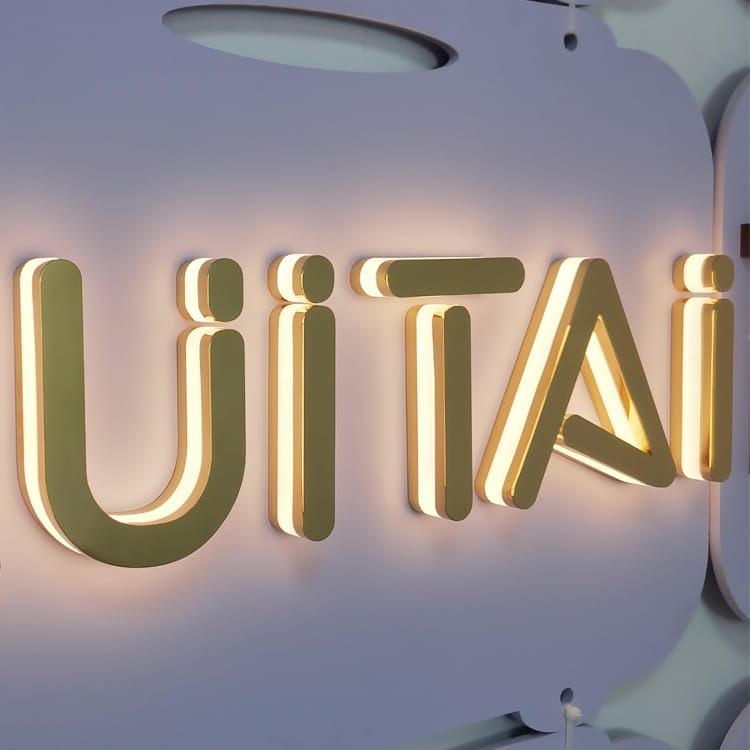
Custom Business Signs That Attract Customers: A Procurement Manager's Design Guide
Choosing the Right Material: Acrylic vs. Stainless Steel vs. Aluminum
Picking the right material for your custom business sign matters. Acrylic, stainless steel, and aluminum each have their own strengths. Acrylic lets through 90-92% of light, so it works well for bright, readable signs. With UV-resistant material it holds up outdoors for 5-8 years, but domestic acrylic can yellow in 1-2 years. Stainless steel has a 10+ year outdoor life and is naturally rust-proof. Brushed #4 and mirror #8 are common finishes. Aluminum weighs about one-third as much as steel, has an 8-12 year outdoor life, and is also naturally rust-proof. Common finishes are anodized, powder coated, and brushed. The choice comes down to budget, the look you want, and how long the sign needs to last.
LED vs. Neon: The Cost-Effective Lighting Solutions for Your Sign
Lighting is a big part of making your sign stand out. LED and neon are both used, but they differ in cost and lifespan. LEDs usually cost less to run over time. A quality LED module from Samsung, Osram, or Blueview can last 5+ years, while cheaper LEDs might only last 12-18 months. Neon has a classic look, but it is more expensive to produce and maintain.
Neon signs can last up to 15 years, but they require more frequent maintenance and cost more to repair. LEDs also use less power, which lowers the electric bill.
Custom Sign Design: Making It Readable and Worth the Money
Design is where a sign either works or does not. A clear sign helps people find the business. For LED color temperature, warm colors like 3000-3500K are common in hospitality, neutral colors like 4000-5000K work well for corporate and retail, and cool colors like 6000-6500K are used for industrial and highway signs. The design should fit the building and the brand. For return on investment, keep the sign readable and visible. If people can read it from a distance at night, it is doing its job.
Understanding Sign Prices: What You Need to Know Before You Buy
Sign prices depend on the type of sign and the materials used. Front-lit
channel letters range from $20 to $80 per letter, while back-lit halo letters run between $35 and $120 per letter. Stainless steel non-lit letters start at $15 and go up to $40, and 3D fabricated letters run from $40 to $120 per letter. Aluminum letters are more affordable, with prices from $10 to $25 per letter. Light boxes run $80 to $250 per square meter. Neon flex signs are priced from $30 to $200 per sign.
Material cost has a direct effect on price. Acrylic with UV-resistant material holds up for 5-8 years and has 90-92% light transmittance. Stainless steel 304 has an outdoor life of over 10 years and is commonly used in finishes like brushed #4 and mirror #8. Aluminum is naturally rust-proof and has an outdoor life of 8-12 years. LED technology also affects price; quality modules from Samsung, Osram, or Blueview last 5+ years.
Do not assume the cheapest option is the best. A cheap LED module might last only 12-18 months, while a quality module can last 5+ years. The same applies to materials. A sign made with lower-quality materials may look fine at first but will not last as long as one made with better materials.
Installation Costs: What to Expect for Your Sign Project
Installation costs vary depending on the complexity of the sign and the location. Factory-direct pricing can save you 50-65% on the product, but installation still adds cost. Installed front-lit channel letters in the US commonly run $200 to $700 per letter, and halo-lit letters run $400 to $1,000 per letter.
Permits and certifications are another factor. UL 48 certification can cost between $4,000 and $15,000 and take 4-9 months, with quarterly audits required. ETL, an alternative to UL, can be 10-30% cheaper. CE certification usually costs a few thousand dollars and takes 2-8 weeks.
Shipping costs also need to be planned. Express shipping takes about 5-15 days and costs $30 to $100 for small packages. Air shipping takes about 10 days and costs $4 to $12 per kilogram. Sea shipping takes about 65 days and costs $80 to $200 per cubic meter for less than container load (LCL) and $1,200 to $3,000 for full container load (FCL).
Finally, expect some project-specific costs like site preparation, electrical work, and modifications needed to meet local codes. These costs vary by project and should be discussed with your
sign manufacturer before finalizing the order.
Certification and Compliance: Ensuring Your Sign Meets Industry Standards
Do not cut corners on certifications. Aochuang Sign holds CE, RoHS, and ISO 9001 certifications. That is not just a logo; it is something we have to earn and maintain. CE certification usually costs a few thousand dollars and takes 2-8 weeks to obtain. UL 48 compliance can take 4-9 months and requires quarterly audits. It costs money, but it is expected for this type of work. These certifications are proof that the sign meets recognized standards.
Then there is the IP rating. An IP65 rating is the minimum for outdoor signs, ensuring dust-tightness and resistance to water jets. IP66 works better for coastal areas, and IP68 is for extreme weather conditions. Aochuang Sign can build to these ratings, but the cost varies, so ask for a quote. ADA compliance also matters. A tactile sign with 48-60" mounting, non-glare finish, and Grade 2 Braille is a legal requirement. Failure to comply can lead to fines and lawsuits.
NEC Article 600 covers US electrical standards for signs. It is about safety. Aochuang Sign builds signs to meet these standards. Compliance costs time and money, but it is required. The sign has to hold up outdoors, pass inspection, and last. Do not cut corners. It is not worth the risk.