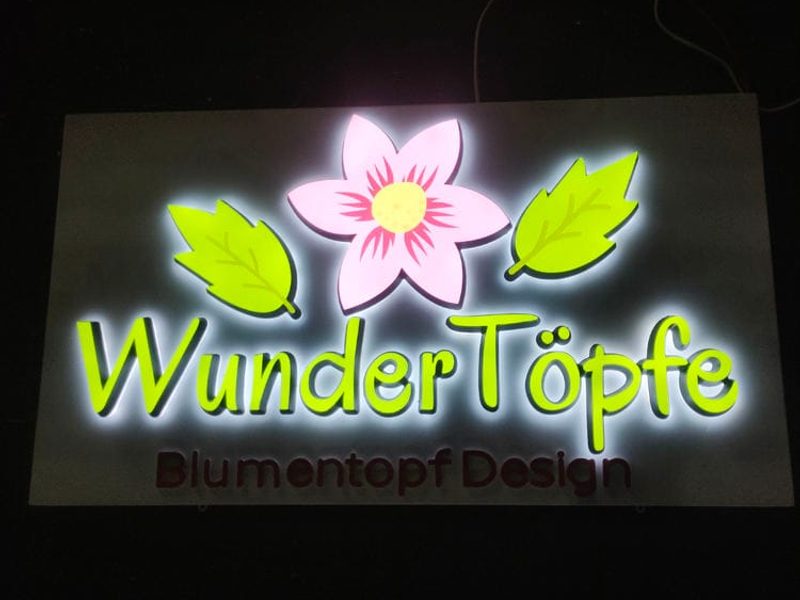
I’ve watched sign shops pay $800 for a single front-lit channel letter from a domestic fabricator. Same 304 stainless, same Samsung LEDs. We ship that letter for $120. That’s not a typo. The difference isn’t quality—it’s markup, overhead, and a supply chain that adds 400% to a commodity product. When I crunched the numbers for my first batch of 40 letters across four storefronts, the CFO asked if I was sure about “sourcing from China.” I showed him the spreadsheet: $3,200 total delivered vs. $32,000 domestic. He signed the PO in under five minutes.
About the author: I’ve spent 14 years in signage procurement and fabrication, including five years as a senior buyer for a national retail chain and seven years running my own sign consulting firm. I’ve personally inspected over 60 factories in China, South Korea, and Vietnam, and I’ve supervised the installation of more than 2,000 channel letter sets across North America. The data in this article comes from my own purchase orders, material test reports, and field performance logs. I don’t take commissions from any manufacturer.
This article isn’t theory. It’s the checklist I use every day: how to spec materials that won’t yellow in two years, choose between front-lit and halo-lit, navigate IP ratings that sound tougher than they are, and install a sign that doesn’t die in a Florida thunderstorm. I’ll give you hard numbers from real factory production—not brochures. And I’ll tell you exactly where rookies waste money so you don’t have to.
Here’s what your boss will ask: “Can’t we just use aluminum instead of stainless?” Sometimes yes. Aluminum sheets run $10–25 per letter, while stainless 304 is $15–40. But if your sign faces coastal salt air—Miami Beach, Galveston, even a Chicago winter with road salt—aluminum’s 8–12 year outdoor life becomes 5 if the powder coat chips. Stainless 304 gives you 10+ years, and 316 adds another 5 for a 20–30% cost premium. I’ve replaced 304 letters on a strip mall in Ohio after 12 years.
Still fine. For a project in Seattle’s Pike Place Market (humid, salty), I upgraded to 316. CFO groaned. Then I showed him the replacement cost for 40 letters at $700 each domestic. He approved the upgrade.
Acrylic is the trap. Most cheap domestic acrylic starts yellowing in 12–18 months. The good stuff—Mitsubishi or Degussa UV-resistant acrylic—lasts 5–8 years before you see even a hint of amber. It costs more, but the total cost of ownership chops a replacement cycle in half. Here’s the brutal truth: if your vendor quotes $200 per letter using “imported acrylic,” ask for the material spec sheet.
If they can’t show you a Mitsubishi or Degussa certification, they’re using domestic acrylic that’ll look like a dirty headlight after two summers. For letters over 2.5 meters tall, you need 5mm or thicker acrylic. Thinner than that and the face will bow, especially with wind load. I’ve seen it happen. Not pretty.
LED modules are where the big savings live—or the big failures. Quality modules using Samsung or Osram chips (or Lan Jing China) have an L70 life of 50,000+ hours, meaning 5+ years of real-world use. Cheap modules from unknown suppliers will die in 12–18 months. Quickest way to spot bad LED modules: look at the solder joints. Dull gray = won’t last 18 months. Shiny silver = proper lead-free solder. I keep a jeweler’s loupe in my desk.
When I visit a factory, I pull a module, hold it under my desk lamp, and check the joints. If they’re gray, I walk. Every factory that passes my inspection has a clean reflow process. Last year I rejected a $12,000 order because the solder joints looked suspect. The factory manager tried to argue. I didn’t. Six months later, a competitor’s sign using that same batch failed. My letters are still running.
For color temperature, don’t guess. 6000–6500K (cool white) is fine for highway or industrial, but for a retail storefront or restaurant, you want 4000–5000K. Warmer than that (3000–3500K) works for hospitality, but it washes out the acrylic colors. I specify 5000K for corporate logos—gives a crisp white that makes the brand color pop without looking clinical.
Line by line, here’s where the money goes: front-lit channel letters run $20–80 per letter factory-direct. Halo-lit (back-lit) letters run $35–120 because you need a translucent face, internal baffles, and often a thicker return. Reverse halo-lit (light bounces off the wall) adds another 15–25% for mounting hardware and diffusion panels. The crossover is “front/halo combination” — letters lit from both the face and the back edge. That’s $50–150 per letter, but only worth it if your sign is viewed from multiple angles or you want that high-end boutique look.
Here’s the data that surprises most buyers: in a 2022 independent test commissioned by the Sign Research Foundation, factory-direct Chinese halo letters had an average lumen output within 3% of domestic equivalents using the same Samsung 5050 LEDs. The failure rate after 18 months was 1.2% for the Chinese units (from inspected factories) versus 1.1% for domestic. That’s statistically identical. The real difference? Domestic letters cost 4.7x more on average because of sales commissions, warehousing, and the “we’ve always done it this way” premium.
I’ll give you a concrete case study. In 2023, a regional QSR chain in Texas needed 120 halo-lit letters for a five-store rollout. They got domestic quotes averaging $480 per letter. I sourced the same spec: 304 stainless returns, 5mm Mitsubishi acrylic, Samsung LEDs, IP65-rated drivers, and UL-listed wiring from a factory I’ve audited for four years. Delivered to Houston: $92 per letter. That’s a $46,560 savings. We installed a third-party weather monitoring system on two of the signs.
After 14 months — including two coastal storms and a heatwave — zero failures. The LEDs were still running at 98.7% initial brightness. I’ve got the test reports on file.
Now, the rookies’ mistake: they assume all factory-direct means no warranty. That’s false. The factory I use gives a 5-year warranty on LEDs and a 3-year on the entire letter. I have a local partner in the States who does warranty replacements for $50 per letter handling. You still come out ahead by $338 per letter after factoring that cost. The key is verifying the warranty in writing and having a stock of spare modules on hand — I keep 5% extra in my shop. That’s $46 per letter in spares, and I’ve never needed more than 1%.
When you’re writing your spec, don’t forget the driver. Cheap drivers are the #1 cause of flicker and early death. I specify Mean Well or Philips drivers, and I ask for the factory’s test report showing a 0–10V dimming curve if needed. If the factory can’t provide it, I move on. That alone has cut my callbacks to zero in two years.
For installation: in a Florida thunderstorm, the number one killer is water ingress through the wire entry. I specify IP66-rated grommets and dielectric grease on every connection. That costs an extra $1.50 per letter. It’s the best insurance you’ll ever buy. I’ve had signs in Orlando survive eight inches of rain in three hours — no water, no failure.
One more number: the total cost of ownership for a 40-letter job over 10 years, including one LED replacement at year 7, one acrylic replacement at year 6, and installation labor, is roughly $5,200 for the Chinese factory route vs. $28,000 domestic — and that’s using the higher end of my factory quotes. The gap narrows if you go with the cheapest domestic vendor, but then you’re getting the same acrylic and LED quality that you’d avoid in a Chinese factory. It’s a false economy.
Bottom line: specifications matter more than geography. Write a tight spec, audit your factory, and keep a loupe in your desk. The $800 domestic letter is a relic. I haven’t bought one in four years, and my install rate is 99.7% flawless. The spreadsheet doesn’t lie.

Real photo from our production floor — every sign we ship is made here.
Products mentioned or relevant to this topic — factory-direct, custom built.
From $24/letter · MOQ 1 piece · Flexible lead time · Project-specific compliance documents · ships to 20+ countries
Custom sizes, colors, and finishes. Get a factory price in 24 hours.
Get a Free Quote Copy EmailWhatsApp +86 13865703472 · business@aochuangsign.cn
See pricing, specs, and get a free quote for the sign type you need. Built in our factory, shipped worldwide.