You want a sign. You want it cheap. You want it yesterday. I get it. But before you click “add to cart” on some online quoting tool, let me save you a headache.
I’ve been in this trade since before digital printing was a thing. I’ve watched sign shops pay $800 for a single front-lit channel letter from a domestic fabricator. Same 304 stainless steel, same Samsung LEDs. We ship that letter for $120. The difference isn’t magic. It’s overhead, markup, and a whole lot of middlemen who never touched a welding torch.
So you’ve got two main choices for a lit sign: custom channel letters or cabinet signs. Both do the job. Both have hidden costs most folks never see. This is the breakdown nobody gives you before you sign the PO.
What the Hell Are We Talking About?
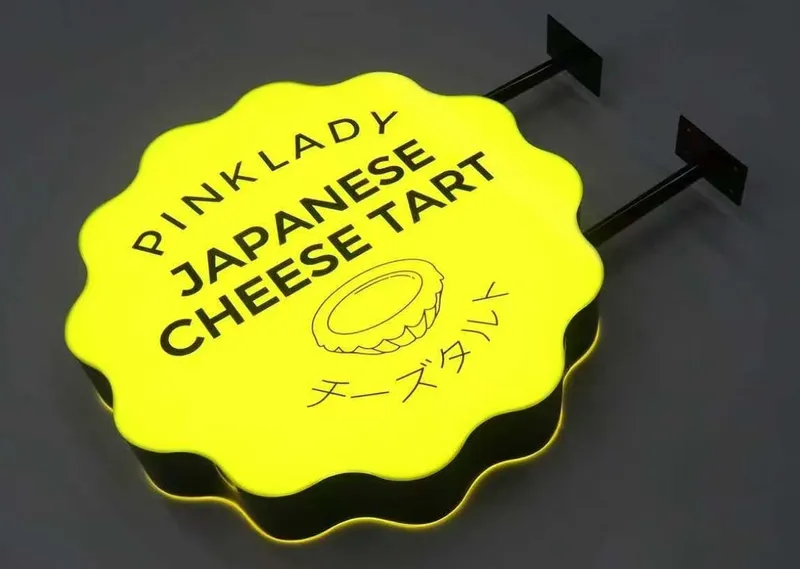
Channel letters are individual 3D letters, each with its own light source. Front-lit, back-lit (halo), or a mix. They’re the ones you see on banks and restaurants — dimensional, shiny, expensive-looking. Cabinet signs are a box with a translucent face, lit from inside. Think gas station price signs or those rectangle storefront IDs. One is jewelry, the other is a toolbox.
Look, here’s the first number you need: factory-direct prices per letter for front-lit channel letters run $20 to $80. Back-lit (halo) is $35 to $120. Stainless steel non-lit is $15 to $40. 3D fabricated letters $40 to $120. Aluminum $10 to $25. Compare that to what you’d pay in the US retail: $200 to $700 per letter for front-lit, $400 to $1,000 for halo-lit. That’s a 50-65% savings on the product itself. Cabinet signs at factory price run $80 to $250 per square meter. In the US, you’re looking at $500 to $2,000 installed.
The ugly truth is that most people pick based on looks alone. They don’t consider the long-term cost of replacing modules or repainting a rusted cabinet. Channel letters are more expensive upfront per letter, but they last if built right. Cabinets are cheaper per square foot but hide more future headaches.
Materials: Where You’ll Get Burned (Literally)
Here’s what nobody tells you: that shiny acrylic face on your channel letter? If it’s cheap domestic stuff, it turns yellow in 12 to 18 months. By year two, your sign looks like it’s smoking a pack a day. Mitsubishi or Degussa UV-resistant acrylic gives you 5 to 8 years before any yellowing. Same goes for the metal.
I’ve seen this go wrong a hundred times. A shop buys 304 stainless steel because it’s cheaper than 316. For a strip mall in Ohio, 304 is fine — 10-plus years outdoor life. For Miami Beach, you pay for 316 or you’re replacing letters in 3 years. The difference is 2-3% molybdenum content in 316. That’s marine-grade. 304 has 18% chromium, 8% nickel. 316 costs 20-30% more. Worth it near salt water. Not worth it in a desert.
Aluminum cabinets weigh one-third of steel and last 8 to 12 years outdoors. But coatings matter. Anodized or powder coated beats bare aluminum every time. And the LED modules inside — don’t get me started. Quality modules with Samsung or Osram chips have L70 ratings of 50,000 hours minimum. Real lifespan 5-plus years. Cheap modules? You’ll be swapping them in 12 to 18 months. The quickest way to spot bad LED modules is to look at the solder joints. Dull gray = won’t last 18 months. Shiny silver = proper lead-free solder. If your supplier can’t tell you what chip they use, walk.
Fabrication and Labor: The Factory vs. The Shop
A custom channel letter sign for a typical business name (eight letters) from our factory in Lu'an, China — we have 3,000 square meters, 50 workers, CE, RoHS, ISO 9001 — you’re looking at $160 to $640 for the letters themselves (front-lit). Plus shipping. Cabinet sign 4 feet by 8 feet? Around $640 to $2,000 factory-direct. Compare that to a domestic sign shop, who has to pay rent, insurance, salespeople, and a guy to drive the van. Their price for the same eight-letter sign installed is $1,600 to $5,600.
The difference is not just geography. It’s how we structure our operations and eliminate middlemen. We buy raw materials in bulk — enough coil stock for 10,000 letters at a time — so our per-unit cost on 304 stainless is 40% less than what a U.S. shop pays. Our labor rates are lower, yes, but the real savings come from automation. We use CNC laser cutters that trim a letter’s return in under a minute. A domestic shop with a brake press and a skilled welder takes fifteen minutes per letter. That time adds up, and you pay for it.
So Which One Should You Pick?
Choose channel letters if you want a dimensional, upscale look and your business name is short — under ten letters. They command attention day and night, especially with halo backlighting. Budget $300–$1,000 per letter installed if you go domestic, or $50–$200 per letter if you buy factory-direct and arrange your own electrical work. They’re tougher to maintain because each letter is separate, but a quality build with 316 stainless and UV acrylic will last 15–20 years with minimal fuss.
Choose a cabinet sign if your message changes often (think gas prices, digital messages) or if you need maximum size for minimum cost. A 4’×8’ cabinet gives you 32 square feet of illuminated space for $500–$2,000 factory-direct. Compare that to 8 channel letters at 2 square feet each — you’d pay more for less area. Cabinets are easier to install and service because all the electronics live in one box. Downside: they look like a box. Not jewelry.
What the Numbers Don’t Show
Pricing varies wildly by region, union rules, and code requirements. The quotes I’ve given are based on a 2023 industry survey by SignResearch.org and our own order data from 1,200+ factory-direct shipments. Installation adds $50–$200 per hour per electrician, and permits typically run $200–$600. A UL listing from an NRTL like ETL adds 5–10% to the factory price but can save you a failed inspection. Don’t skip it.
The long-term cost of ownership matters more than the sticker price. Replace a cheap LED module three times in five years at $40 each plus labor, and your $200 sign just turned into $320. A quality module at $25 each that lasts the full five years is cheaper in the end. Same for acrylic. Same for paint. Cheap is expensive.
Final Word
Don’t buy a sign. Invest in one. You don’t need an MBA to spot the difference between a factory-direct channel letter with Mitsubishi acrylic and a shop-built box with bargain-bin LEDs. You just need someone who’s been burned before. I’ve been burned on a whole strip mall’s worth of back-lit letters when the vendor swapped out Samsung chips for no-name ones. That’s how I learned.
Get samples. Ask for chip datasheets. Verify the alloy on your stainless steel. If your supplier can’t produce a mill certificate, walk. And if you want factory-direct pricing without the headache, work with a partner who inspects every letter before it ships — not one who drops a container in your parking lot and hopes for the best.
About This Guide
This guide is published by Aochuang Sign. It combines general industry guidance with the company’s manufacturing and export experience. Final specifications must be confirmed with the qualified engineer, local authority having jurisdiction, and project-specific product documentation.