I’ve been on a factory floor for 16 years. I’ve cut my hands on stainless burrs, watched acrylic panels warp under cheap LEDs, and argued with purchasing managers who thought a sign was just a sign. It’s not. A sign is the first thing your customer’s customer sees — before your handshake, before your invoice, before your excuse about a late shipment. Buy it wrong, and the whole project stinks.
Most guides feed you buzzwords. I’ll feed you numbers. Real weights, real lifespans, real costs. And I’ll tell you when we’re not the right shop for you, because nothing kills trust faster than a factory that says yes to everything.
Here’s what nobody tells you: the material label on the quote is just the opening sentence of a long, sometimes ugly, story.
Acrylic looks simple. It’s not. If I stamp “acrylic” on the line item and nothing else, I’m hiding something. Domestic acrylic costs us 40% less than Mitsubishi or Degussa. It’ll also start yellowing in 18-24 months under direct sun. UV-resistant stock from Japan or Germany? 5 to 8 years before you see a noticeable shift. For faces over 2.5 meters, you need 5mm thickness minimum. The ugly truth is, I’ve seen shops use 3mm on a 3-meter face to save fifteen bucks. First thunderstorm, the face cracks, water gets in, and your LED modules are fish food.
Stainless steel sounds tough. It is, but there’s a fork in the road. 304 stainless (18% chromium, 8% nickel) lives outside for a decade in most inland cities. 316 stainless adds 2-3% molybdenum — that’s your Miami Beach, your Houston shipping channel, your salty coastal air. 316 costs 20-30% more. For a strip mall in Ohio, 304 is perfectly honest. For an oceanfront restaurant, pay for 316 or I’ll sell you a rust warranty I can’t keep.
Aluminum is the lightweight. Weighs a third of steel, won’t rust, easy to powder coat. Good for 8-12 years outdoors. But dents more easily than stainless. I’ve shipped aluminum letters to theme parks where kids think they’re climbing holds. They hold up fine, but if someone swings a baseball bat, you’ll see the battle scar. Stainless just laughs.
Look, every LED data sheet says L70 ≥50,000 hours. That’s industry cheese. It means that in a lab, at exactly 25°C, the LEDs still hit 70% of their original brightness after 5.7 years of continuous use. It doesn’t mean your sign will look perfect for six years. Heat, voltage spikes, and shitty soldering kill modules faster than lumen depreciation.
We use SMD 2835 chips from Samsung, Osram, or Lan Jing — 100 to 150 lumens per watt. In a real-world channel letter that breathes a little, you’ll get a solid 5+ years of clean, even light. I’ve pulled cheap modules out of competitor signs after 14 months; they flicker like a 70s disco. SMD 5050 is your go-to if you need RGB color mixing. SMD 5730 pumps out 40-60 lumens per chip if you need eye-searing brightness for a highway sign. I’ll spec the right chip if you tell me where the sign lives and at what height.
Color temperature isn’t a preference. It’s a zoning code in some cities. 3000-3500K warm white — restaurants, hotel lobbies. 4000-5000K neutral — corporate offices, retail. 6000-6500K cool — industrial parks, roadside. Get this wrong, and your cozy café looks like an operating room. I’ve seen a sign shop eat a $10k mistake because the factory shipped 6000K when the spec said 4000K. Confirm sample photos before full production, always.
The factory-direct numbers I’m about to give you are per-unit from our floor in Lu’an. Not installed, not shipped, not branded with a middleman’s margin. Retail shops in the US tack on design, permits, bucket trucks, and union labor. That’s fair. But if you’re a contractor or a fast-growing chain, you want the bare metal price first.
Front-lit channel letters: $20-80 each. Simple acrylic face, standard returns, painted trim. The kind you see on every strip mall. front-lit channel letters are our daily bread — we ship hundreds a week. Back-lit halo letters, where the light spills onto the wall behind the letter, run $35-120 each. That upscale architectural glow. back-lit halo letters need precise standoffs and flawless backside finishing. Stainless steel non-lit letters: $15-40. stainless steel letters in 304 with a brushed finish look like they cost three times that. Acrylic light boxes: $80-250 per square meter. acrylic light boxes work for storefronts where you need a big, illuminated face with changeable graphics.
If you’re comparing those numbers to a local sign shop quote of $200-700 per letter, don’t faint. You’re saving 50-65% on product. Then you add shipping, duties, and local install. That’s the honest equation.
The ugly truth is, the freight can eat your margin if you don’t plan. A small box of 5 channel letters via express (DHL/FedEx) might cost $30-100 and land in 7-10 days. Perfect for a quick replacement. But if you’re ordering a full pylon sign set, air freight runs $4-12 per kilo and sea freight LCL is $80-200 per cubic meter. Sea takes about 65 days. A full container (FCL) costs $1,200-3,000 but you need the volume to fill it.
Then there’s the US Section 301 tariff on certain Chinese sign components — roughly 30% depending on the exact HS code. I’ll give you our HS codes before you order so your customs broker doesn’t guess. Don’t let your shipment sit in Long Beach for a week because someone classified a channel letter as “illuminated furniture.”
I’ve seen this go wrong: a contractor ordered 40 halo letters by air to meet a grand opening. The freight cost more than the signs. He could have shipped by sea a month earlier and saved $4,000. We warned him. He needed it now. He paid. That’s fine, but he wasn’t surprised — we were straight about the numbers.
Any factory can slap a CE logo on a sticker. Ask to see the certificate with today’s date and the testing lab’s name. Our CE certification cost 20,000-50,000 RMB and covers the relevant EU directives. ISO 9001 means our processes get audited — you can trace a defect back to a specific welding station. RoHS means our LEDs aren’t spilling lead into a landfill.
Here’s what we don’t have: UL 48 listing. We’re not hiding it. If your project requires UL-listed channel letters, we can arrange it through a partner lab — $4,000-15,000 and 4-9 months of testing and quarterly audits. ETL is a viable alternative, 10-30% cheaper and recognized across the US. I won’t tell you our standard letters are UL-listed because they’re not. A lot of factories lie about this. I’ve got the CE and ISO certs hanging in the office; you can verify them before you send a dime.
IP ratings: IP65 means dust-tight and protected against water jets from any direction. It’s the floor for outdoor signs. IP66 handles powerful jets — coastal storms. IP68 means submersible; you probably don’t need that unless your sign goes underwater. We seal letters with neutral silicone, not acidic, because acidic cure corrodes LED solder joints over time.
I’ve watched sign buyers expect a 3-day turnaround on a custom fabricated letter. That’s a rookie mistake. Here’s what actually happens, and why our standard lead time is about 5-15 days.
Day 1: design confirmation. We check every stroke width, every mounting point, because a missing stud means your installer curses your name into a bucket truck. Days 1-2: laser cutting with ±0.1mm accuracy. That’s the difference between a letter that looks crisp and one that looks like it was chewed. Days 2-3: TIG welding and bending. We don’t spot-weld the seams and hide them with filler; we run clean beads and grind them back.
Days 3-4: grinding and polishing. For mirror-finish stainless, it’s a slow, dirty job. Days 4-5: CNC routing the acrylic face, mounting the LED modules. Days 5-6: sealing with neutral silicone, running an 8-12 hour aging test — we light every sign overnight to catch early failures. Day 7: 100% QC inspection, foam wrap, carton, plywood crate for sea freight. Someone once asked me why we don’t skip the aging test to ship faster. Because I’d rather catch a dead module in Lu’an than in Los Angeles.
Look, the most expensive sign is the one you buy twice. I’ve got two cautionary tales burned into my brain.
First: a client ordered a full set of rimless channel letters — beautiful, modern, no visible trim. They spec’d domestic acrylic to save $300. 18 months later, the faces went from crisp white to nicotine yellow, and the client’s brand looked like a discount shop. We replaced the faces with Mitsubishi UV-resistant stock at full cost. The initial savings evaporated. Now I ask every buyer: “Do you need this sign to look good for 2 years or 6 years?” That one question saves thousands.
Second: a contractor bought 500 modular LED modules from a no-name supplier on price. Within a year, 30% started flickering. The power supplies were fine; the modules’ solder joints had cracked from cheap flux. He paid us to gut and re-LED every letter. The labor cost more than the modules. Buy cheap LEDs, and you’ll pay me twice — once to build the sign, once to fix it. We only install Lan Jing, Samsung, or Osram modules, and we warranty the LEDs for 2 years, the power supply for 1.
Send us a vector file — .ai, .cdr, .dxf. Not a JPEG screenshot off Google. Tell us the exact Pantone or RAL color. Tell us the mounting surface: brick, drywall, raceway, stucco. A heavy stainless letter on drywall needs a different backing plate than aluminum on brick. If you don’t know what you need, tell us where it’s going and we’ll figure it out.
Spec the voltage. 12V or 24V DC. For large signs, 24V reduces voltage drop over long cable runs. If you’re connecting to a 120V AC circuit in the US, you need a driver that converts properly. We can build with UL-recognized components even if the full assembly isn’t listed — talk to us about your inspector’s requirements.
For ADA tactile signs, we can fabricate with Grade 2 Braille and non-glare finish. Mounting heights between 48-60 inches. Not every sign shop bothers, but we do a lot of hotel and hospital work where code compliance isn’t optional.
The ugly truth is, a factory that says “yes” to everything is lying about something. Here’s where we draw the line. We can’t fabricate a 6-meter acrylic light box face as one single seamless piece — the raw material sheets max out around 3 meters. We’ll join it cleanly with a transparent seam, and we’ll tell you exactly where that seam falls. If you need a completely seamless 6-meter face, you’re looking at a different polymer process, and we’ll point you to someone who does it.
We can’t guarantee a 3-day turnaround on intricate 3D fabricated letters. If you need a single-letter replacement for a damaged storefront, we can sometimes pull from stock or push an order through in 5 days with express shipping, but 7 days is our honest minimum for new custom work. Rushing welding and polishing creates defects, and I’m not putting my name on a letter with a visible weld scar.
We can’t beat domestic pricing on a single 12-inch acrylic letter shipped by air to Nebraska. The freight kills the deal. Our sweet spot is quantity — a full pylon sign, a multi-store rollout, a set of 20 halo-lit letters for a corporate lobby. If you’re ordering one or two letters, I’ll still give you a fair price, but I’ll also tell you if a local shop can do it faster and cheaper once shipping is factored in. I’d rather lose a sale than burn a relationship.
Before you cut a purchase order, ask your supplier these three things: show me a photo of the actual LED modules you’ll use, not a stock image. Give me the thickness and grade of the metal, not just “stainless.” And tell me what happens if the sign arrives with a failed module. We send a video of every sign lit up before it’s crated, and we pack spares in every shipment. That’s not sales fluff; it’s how you avoid a service call six months later.
I’m a guy with scars on my hands from hot acrylic and a deep suspicion of anyone who calls a channel letter a “signage solution.” I don’t do corporate speak. But I do know that a well-built sign is the cheapest part of a storefront remodel, and a cheap one is the most expensive mistake you’ll make. Get the material right, get the light right, and don’t let anyone rush you past the sample stage. We’ll be here when you’re ready.

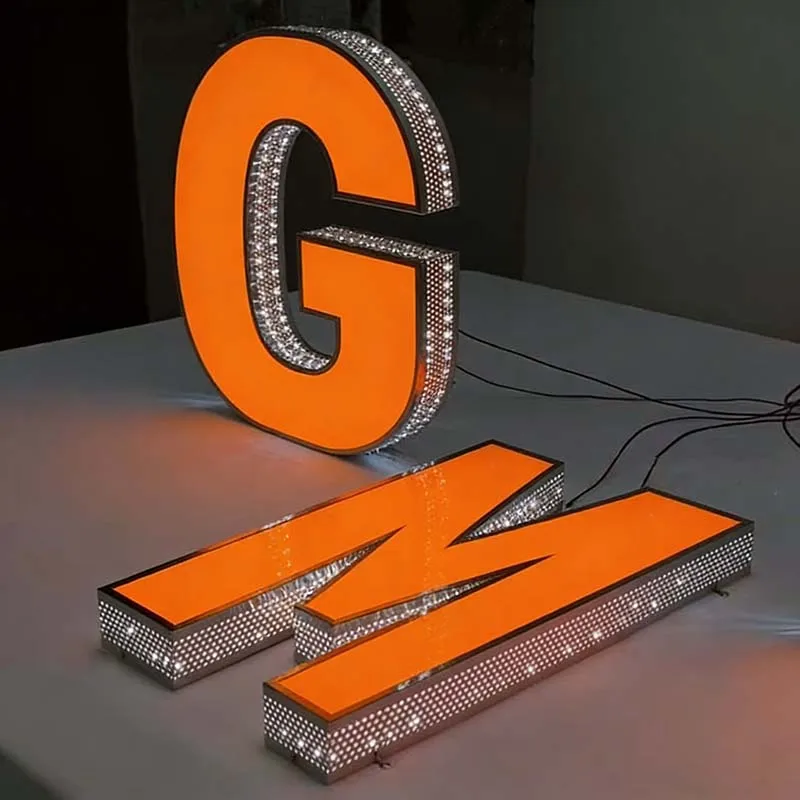
Real photo from our production floor — every sign we ship is made here.
From $24/letter · MOQ 1 piece · Flexible lead time · CE & UL certified · ships to 20+ countries
Custom sizes, colors, and finishes. Get a factory price in 24 hours.
Get a Free Quote Copy EmailWhatsApp +86 13865703472 · business@aochuangsign.cn
See pricing, specs, and get a free quote for the sign type you need. Built in our factory, shipped worldwide.