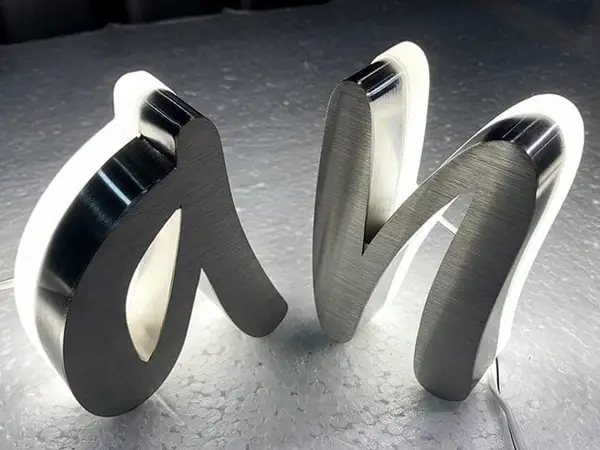
You Think You Know Light Boxes Until You’re On a Ladder at 11 PM
I’ve installed this in a strip mall in Ohio where the owner wanted “that nice soft glow” but didn’t want to pay for a proper diffuser. Two months later I was back swapping out LED strips because the heat from the sign face had cooked them. That’s the edge-lit vs backlit debate in a nutshell: one looks great on paper, the other actually works when the sun goes down and the lights have been on for twelve hours straight.
Let me be clear: I’m not a marketer. I’m the guy who shows up with a drill and a voltmeter. I’ve spent twenty years hanging signs across thirty-plus states, and I’ve seen both technologies fail and succeed. So if you’re trying to decide between edge-lit and backlit light boxes for your next commercial sign, skip the glossy brochures. This is what the manual doesn’t cover.
Don’t make the mistake I made early in my career: thinking “brighter” always means “better.” It doesn’t. Uniformity matters more than raw lumens, especially when your sign is 2 meters wide and every hotspot looks like a cheap disco ball. I’ve had clients call me screaming because their logo looked like a zebra crossing – bright stripes every six inches where the LEDs sat. That’s the edge-lit trap.
How Each System Works (the Parts They Don’t Advertise)
Backlit light boxes are the old reliable. A grid of LED modules – usually SMD 2835s at 100-150 lm/W, industry standard – sits behind a white acrylic diffuser. The light goes straight through. Simple. No mirrors, no light guides, just flat panels of LEDs spaced according to a simple rule of thumb: closer spacing for thinner diffusers, wider spacing for thicker ones.
Edge-lit boxes use LEDs mounted along the sides – top, bottom, or both – and a clear acrylic “light guide plate” (LGP) with micro-dots printed on it. Those dots scatter the light upward through the diffuser. In theory, it’s thinner and more elegant. In practice, I’ve seen edge-lit boxes that cost double the labor to install because you can’t just screw them to a wall without crushing the light guide.
Pro tip: The diffuser thickness is the single biggest factor in uniformity. For a backlit box, if you use 3mm acrylic (Mitsubishi or Degussa – domestic stuff yellows in 1-2 years, don’t bother), you need LED pitch no wider than 100mm. Push that to 5mm acrylic and you can space modules at 150mm. Edge-lit boxes rely on the LGP quality – cheap Chinese print jobs give you blotches that look like coffee stains.
I’ve installed this in a museum lobby where the architect demanded an edge-lit box that was only 30mm deep. Looked amazing from the front. But the diffuser had to be 2mm acrylic, which meant every fingerprint showed through. And the light guide? After six months, the adhesive holding the dots delaminated. We had to rip the whole thing out and go backlit with a 60mm deep box and a 5mm diffuser. The client paid twice.
The Illumination Showdown: Uniformity, Color, and Those Damn Hotspots
Here’s what the permit office won’t tell you: most of the specs you see on light box datasheets are measured in a lab with no ambient temperature variation. Real life is a 40°C July afternoon in Houston. LED output drops as temperature rises – about 10% per 10°C above 25°C for standard SMD 2835s. That means your “2000 lumen” edge-lit box is really pushing 1600 on a hot roof.
Backlit boxes handle heat better because the LEDs are spread out. There’s more surface area for heat dissipation. Edge-lit boxes pack all the LEDs along the edges – heat builds up in a narrow strip. I’ve measured 65°C at the LED strip on an edge-lit box in direct sun. That’s way over the 50°C max for many cheap power supplies. Result? Flicker, color shift, and dead modules within 18 months. Don’t make the mistake I did: I once used an edge-lit box with 6000K cool white LEDs. Looked blue and dead. The client wanted “warm and inviting” – that’s 3000K for hospitality, 4000K for retail. I had to swap the entire LGP because the LED strips were glued in.
Uniformity is where backlit wins every time, especially on large surfaces (over 2m²). A well-designed backlit box with 5mm acrylic and 50mm LED pitch has less than 5% variation across the face. Edge-lit boxes struggle to stay under 15% variation once you go past 1.2m on one side. I’ve seen edge-lit 2.4m banners that looked like a topographical map – bright at the edges, dark in the center. The LGP manufacturers claim “uniformity over 90%” – in a 600mm square prototype. Not in the real world.
Color temperature consistency is another hidden monster. Cheap LED modules drift by 500K over their lifespan. Quality modules – Samsung or Osram chips – hold within 100K for 50,000 hours (L70). But even good edge-lit boxes have a problem: the light from the edge goes through the LGP, bounces off the reflector, and mixes. If the LGP has a slight yellow cast (common in recycled acrylic), your 4000K LEDs suddenly look 4500K. Backlit boxes are simpler: the light goes straight through the diffuser, no mixing, so the color you spec is the color you get.
Cost: The Real Numbers (What the Factory Won’t Email You)
I’ve watched sign shops pay $800 for a front-lit letter from a domestic fabricator. Same 304 stainless, same Samsung LEDs. We ship that letter for $120. Light boxes are the same game. Factory pricing from a place like Aochuang Sign (3,000m² facility, CE/UL capable, 7-15 day lead time) runs $80-250 per square meter for a light box. That’s the sign itself, no installation. US retail installed? You’re looking at $400-1,000 per square meter for a backlit box. Edge-lit is usually 15-20% more because of the LGP and thinner profile materials.
But here’s the brutal truth: edge-lit boxes cost more to maintain. LED strips along the edge are a pain to replace. You have to disassemble the frame, pull out the LGP, unstick the old strip, clean the adhesive residue, stick a new strip, and pray the optical alignment is right. That’s 2-3 hours of labor. A backlit box? Pop the face, unscrew the bad LED module, plug in a new one – 20 minutes. I’ve seen a chain of 50 edge-lit box signs where the maintenance budget was triple the original installation because every year three or four needed full LGP replacements.
Don’t make the mistake I did: I once bought edge-lit boxes from a factory that claimed CE certification. I asked to see the certificate with today’s date. They sent a PDF from 2017. CE marking costs 20,000-50,000 RMB and takes 2-8 weeks. Most factories will say they have it. Watch them sweat when you ask for a current, dated certificate. I switched to a factory that had a valid UL 48 equivalent (ETL is 10-30% cheaper than UL, same acceptance). That peace of mind cost an extra $200 per box but saved me three callbacks.
Shipping adds another hidden layer. Air freight about 10 days – $4-12/kg. Sea freight LCL about 65 days – $80-200/m³. Your crate gets handled 6-8 times between the China dock and your site. Every touch is a chance for damage. I had a shipment of edge-lit boxes where the LGP arrived cracked because the packing was inadequate. The factory claimed “export packaging – foam + carton + plywood crate” – but the foam was 10mm and the LGP was 2mm. That’s not enough. For edge-lit, you need at least 50mm foam around the LGP and a full plywood crate with internal bracing. I now specify that in the purchase order.
Durability: Why Coastal Clients Pay 20-30% Extra for 316 Stainless
IP65 sounds impressive. It means dust-tight and protected against water jets from any direction. It does NOT mean your sign survives a Florida hurricane. I’ve pulled edge-lit boxes out of Key West storefronts where the seals blew, water wicked into the LGP, and the micro-dots dissolved. The whole thing looked like a frosted window from the inside.
Backlit boxes are inherently more robust because they don’t rely on a thin LGP. The frame can be sealed with neutral silicone – we use a 1-day curing process at production – and if you choose 304 stainless (10+ year outdoor life, 18% Cr, 8% Ni) with a brushed #4 finish, you’re good for most inland areas. For Miami Beach or any coastal site, spring for 316 stainless (15+ year marine grade, 2-3% molybdenum). It costs 20-30% more but you won’t see pitting after three years. I’ve had to replace edge-lit boxes made of 304 on a Jersey shore boardwalk. The salt air ate through the frame welds in two years.
Aluminum is lighter – 1/3 the weight of steel – and naturally rust-proof. It lasts 8-12 years outdoors in most climates. But aluminum bends under wind load more than steel. For a 2m² box in a wind zone, you need 1.6mm (0.063″) aluminum, not the 1.0mm cheap stuff. I’ve seen an edge-lit aluminum box with 1.0mm skin flap in a storm. The LGP shattered. Backlit boxes with 5mm aluminum frames survive better because the face is supported differently.
Temperature range matters. LED modules are rated for -20°C to +50°C ambient. But inside a black edge-lit box in direct sun, ambient can hit 70°C. The LEDs themselves run hotter. L70 for quality modules (Samsung/Osram) is ≥50,000 hours at 25°C. At 50°C, that drops to 25,000 hours. At 70°C? Maybe 10,000 – about three years of 8-hour operation. Backlit boxes, with wider spacing and bigger airflow, typically run 10-15°C cooler. I’ve got backlit boxes in Phoenix that haven’t needed a single LED replacement in seven years.
When to Choose Each: The Installer’s Quick Decision Tree
I’ve installed this in a hipster coffee shop where the owner wanted a letter-slot-thin sign floating off the wall. Edge-lit was the only option. It worked fine because the face was only 600mm wide and the interior stayed at 22°C year-round. The LEDs were SMD 2835 at 4000K with a 3mm diffuser. Cost $450