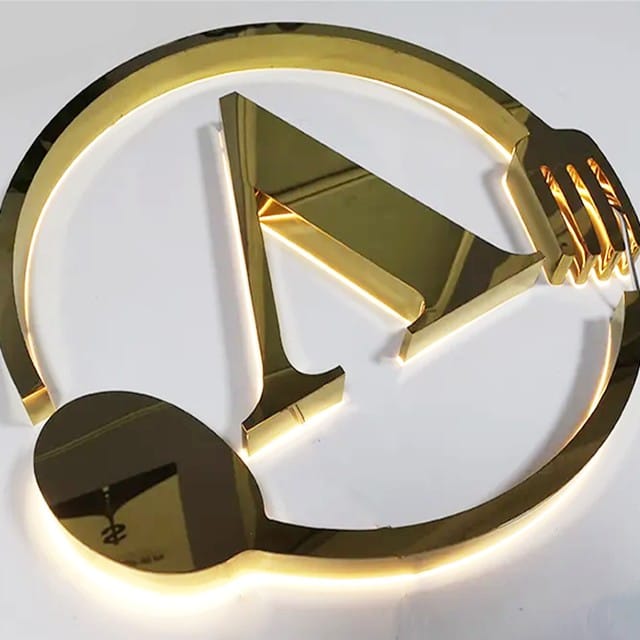
Look, I’ve had a client yell at me for 20 minutes because the back-lit letters they bought didn’t glow the way they imagined. They’d ordered them for a rough brick wall, stuck them straight on the mortar, and then wondered why the halo looked like a bad flashlight through a cheese grater. That’s not a manufacturing defect. That’s picking the wrong illumination style for the surface. I’ve been on factory floors since before RGB was a thing, burned my hands on hot acrylic more times than I’ll admit, and watched sign shops pay $800 for a letter I can ship for $120. If you’re trying to decide between front-lit, back-lit, and halo-lit channel letters, you don’t need a glossy brochure. You need someone who’s welded them, wired them, and cleaned pigeon poop off them after a rainstorm. That’s me.
Front-Lit Channel Letters: The Workhorse That Doesn’t Apologize
You’ve seen these a million times. The acrylic face glows at night, the aluminum or stainless steel sides hold it all together, and from 200 feet away your store name screams “we’re open.” A
front-lit channel letter is exactly what it sounds like: light shoots forward through a translucent face, typically 2mm or 3mm acrylic. We use SMD 2835 LED modules inside most of them, 100–150 lumens per watt, and if you spec Samsung or Lan Jing you’ll get 5+ years of real outdoor life before the L70 rating kicks in. The acrylic face transmits 90–92% of that light, so it’s the brightest option per dollar you can put on a wall.
Here’s what nobody tells you: the face thickness matters more for durability than brightness. A 2mm acrylic face cuts 90% light output; a 3mm face cuts 92%. Your customer won’t see that 2% difference. But a 2mm sheet on a letter taller than 2.5 meters will flex in the wind, crack at the mounting studs, and eventually let water in. We ship that letter with 5mm acrylic faces for anything over 2.5m, not because we love spending money on plastic, but because nobody pays me to remake a sign that failed after six months. In our factory, a standard front-lit letter goes from laser cutting (±0.1mm on the returns) to TIG welding, LED assembly, silicone sealing, and a full 8-hour aging test before it ever sees a crate. Typical cost to you? $20–80 per letter, depending on size and material. That same letter installed by a domestic fabricator runs $200–700. I’ve watched sign shops cry when they see our price list. Factory-direct isn’t magic; it’s just eliminating the middle-people who take a 50–65% cut.
The ugly truth is that cheap LED modules will murder this sign faster than a hailstorm. I’ve opened warranty claims where the LEDs outlasted the power supply by two years, and the reverse. Solder joints tell the story. If you crack open a module and the solder is dull gray, that letter’s probably dead in 12–18 months. Shiny silver, lead-free joints? That’s a module that’ll keep glowing after the building gets a new paint job. We warranty our LEDs for 2 years and power supplies for 1—not because we think they’ll fail, but because I’ve learned to under-promise on things I can’t control, like an installer who hooks them up to a generator on a construction site.
Back-Lit Letters and the Halo That Can Break Your Heart
Back-lit letters—sometimes called reverse channel letters—flip the playbook. The face is solid, usually stainless steel or painted aluminum, and the LEDs live on the back panel, casting light onto the wall behind the sign. The result is a silhouette with a glowing halo that looks like something an architect dreams up at 2 a.m. We ship plenty of
back-lit halo letters, especially for high-end retail and corporate lobbies. The letters themselves can be as thin as 25mm deep, but the mounting standoffs push them 30–50mm off the wall to create that even spread of light. We fabricate these from 304 stainless steel for indoor and protected outdoor, 316 for anything within a mile of saltwater. That 2–3% molybdenum in 316 costs you 20–30% more but stops pitting corrosion that’ll turn a $150 letter into a rusty eyesore in three years. For a strip mall in Ohio, 304 is fine. For a hotel in Miami Beach, pay the extra or you’re replacing the sign before the lobby furniture.
I’ve seen this go wrong: a shop ordered back-lit letters with the factory’s standard 15mm standoff, mounted them on a textured stucco wall, and called me screaming when the halo looked like a segmented caterpillar. The light needs a smooth, light-colored surface to reflect evenly. Dark brick, heavily textured stone, or a wall painted charcoal gray will eat half your glow. No LED lumen