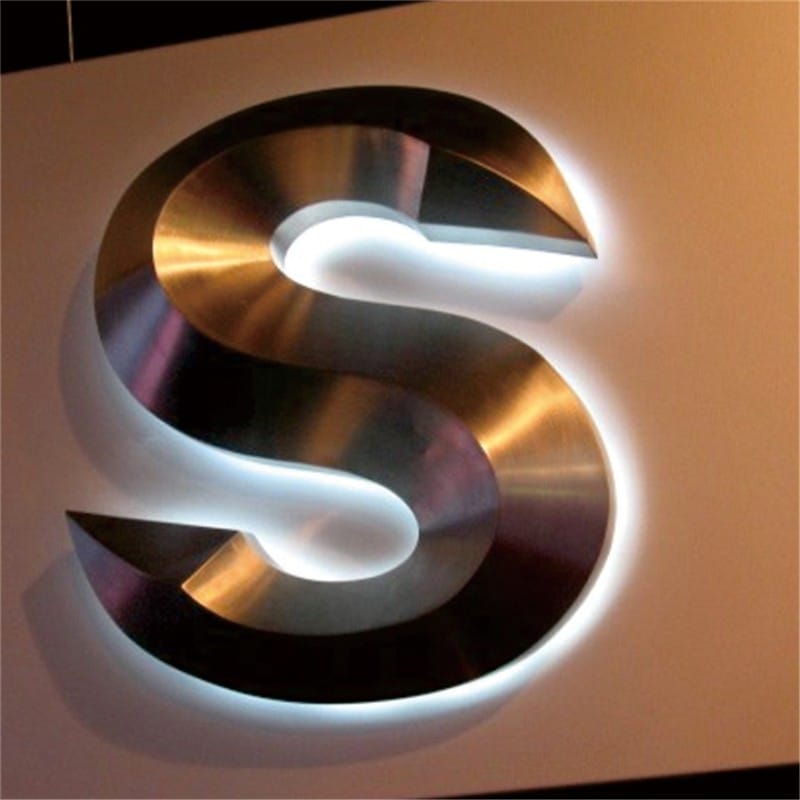
Fifteen years ago I watched a station owner in Phoenix climb a ladder in August to change a fluorescent tube in his price sign. 110 degrees. He dropped the tube, swore loud enough to echo off the canopy, and paid $280 for an emergency call. I still think about that every time somebody tells me LED price signs are too expensive.
Gas stations don't need one sign. They need five or six, and each one has a different job.
Canopy letters tell a driver on the highway who you are at 70 miles an hour. The price sign tells them whether to take the exit. The pump topper sells the car wash or the two-for-one energy drink. The building fascia or monument sign gives the place enough legitimacy that a family will stop for the restroom.
Most operators mess this up by treating all of them like the same buy. A canopy sign sits 20 feet up and takes full sun and wind. A price sign sits at eye level, and a tired clerk pokes it with a pole at 6 a.m. They shouldn't share the same spec.
For the canopy, you want front-lit channel letters with a 3mm or 5mm acrylic face, depending on letter size. Anything over 2.5 meters needs the 5mm. Under that, 2mm kills 90% of your light output and 3mm kills 92%, so don't pay extra for 5mm on a 20-inch letter.
Price signs are usually a changeable number system inside a sealed lightbox. If you're buying an enclosed unit, embedded lightbox construction keeps the electronics out of the rain and the bugs out of the digits.
Building-mounted letters and monument signs can be front-lit or halo-lit. Halo looks sharper at night, but it costs more and doesn't read as well from a highway at 300 yards. Front-lit wins for gas stations. Every time.
I've seen this go wrong: a sign shop ships a beautiful $12,000 gas station pylon, installs it, and two weeks later the city slaps a stop-work order on it because nobody stamped the wind-load calculations. Now the client is bleeding $400 a day in lost fuel sales and the shop is eating the re-engineering cost.
Gas station signs are commercial structures. Not decorations. In the US, that means NEC Article 600 for electrical and UL 48 or ETL listing for the sign itself. If your supplier can't provide stamped drawings and a compliance path, you don't have a sign. You have a liability.
Zoning varies block by block. Some municipalities cap canopy sign height. Some ban digital price signs near residential streets. Some require a monument sign instead of a pylon if the station is within 200 feet of a school. Pull the permit packet before you quote, not after.
Look, UL 48 costs $4,000 to $15,000 and takes 4 to 9 months with quarterly audits. ETL is 10 to 30 percent cheaper and accepted by most inspectors. CE marking is 20,000 to 50,000 RMB and takes 2 to 8 weeks. But here's the ugly part: any factory can write "CE" on a drawing. Ask for the certificate with today's date. Watch them sweat.
IP65 means dust-tight and rated for water jets from any direction. That doesn't mean your sign survives a Florida hurricane. For coastal fuel stops or anything near salt spray, you want IP66 and 316 stainless, not 304.
Gas stations live outside. All day. Every day. The sun eats cheap acrylic, road salt eats cheap steel, and voltage spikes eat cheap LED modules. If you're comparing quotes, compare materials first.
304 stainless is the baseline for any letter or cabinet that'll be up for a decade. It's got 18% chromium and 8% nickel, weighs 7.93 grams per cubic centimeter, and lasts 10-plus years outdoors. For building fascia, 304 stainless steel letters with a brushed or powder-coated finish will outlast the lease.
If the station is within a mile of salt water, step up to 316. That's 2 to 3 percent molybdenum and a 15-plus year marine-grade lifespan. It costs 20 to 30 percent more. In Miami Beach, that's cheap. In Ohio, it's overkill.
Aluminum is a third the weight of steel and naturally rust-proof. It's fine for lightbox frames, cabinets, and soffit panels. I like 1.6mm aluminum for price sign housings, not the 1.0mm some factories quote. The lighter stuff dimples when the lot kid backs into it with the squeegee cart.
Acrylic faces split into two camps. Mitsubishi and Degussa UV-resistant acrylic stays clear for 5 to 8 years. Domestic acrylic starts yellowing in 1 to 2. Acrylic LED letters and lightbox faces should only use the UV-stable stuff unless your customer wants a yellow "Shell" sign in 24 months.
Here's what nobody tells you: the LED modules inside a gas station price sign are not all the same, even when the spec sheet says 50,000 hours.
SMD 2835 chips run 100 to 150 lumens per watt and are the industry standard for channel letters and lightboxes. SMD 5050 chips handle RGB color. SMD 5730 chips hit 40 to 60 lumens per chip and are the brightest option for digital price displays that need punch in direct sun.
The L70 rating means the module still puts out 70 percent of its initial brightness at the end of its rated life. Quality modules from Samsung, Osram, or Blueview last 5-plus real years. Cheap modules with dull gray solder joints last 12 to 18 months. Quickest way to spot the difference: ask for a photo of the solder. Shiny silver, fine. Dull gray, walk away.
Color temperature matters more than wattage. A 6000-6500K cool white works for highway-facing price signs because it cuts through headlight glare. A 3000-3500K warm white belongs on a hospitality brand. Most fuel stations run 4000-5000K neutral for the canopy and 6000K for the price sign.
Digital gas price displays are a different animal. They're not just a sign. They're a revenue tool. If you can change prices from the back office instead of sending a guy out with a suction cup pole, the labor savings pays for the display. But make sure the display is UL-listed and has proper surge protection, because gas station power is dirty. Pumps kick on and off all day. That's what kills cheap digital signs in two years.
The ugly truth is most gas station owners don't replace signs until the old ones are embarrassing. Then they panic and call a local sign company that charges $800 a letter for front-lit channel letters installed.
That same letter—304 stainless, Samsung LEDs, UV-stable acrylic face—ships factory-direct from our plant for $120. Factory-direct pricing on front-lit channel letters runs $20 to $80 per letter depending on height and complexity. Back-lit halos run $35 to $120. Stainless non-lit letters run $15 to $40. A sealed lightbox runs $80 to $250 per square meter.
Retail installed prices in the US run $200 to $700 per letter for front-lit and $400 to $1,000 for halo-lit. That means buying factory direct saves 50 to 65 percent on product before install labor. If you're a sign shop, that margin is yours. If you're a station owner, that savings pays for the crane and the electrician.
Freight and tariffs are the part rookies forget. Air freight runs $4 to $12 per kilogram and takes 10 to 20 days. Sea freight LCL runs $80 to $200 per cubic meter and takes 50 to 70 days. Then you've got the Section 301 tariff, roughly 30 percent on many sign products. Still cheaper than domestic. Usually.
Maintenance on a properly built LED gas station sign is close to zero for five years. The power supply might need replacement at one to two years if it's cheap. Our standard warranty is two years on LED modules and one year on the power supply. That's not marketing. That's what survives in the field.
Same story, different station: a contractor orders 200 letters for a gas station chain, the factory ships them without an aging test, and three weeks after install, half the modules flicker like a horror movie. The factory says "installer error." The contractor eats $6,000 in warranty labor. Nobody wins.
Specifying factory-direct isn't about finding the lowest price. It's about finding a factory that runs the full 10-step process: design confirmation, laser cutting, bending and TIG welding, grinding and polishing, acrylic CNC, LED assembly, neutral silicone sealing, an 8-to-12-hour aging test, 100 percent QC, and export packaging with foam, carton, and plywood crate.
Ask about the aging test. If the factory doesn't do it, you're their QC department. Ask about the silicone. Neutral silicone, not acid-cure stuff that fogs acrylic and eats the LED coating. Ask about the packing. LCL crates get handled six to eight times between the factory dock and your local warehouse. Every touch is a chance for damage.
MOQ should be one piece. Lead time should be 7 to 15 days, not 45. A factory that says 45 days is brokering to another factory.
For canopy letters and station identity, front-lit channel letters are still the bread-and-butter. For building fascia or monument work, stainless steel letters and embedded lightboxes cover the rest.
Can I get a UL-listed gas station sign from China? Yes, but not from every factory. UL 48 runs $4,000 to $15,000 and requires quarterly audits. If a factory says "UL equivalent" without a file number, it's not UL. Move on.
What IP rating do I actually need for a gas station canopy? IP65 minimum. That means dust-tight and rated for water jets from any direction. That doesn't mean hurricane-proof. If you're on the Gulf Coast, use IP66 and 316 stainless.
How long do LED gas station signs really last? Good modules with Samsung or Osram chips last 5-plus years. Cheap modules last 12 to 18 months. If the quote seems too good, it is.
Why is sea freight so slow? Because it's a boat. LCL is 50 to 70 days and your crate gets handled six to eight times. Pay for air if you need it in two weeks.

Real photo from our production floor — every sign we ship is made here.
Products mentioned or relevant to this topic — factory-direct, custom built.
From $24/letter · MOQ 1 piece · Flexible lead time · CE & UL certified · ships to 20+ countries
Custom sizes, colors, and finishes. Get a factory price in 24 hours.
Get a Free Quote Copy EmailWhatsApp +86 13865703472 · business@aochuangsign.cn