L70-rated LEDs run 50,000 hours on paper. One unsealed splice will kill a $3,000 outdoor sign in six months. More silicone gooped over everything won't fix it. Use adhesive-lined heat shrink on every wire splice, pack dielectric grease into sealed connectors, and put everything inside an IP65 junction box. If you're within five miles of salt water, step up to IP66.
I've opened enough junction boxes full of green slime to know exactly how this goes wrong. Water doesn't need a big hole.
Moisture rides the stranded copper. Capillary action.
Look, most outdoor signs don't die from bad LEDs. They die from one exposed connection. Cheap LED modules last 12–18 months. The chip itself rarely fails—water gets into the solder joint and corrosion eats it from the inside. I've pulled apart modules that were still bright on the bench but dead in the field, and every single one had green crust where the wire met the PCB.
Thermal cycling does more damage than rain. That's the ugly truth. Your sign bakes in the sun, then a thunderstorm hits and drops the temperature 30 degrees. Rigid silicone caulk cracks. Heat shrink that was never adhesive-lined separates. Once you get a pinhole, capillary action takes over. Acrylic faces, for all their 90–92% light transmittance, don't help if water gets trapped behind them. You'll see fog first, then brown streaks, then dead rows of LEDs.
Stranded copper is a wick. I've pulled apart a power supply that was bone dry inside, but the wire was green four feet away from the leak. That's moisture wicking under the insulation. If you don't tin the ends or seal the entry, you'll chase that ghost forever. The joint didn't fail. The raw wire end you left exposed did.
Galvanic corrosion? Copper wire crimped to an aluminum backplate without isolation will eat itself. 304 stainless brings 18% chromium and 8% nickel—good stuff. Mix it with copper in salt air and electrolysis will teach you a lesson. Use a barrier: heat shrink, grease, or both. If you're hanging front-lit channel letters over a storefront, every return is a potential entry point. Seal the return, seal the harness, seal the box.
Here's what nobody tells you: IP65 sounds impressive. That means dust-tight and protected from water jets from any direction. That doesn't mean your sign survives a Florida hurricane. For outdoor LED sign connections, IP65 is the floor. If you're near the coast or in an area with driving rain, go IP66—that's powerful jets. IP68 is submersible. Great if your junction box sits in a below-grade vault, overkill on a pylon sign in Ohio.
The enclosure material matters as much as the rating. Aluminum weighs one-third of steel and won't rust, but it'll corrode if you bolt it to a steel bracket without isolation. 304 stainless gives you 10+ years outdoors. 316 adds 2–3% molybdenum and costs 20–30% more. For Miami Beach, pay for 316 stainless steel letters and enclosures. For a strip mall in Ohio, 304 works fine. Don't oversell marine-grade hardware to a customer who doesn't need it.
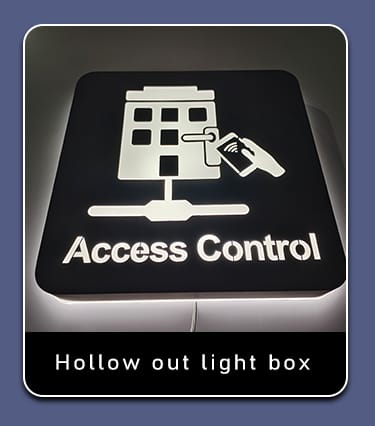
Never put conduit entries on top of a junction box. Water runs downhill. Use liquid-tight connectors, bottom entries, and a drip loop on every cable. NEC Article 600 covers electric signs in the US, and inspectors will bounce you for open knockouts. A recessed embedded lightbox mounted in a wall is a condensation trap—the box behind the sign needs a vapor barrier or weep holes, or you'll be back in 18 months.
Potting compound is the nuclear option. You fill every air gap around a connection with a two-part resin, and water can't get in because no space is left for it to sit. But don't pot a wire nut.
I've seen this go wrong: a guy fills a junction box with silicone, closes it up, and six months later the water's still inside—it just can't get out. Now you've built a terrarium. Potting is for low-voltage cavities you'll never open again: LED module pigtails inside channel letter returns, the back of a backlit halo letter where the driver sits, the solder joints on a PCB. Do it at the factory on a bench, not on a ladder.
At our shop, we pot connections before assembly. Potting adds a day to production—worth it when you're giving a 2-year LED warranty. A potted connection will survive 10 years of thermal cycling. A field-sealed one lasts as long as the guy's patience. That's the difference between a sign and a callback.
Here's the difference nobody explains: dielectric grease prevents corrosion on contacts. Dielectric grease isn't a sealant. It doesn't stop water from flowing; it stops water from causing damage. Use it inside connectors that are already sealed—spade terminals, bullet connectors, the plug between the driver and the LED module.
Silicone sealant is a gasket maker. It's great between a face and a return, or around a lens. But it's not a structural waterproofing system. Neutral silicone cures and stays flexible, but acid-cure silicone will eat copper traces. Use neutral cure, or watch your LEDs flicker out in 12–18 months. I've argued with suppliers about this. They'll sell you whatever's cheaper. You'll be the one on the roof.
Adhesive-lined heat shrink is the only thing I trust on an inline splice. The inner adhesive melts, flows into the stranded copper, and seals the wire itself. Regular heat shrink just shrinks. It doesn't seal. You've still got a water path along the wire. I've pulled heat shrink off a 5-year-old sign in Texas sun. Cheap stuff crumbled. Good adhesive-lined heat shrink had to be cut off with a knife. That's the difference.
Strip the wire, tin the stranded copper. Soldering the end stops capillary wicking by filling the gaps between strands. Don't skip this because you're cold and want to go home.
Solder the connection. Don't twist and tape. A proper lead-free solder joint is shiny silver. Dull gray means the joint was cold and will fail. Cut it and start over.
Slide adhesive-lined heat shrink over the splice before you solder. I know, everyone forgets. Then heat it until the adhesive squeezes out both ends. If you don't see squeeze-out, you didn't heat it enough.
Pack waterproof connectors with dielectric grease. If the connector is gel-filled, you don't need it. If it's a basic spade connector, grease is the only thing saving you. Then mount the junction box with the lid gasket facing down. Bring wires in through the bottom with liquid-tight fittings. Add a drip loop outside the box so water runs away.
Close it up, tighten the lid, then run the sign for its 8–12 hour aging test. If it survives that, you're probably okay. At the factory we do this on every sign, 100% QC inspection before it goes in the crate. You can't always do that on site, but you can at least run it for an hour.
Here's what nobody tells you: most outdoor sign failures happen because someone was in a hurry on a ladder. The factory has time, clean conditions, and a 10-step process. The field has wind, rain, and a deadline. One skipped step on a humid afternoon and you're back in six months.
We pre-seal harnesses at the factory. Design confirmed, laser cut, welded, polished, LED assembled, neutral silicone on every seam, 8–12 hour aging test, 100% QC. When that crate leaves Lu'an, the connections are already waterproof. The installer isn't fighting heat shrink on a scissor lift.
I've watched sign shops pay $800 for a front-lit letter from a domestic fabricator. Same 304 stainless, same Samsung LEDs. We ship that front-lit letter for $120. The difference isn't materials. We don't leave sealing to chance. Buy a sign with pre-sealed harnesses and you get a 2-year LED warranty. Field-wired signs? Your supplier will blame the installer the first time water shows up. That's why I tell contractors: import the complete sign, not a kit.
Quickest way to spot bad LED modules: look at the solder joints. Dull gray = won't last 18 months. Shiny silver = proper lead-free solder. That's your first QC test. If the factory can't show you a joint, don't trust their waterproof claims.
At the factory, every sign goes through an 8–12 hour aging test, then 100% QC inspection. The aging test heats the LEDs, expands the aluminum, contracts the acrylic, and shows you exactly where the sealant failed. Acrylic faces transmit 90–92% light, but if water gets behind them, you'll see it. The aging test is not optional.
CE marking costs 20,000–50,000 RMB. Most factories will say they have it. Ask to see the certificate with today's date. Watch them sweat. Same for UL 48 in the US: that's a $4,000–15,000 certification with quarterly audits. No certificate, no UL listing. And no UL listing means no inspector sign-off.
For field testing, soak the connection with a garden hose, then run the sign at full power for an hour. If condensation fogs the acrylic face, you've got a leak. Don't wait for the customer to find it.
Nope. Wire nuts aren't outdoor connectors. Silicone isn't a seal. You've built a moisture trap. Use adhesive-lined heat shrink or a gel-filled connector.
IP65 means dust-tight and protected from water jets from any direction. For normal outdoor rain, yes. For coastal wind-driven salt spray, go IP66. IP68 is for submersion—if your sign's swimming, we have bigger problems.
With proper adhesive-lined heat shrink and a sealed enclosure, you'll get 5+ years in real conditions. Cheap LEDs fail at 12–18 months because the connections weren't sealed, not because the chip died.
Because water follows the wire. Caulk on the exterior doesn't stop capillary wicking through stranded copper. Tin the leads and use liquid-tight fittings. Then you can caulk if it makes you feel better.
Products mentioned or relevant to this topic — factory-direct, custom built.
From $24/letter · MOQ 1 piece · Flexible lead time · CE & UL certified · ships to 20+ countries
Custom sizes, colors, and finishes. Get a factory price in 24 hours.
Get a Free QuoteWhatsApp +86 13865703472 · cairuisheng@aochuangsign.cn