You ever watched a sign guy drill through tempered glass? I have. It sounds like a gunshot and then you're sweeping up a million little cubes and explaining to a store owner why their $4,000 storefront is now a pile of safety glass. Don't be that guy.
That's the job that separates real sign installers from the ones who think VHB tape and a prayer count as engineering. I've been on factory floors since 2010. I've built and shipped front-lit channel letters and halo-lit letters all over the world. And I'm telling you right now: installing on glass isn't hard if you understand the glass, the load path, and the hardware. Skip any one of those and you'll be back in six months replacing a fallen sign or a fried power supply.
Look, tempered glass and annealed glass aren't the same animal. Tempered glass has edge markings — usually a little stamp in the corner that says "TEMPERED" or "16 CFR 1201." If you don't see it, assume the worst: annealed. Annealed glass won't take point loads. You drill it, it cracks in a spiderweb and you buy a new storefront. Tempered can take some surface loads, but don't get cocky.
Set a channel letter right on the glass without a proper support system? You're asking the glass to act as a structural beam. It isn't. Glass deflects. It creeps. Over time, silicone bonds let go and letters sag. I've seen this go wrong: a shop used construction adhesive directly on a 10-foot tempered panel. It held for 14 months. Then a 40 mph gust peeled a 12-pound letter off and sent it through a parked car's windshield. The shop had no stamped engineering, so insurance didn't cover it.
Your first job is to identify the framing system. Most glass storefronts are either stick-built aluminum with 2" x 4-1/2" mullions, or a curtain wall with steel or aluminum members. The mullions carry the weight. The glass just fills the hole. If there's a metal header, a base channel, and verticals, you can anchor to them. If it's a frameless glass wall — no mullions, just patch fittings — then you don't have a storefront. You have a liability. Walk away or spec a freestanding pylon sign.
The ugly truth is most sign shops never check local load limits. They assume a channel letter weighs nothing. A front-lit channel letter with a 5mm acrylic face, 304 stainless returns, and a Samsung LED module can weigh 8 to 15 pounds depending on size. That's dead load. Wind turns it into a lever.
Here's what nobody tells you: direct adhesive on glass is for tiny, non-illuminated acrylic letters, not channel letters. Once you add LED modules, a power supply, and an aluminum or stainless return, the weight and heat load change everything. VHB tape and silicone aren't structural. They're weather seals. If a salesman tells you his tape holds 30 pounds per square inch, ask him for the engineering spec on glass adhesion with UV exposure and thermal cycling. I'll wait.
That leaves two real options: a raceway or a backer panel. A raceway is an aluminum extrusion that houses the power supplies and wiring. Letters mount to the raceway with fasteners, and the raceway anchors to the building structure — not the glass. A backer panel does the same job but it's a flat sheet, usually 0.063" aluminum or 18-gauge stainless, painted to match the storefront. It spreads the load across multiple anchor points. For most glass storefronts, a raceway is faster and cheaper.
A backer panel looks cleaner because it can be painted to match the mullion color or the glass tint.
The ugly truth is a raceway on a glass storefront only works if the mullions are metal and you can through-bolt or use structural rivets. If the storefront has a top header made of steel or aluminum, you can hang a raceway from the header. If the only available structure is the concrete slab above, you need a backer panel with standoffs that transfer load to the slab. That's an engineered solution, not a sign shop guess.
If the client wants a premium architectural look, back-lit halo letters on a backer panel are the cleanest install you'll ever do. Just make sure the panel is engineered for the extra standoff distance. That's where the wind load gets nasty.
Look, not all stainless is the same. 304 stainless has 18% chromium and 8% nickel. It'll last 10+ years outdoors in most places. But if you're on a coast, you need 316 stainless with 2-3% molybdenum. It costs 20-30% more, but it's cheaper than replacing corroded anchors in 3 years. For a strip mall in Ohio, 304 is fine. For Miami Beach, spec 316 or you'll be back.
For fasteners that touch glass or aluminum framing, use nylon or EPDM washers between dissimilar metals. Aluminum and stainless steel will galvanically corrode if you bolt them together without isolation. That's basic. I've seen installers use zinc-plated steel screws on aluminum mullions and then wonder why the paint bubbles off in 12 months. Stop doing that. Just don't.
Your LED modules matter more than the letters themselves. The industry standard is SMD 2835, 100-150 lumens per watt, with an L70 rating of at least 50,000 hours. Samsung, Osram, or Blueview modules will give you 5+ years of real lifespan. Cheap modules? 12 to 18 months, then half the letters are dark and you're on a ladder with a multimeter. The quickest way to spot bad LED modules: look at the solder joints. Dull gray = won't last 18 months. Shiny silver = proper lead-free solder.
Every component that goes on a glass storefront has to be rated for outdoor use. IP65 is the minimum — dust-tight and protected against water jets from any direction. IP65 doesn't mean your sign survives a Florida hurricane. For coastal installs, step up to IP66. And if you're in the US, the power supply and wiring must meet NEC Article 600.
I've seen this go wrong: an installer anchored a raceway to the glass with toggle bolts because the mullions were only 1-1/2" wide and he didn't want to drill them. The raceway held for two weeks. The glass didn't. Here's the right way.
The raceway is now your structural foundation. If it flexes, the letters will flex, and the silicone joints will fail. Put a 200-pound guy on a ladder and have him hang off the raceway. If it moves, add more anchors. Better to overbuild now than tear the storefront apart later.
Mounting the letters themselves is the easy part if the raceway is right. Most front-lit channel letters have a 1" flange or stud pattern. Match the pattern to the raceway with a paper template. Drill and tap the aluminum or use stainless studs with nuts on the back side. Don't use self-tappers from the front — you'll dimple the face, and water will find every one of those holes.
Wiring inside a raceway or backer panel has to be neat. Use 18-gauge stranded wire for LED runs, and keep the power supplies in a ventilated enclosure. A sealed raceway without ventilation will cook the drivers in a Florida summer. I've replaced too many power supplies because some genius sealed everything with silicone and trapped the heat. The LED modules run fine. The power supply doesn't.
Waterproofing is where most installs fail. Seal the letter returns to the raceway with neutral-cure silicone. Don't use acid-cure silicone on aluminum — it'll eat pinholes in the metal. Every penetration gets a dab of silicone. Every wire exit gets a drip loop. Then run an 8- to 12-hour aging test before you put the ladder away. If a module's going to fail, it usually fails in the first day, not the first year.
Here's what nobody tells you: your sign permit application will get rejected if you don't have a stamped wind load calc. Glass storefronts are in the worst exposure category — open, flat, no shielding. A 30" channel letter can generate 50 pounds of uplift in a 90 mph wind. No guess. That's basic building code. If you don't have an engineer on call, find one before you quote the job.
In the US, all sign wiring has to meet NEC Article 600. That means disconnects, proper grounding, and listed components. UL 48 certification on the letters themselves is the gold standard, but it costs $4,000-15,000 and takes 4-9 months with quarterly audits. ETL is a recognized alternative and 10-30% cheaper. If the landlord demands UL, don't lie about it. I've watched factories claim CE marking and then fumble when I ask for the certificate with today's date. CE costs 20,000-50,000 RMB and takes 2-8 weeks. You don't just print a CE certificate.
Keep a job folder with the glass assessment photos, structural drawings, engineer's stamp, and a copy of the permit. When the store owner sells the building in four years, the new owner's inspector will want to see it. If you don't have it, they'll make you pull the sign down and prove it's safe. That costs more than the job.
The ugly truth is most signs fail because nobody looks at them after the install. Glass storefronts flex with temperature changes — 100°F in the sun, 40°F at night. That thermal cycling works on every sealant joint. Every six months, walk the storefront and check for cracked silicone, water inside the letters, or flickering modules. If you catch a failing power supply in month 11, the warranty covers it. If you wait until month 13, you're buying a new one.
Warranty on the LED modules is normally 2 years. The power supply is 1 year. That's standard from any factory that's honest. If someone offers you a 10-year LED warranty on a channel letter, they're lying or they're charging you triple and self-insuring. Read the fine print. Heat, moisture, and lightning are usually excluded. So don't skip the surge protector on the power feed.
If you used cheap modules, plan on replacing them in 12-18 months. You saved $3 a letter. Now you're paying $200 in labor to go back. Do the math.
Can I just glue the letters to the glass with VHB tape? No. Not if they're channel letters with LEDs. VHB is a weather seal, not a structural anchor. Even if the tape holds 30 PSI, glass flex and thermal cycling will kill the bond. Tiny acrylic letters under 12" maybe. Anything bigger needs a raceway or backer panel anchored to structure.
Do I need a permit for a sign on a glass storefront? Yes. Every municipality I've worked in requires a sign permit. If you skip it, the landlord's insurance can deny a claim, and the city can fine you $500 a day until it's removed. Don't be that installer.
How much does a factory-direct channel letter cost versus local fabrication? A front-lit channel letter from a good factory runs $20-80 per letter. The same letter installed by a US shop can run $200-700 per letter. That's 50-65% savings on product. The installation labor is the same either way. But if the factory doesn't have UL or ETL, you'll spend the savings on a consultant. Check the certs first.
What's the deal with IP65 vs IP66? IP65 means dust-tight and protected against water jets from any direction. IP66 means protected against powerful jets. If you're 500 feet from the ocean, pay for IP66. If you're in a strip mall in Ohio, IP65 is fine. IP68 is submersible — you don't need that unless the sign is literally underwater.
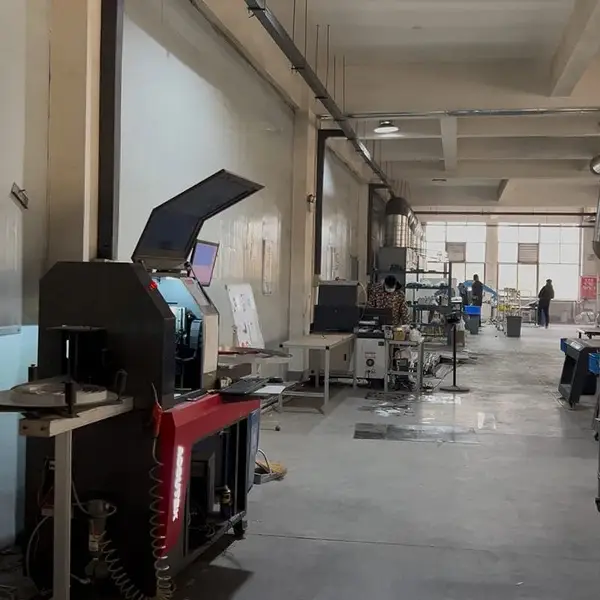
Real photo from our production floor — every sign we ship is made here.
Products mentioned or relevant to this topic — factory-direct, custom built.
From $24/letter · MOQ 1 piece · Flexible lead time · Project-specific compliance documents · ships to 20+ countries
Custom sizes, colors, and finishes. Get a factory price in 24 hours.
Get a Free Quote Copy EmailWhatsApp +86 13865703472 · business@aochuangsign.cn