
You just got a box of stainless steel channel letters from China. They look perfect. Shiny. But if you mount them wrong, you'll be back in six months replacing LEDs or scraping off corrosion. I've seen it happen more times than I can count. Let's get this right.
Most buyers don't realize the wall behind your sign matters more than the sign itself. A brick wall with mortar joints is a nightmare for hidden water intrusion. A stucco surface with no weep holes? You're building a swimming pool behind your letter.
Let me break this down: water always finds the path of least resistance. Mount channel letters directly onto a porous surface like brick or concrete block, and that wall acts like a sponge. Every rainstorm pushes moisture behind the acrylic faces and into the LED wiring. The spec says you need a ½" to ¾" standoff from the wall. In reality, I've seen installers skip the standoffs to save time. Then the customer calls me six months later saying the "B" in "BISTRO" is dim. That's not an LED failure.
That's a moisture failure. The copper traces on the PCB corrode, and the solder joints go dull gray. Shiny solder joints mean proper lead-free alloy. Dull gray means you've got a problem coming.
For the mounting surface: use stainless steel standoffs with neoprene gaskets. The standoff height should be at least 12mm (½ inch) for open-back letters, and 25mm (1 inch) for push-through acrylic faces. Anything less traps condensation. No exceptions. If you're mounting on wood siding, you need a continuous vapor barrier behind the letter – not just caulk. Caulk fails. I've tested it.
Here's the math: a stud-mounted letter uses 4 to 6 threaded studs per letter, each rated for about 200 lbs of pull-out force in concrete. That's more than enough for a 10-lb acrylic letter. But the math breaks down when you install on metal studs or insulation board. A ¼-inch concrete anchor in brick holds about 1,200 lbs in compression. A toggle bolt in drywall? Maybe 50 lbs. If your channel letter is 4 feet tall and weighs 50 lbs, that's fine – until wind catches it. Wind load on a 4-foot letter at 90 mph is roughly 15 psf. That's a 60 lb force pulling the letter off the wall. Plus dynamic gust loads. Your toggle bolt is now the weak link.
The spec says to use stainless steel studs with expansion anchors for masonry, or through-bolts with backing plates for metal. In reality, I've seen guys use plastic wall anchors and call it a day. Don't be that guy. For letters over 2.5 meters (8 feet) tall, you need 5mm acrylic, not 3mm. And you need studs spaced no more than 18 inches apart. I've watched a 10-foot "M" bow out in a storm because the installer used 3mm acrylic and only three studs. The face popped off. That's a $400 letter destroyed because someone saved 15 minutes.
Raceway mounting – where you mount all letters on a common aluminum channel – is faster and more secure. But it looks ugly if the raceway is visible. For a flush mount solution, you can hide the raceway behind the letters if the wall is flat. But for brick or uneven surfaces, you're stuck with exposed raceway. Pay for a painted raceway that matches your wall color. It's worth the extra $50 per linear foot.
This section depends on the approved design, installation conditions and local code. The remaining project-specific details depend on the approved design, installation conditions and local code; confirm them before ordering.
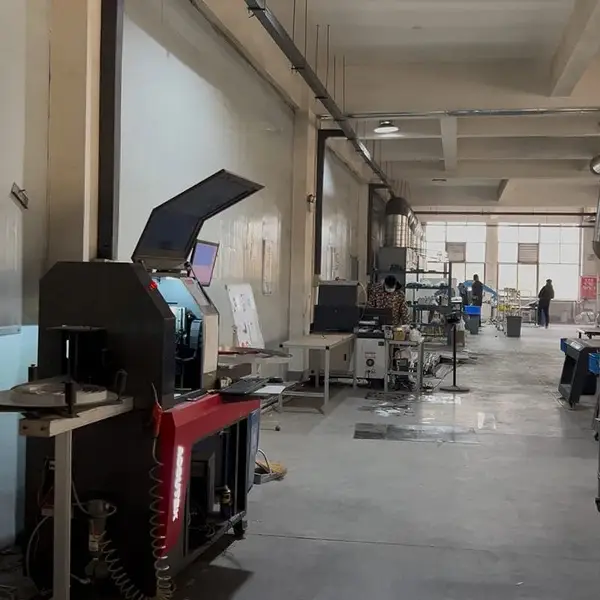
Real photo from our production floor — every sign we ship is made here.
Products mentioned or relevant to this topic — factory-direct, custom built.
From $24/letter · MOQ 1 piece · Flexible lead time · Project-specific compliance documents · ships to 20+ countries
Custom sizes, colors, and finishes. Get a factory price in 24 hours.
Get a Free Quote Copy EmailWhatsApp +86 13865703472 · business@aochuangsign.cn
See pricing, specs, and get a free quote for the sign type you need. Built in our factory, shipped worldwide.