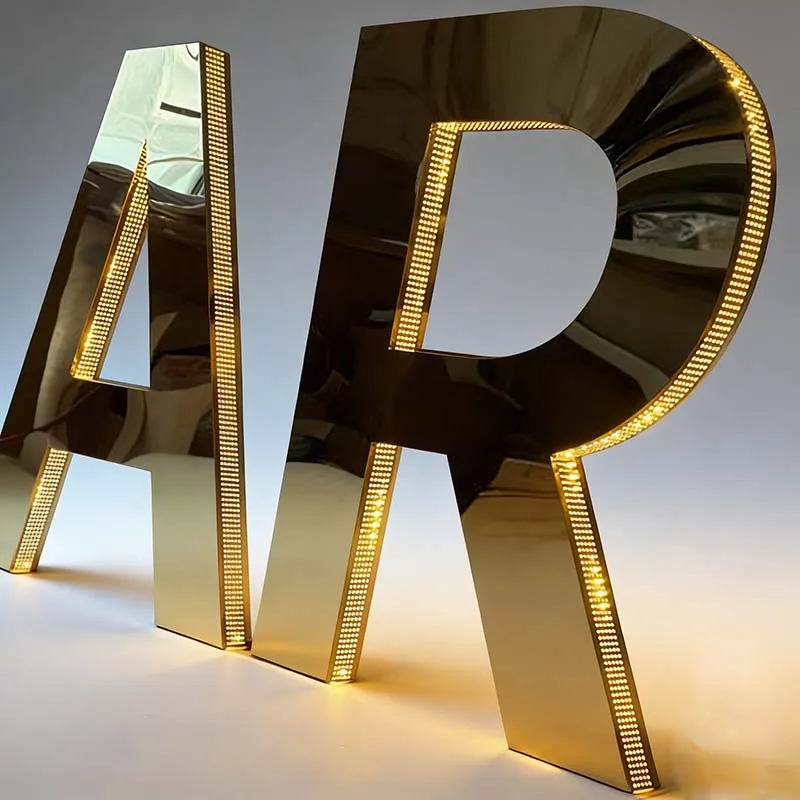
I’ve seen it happen a hundred times. A sign shop owner finds a manufacturer offering channel letters for $20 a pop. They place a bulk order. Six months later, the acrylic has yellowed, the LEDs are flickering, and the client is threatening to sue.
The problem isn’t the price. It’s that nobody verified the manufacturer’s actual quality before cutting the PO.
Here’s a hard fact: cheap SMD 2835 modules from no-name suppliers have an L70 lifespan of 12 to 18 months. Quality modules using Samsung or Osram chips? They’ll run 50,000 hours—over five years of real-world use. The difference isn’t magic. It’s verification.
This guide walks you through seven concrete steps to assess a sign manufacturer’s quality. No fluff. No marketing. Just the stuff that matters on the factory floor.
Photos lie. Videos lie harder. A physical sample doesn’t.
When you request a sample, don’t just ask for “one of your standard signs.” Specify the exact materials you’ll use in production. For example: “Send me a 600mm channel letter with 3mm acrylic (Mitsubishi), SMD 2835 LEDs at 4000K, and a stainless steel 304 back with a brushed #4 finish.”
Once you have it, run these tests:
The thing is, a manufacturer who’s proud of their work will happily send you a custom sample. If they push back or try to upsell you on a “standard” sample, that’s a red flag.
You’d be surprised how often manufacturers swap materials after the order is placed. “We ran out of 304 stainless, so we used 201. It’s basically the same.” No. It’s not.
Here’s a quick reference for what you should demand:
| Material | Specification | Expected Lifespan | Red Flag |
|---|---|---|---|
| Acrylic (Mitsubishi/Degussa) | 3mm, UV-resistant, 90-92% transmittance per ASTM D1003 | 5-8 years before yellowing | Domestic acrylic yellowing in 1-2 years |
| Stainless Steel 304 | 18% Cr, 8% Ni, density 7.93 g/cm³, 1.0-3.0mm thick | 10+ years outdoors | Magnetic stainless (likely 201 or 430) |
| Stainless Steel 316 | 2-3% Molybdenum, marine grade | 15+ years coastal/industrial | No Mo content = not 316 |
| Aluminum | 0.040-0.063" (1.0-1.6mm), anodized or powder coated | 8-12 years outdoors | Thinner than 0.040" or uncoated |
| LED SMD 2835 | 100-150 lm/W, Samsung/Osram/Ledman chips | 50,000+ hours L70 | No brand name on datasheet |
Ask for the material supplier’s name and batch number. For example, request the Mitsubishi acrylic batch certificate or Samsung LED bin code. A quality manufacturer like Aochuang Sign (founded 2010, 3,000m² facility) will provide this without hesitation. If they can’t or won’t, assume they’re using the cheapest substitute.
To verify stainless steel, use a magnet: 304 is non-magnetic, while 201 or 430 will attract. For LEDs, request the LM-80 test report—this measures lumen maintenance over 6,000+ hours and confirms the L70 rating. A manufacturer who can’t provide an LM-80 report for Samsung or Osram chips is likely using knock-offs.
Certifications are not all created equal. And some are outright faked.
For the US market, UL 48 is the gold standard for electric signs. But getting UL certified costs $4,000 to $15,000 per product line and takes 4 to 9 months. Plus, it requires quarterly factory audits. That’s a serious commitment.
ETL is a legitimate alternative. It’s 10-30% cheaper than UL and accepted by most US inspectors. For overseas manufacturers, CE certification is common but does not guarantee compliance with US electrical codes. CE costs 20,000-50,000 RMB and takes 2-8 weeks to obtain.
Here’s what matters most for illuminated signs:
And don’t forget NEC Article 600. That’s the US electrical code for signs. If your manufacturer can’t show compliance documentation, your sign won’t pass inspection.
One more thing: ISO 9001 certification is a sign of a quality management system, not product quality. But it shows the factory has standardized processes. Aochuang Sign holds ISO 9001, CE, and RoHS certifications. That’s a good baseline.
You don’t need to fly to China to check a factory’s quality control. But you do need to ask the right questions.
A manufacturer with a real QC system will have a documented 10-step production process. For example, a quality sign maker will follow this sequence:
Ask them: “What’s your QC pass rate for the last 100 orders?” If they hesitate or give a vague answer, that’s a problem. A good factory tracks this metric and can share it.
Also ask for photos or video of their aging test. A sign that passes an 8-hour burn-in is far less likely to fail on your wall.
Warranties are the easiest thing to fake. A manufacturer can promise “5 years” and then ghost you after 6 months.
Here’s what a real warranty looks like:
But the real test is how they handle a warranty claim. Ask them: “What happens if a sign fails after 14 months? Do you replace it? Do I pay shipping?” If they don’t have a clear policy, walk away.
And never accept a warranty that’s only valid if you buy their “approved” installation service. That’s a lock-in tactic, not a quality guarantee.
Every manufacturer has a portfolio. But not every portfolio tells you the truth.
When reviewing past projects, look for:
Here’s a trick: ask to see a project from 2 years ago. Then ask for a recent photo of that same sign. If the manufacturer can’t provide it, the sign probably failed.
Quality costs money. But it shouldn’t cost a fortune.
Here’s a realistic price breakdown for factory-direct signs (based on Aochuang Sign’s pricing):
| Sign Type | Factory Price (per letter) | US Retail Installed | Factory-Direct Savings |
|---|---|---|---|
| Front-lit channel letter | $20–$80 | $200–$700 | 50-65% |
| Back-lit halo letter | $35–$120 | $400–$1,000 | 50-65% |
| Stainless steel non-lit letter | $15–$40 | N/A | Significant |
| 3D fabricated letter | $40–$120 | N/A | Significant |
| Aluminum letter | $10–$25 | N/A | Very high |
Lead time matters too. A quality manufacturer will quote about 5-15 days for production. If they promise 3 days, they’re skipping steps—likely the aging test and QC inspection.
Shipping adds cost. Express (7-10 days) costs $30-100 for small orders. Air freight (about 10 days) is $4-12/kg. Sea freight (about 65 days) runs $80-200/m³ for LCL or $1,200-3,000 for a full container. And don’t forget the US Section 301 tariff—roughly 30% on Chinese-made signs.
But even with tariffs and shipping, factory-direct pricing is still 50-65% below US retail. The savings are real—if you verify quality first.
Start with the edge test (fingernail check for burrs). Then run the sign for 24 hours continuously—check for LED flicker or failure. Spray it with a garden hose at close range (simulating rain). If water gets inside the seal, that’s an immediate fail. Finally, leave the sample in direct sunlight for one week. If the acrylic yellows or the paint fades, the UV protection is inadequate.
Ask for the LED module datasheet with the chip brand and model number. Genuine Samsung or Osram chips have traceable batch codes. You can also test the light output: a quality SMD 2835 module should deliver 100-150 lumens per watt. Cheap knock-offs will be dimmer and run hotter. Use a lux meter to compare against a known standard.
A real warranty is specific. It states the exact coverage period for each component (LEDs: 2 years, power supply: 1 year, structure: 1 year). It explains the claim process—who pays for return shipping, how replacements are handled, and the timeline. Avoid warranties that require you to use “approved” installers or that exclude “normal wear.” If the warranty is one paragraph of vague promises, it’s worthless.
Request their QC checklist and pass rate data. Ask for photos or video of the aging test and final inspection. A good manufacturer will also provide third-party test reports (e.g., IP rating verification, material composition analysis). If they can’t share any of this, assume their QC is minimal. Virtual factory tours via video call are also becoming standard—insist on one.
The top five defects are: (1) poor welds that crack or rust, (2) uneven LED illumination, (3) acrylic yellowing within 1-2 years, (4) seal failure leading to water ingress, and (5) color inconsistency between batches. Screen for these by inspecting a physical sample, checking material batch numbers, and ordering a small pilot run before committing to a large order. A manufacturer with a 100% QC inspection step (like Aochuang Sign) will catch these issues before shipping.
John Mitchell is a sign industry veteran with over 15 years of experience in quality assurance and supply chain management for custom signage. As a former factory inspector for UL-certified facilities in Asia, he has audited more than 200 sign manufacturers and helped dozens of US sign shops reduce defect rates by 40% through rigorous material verification. John now consults with sign buyers to navigate factory-direct sourcing and avoid costly quality pitfalls.
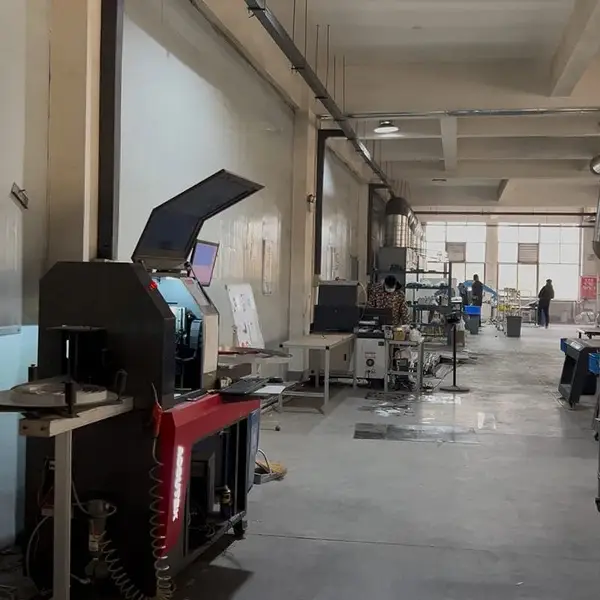
Real photo from our production floor — every sign we ship is made here.
Products mentioned or relevant to this topic — factory-direct, custom built.
From $24/letter · MOQ 1 piece · Flexible lead time · CE & UL certified · ships to 20+ countries
Custom sizes, colors, and finishes. Get a factory price in 24 hours.
Get a Free Quote Copy EmailWhatsApp +86 13865703472 · business@aochuangsign.cn
See pricing, specs, and get a free quote for the sign type you need. Built in our factory, shipped worldwide.