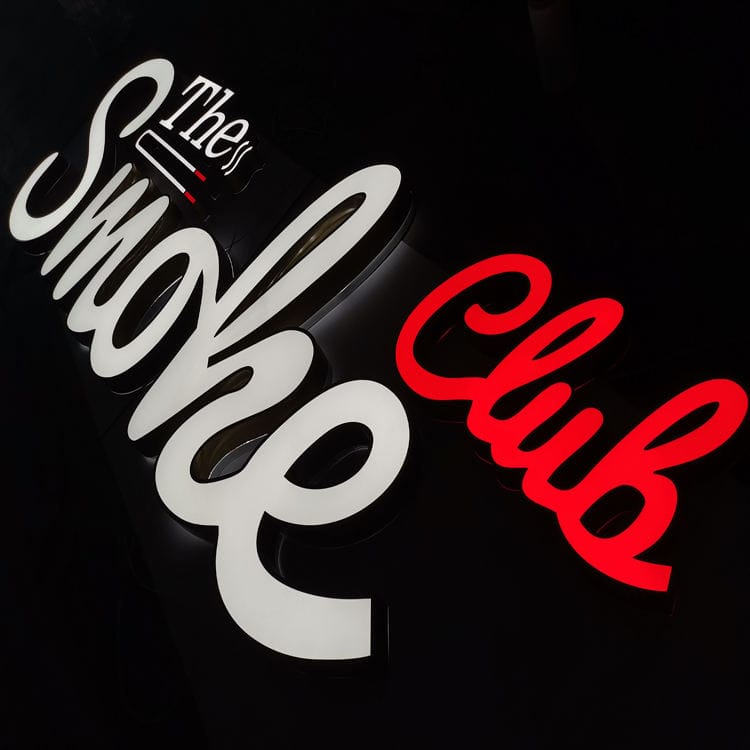
Look, I've unspooled enough LED neon flex to wrap a strip mall twice, and most of what gets sold as "premium" wouldn't survive one monsoon season in a Gulf Coast parking lot.
The difference between a $40 sign and a $200 sign isn't the glow. What separates them is what's inside the silicone.
I'm going to tell you what I tell every contractor who calls my shop after a cheap install fails: understand the construction, check the specs, and stop believing a CE mark means quality.
Here's what nobody tells you: the housing matters more than the LED. PVC is cheap and stiff. Silicone costs maybe 40% more, but it bends tighter and doesn't yellow like PVC after two summers.
Inside that housing, you'll find an SMD light engine. SMD 2835 is the industry standard and runs 100-150 lm/W. That's what I put in 80% of our LED neon flex orders because it gives the best brightness without cooking the strip.
For RGB color-changing, you want SMD 5050. It has three channels in one package, so it can hit full color. SMD 5730 gives you 40-60 lm per chip and it's the brightest, but it also runs hotter, so spacing and heat-sinking matter more.
Looks simple. It isn't.
Profiles: top-bend flex only bends side to side, side-bend bends up and down, and 360-degree flex bends everywhere. If a supplier can't tell you which one they're quoting, walk away.
We cut at the factory-specified interval—usually every 2.5 cm or 5 cm—and never mid-run. Cut in the wrong spot and you've just turned a 50,000-hour product into a 50-hour one.
The ugly truth is most buyers check the price per meter and ignore the datasheet.
Verify four things: luminous efficacy, CCT, IP rating, and warranty. A quality SMD 2835 strip should give you 100-150 lm/W. If a supplier quotes 180 lm/W for the same diode, they're lying or they're measuring in a freezer.
Color temperature is not decoration. 3000-3500K is warm and works for hospitality. 4000-5000K is neutral, what you want for corporate and retail. 6000-6500K is cool and belongs on industrial or highway signage.
Here's what happens when you ignore that: a warm white strip run at 4000K looks clinical. A cool white strip in a steakhouse makes the food look like a morgue tray. The customer notices. They just can't tell you why they hate it.
Check the solder joints. Quickest way to spot bad LED modules: dull gray joints mean no-name solder that'll crack in 18 months. Shiny silver joints mean proper lead-free solder. That's the difference between a 12-month warranty and a 5-year lifespan.
Warranty: we give 2 years on LEDs, 1 year on the power supply. If a factory offers 5 years on LEDs with no brand-name chips, ask what happens when the phosphor shifts and the color looks like old nicotine.
Need certification. CE costs 20,000-50,000 RMB. Most factories will say they have it. Ask to see the certificate with today's date. Watch them sweat.
I've seen this go wrong: a client insisted on real glass neon for a 20-foot storefront because "LED looks fake." Six months later, a hailstorm cracked three tubes. The repair bill ran $1,200 and the sign sat dark for a week.
That replacement LED neon flex cost $140 from our factory. Four years later, it's still running without a hiccup.
For total cost over five years, don't just look at the product. Look at energy, maintenance, and replacement labor. Traditional glass neon runs on a 15,000V transformer that hums and burns out. LED neon flex runs on 24V DC and sips power.
A cheap LED strip might die in 18 months. A Samsung- or Osram-driven strip lasts 5+ years at L70. That's 50,000 hours before it loses 30% brightness. Your maintenance crew isn't going out three times because you saved $2 per meter.
If you want the glass neon look without the glass, back-lit halo letters give you that clean glow with the same LED engines. Or you can bend LED neon flex into channel letter returns and get 90% of the visual for 30% of the cost.
Factory-direct pricing for LED neon flex runs $30-200 per sign. A US shop installing a similar front-lit channel letter charges $200-700 per letter. You do the math on a six-letter sign.
Look, you can't bend a sign straight after the silicone's cured wrong. Our process isn't magic. Discipline keeps it straight.
We start with the LED reel and inspect every solder joint under magnification. Dull gray goes back to the supplier. Then we cut to length at factory intervals, solder end caps, and pull the strip through the silicone profile.
Sealing matters. We use neutral-cure silicone because the acid-cure stuff eats copper traces. That's a rookie mistake I've seen too many factories make because acid-cure is cheaper.
We run every batch through an 8-12 hour aging test. If there's a bad solder joint or a weak driver, it'll fail on our bench, not on the sign.
Then 100% QC inspection. Not a sample. Every single meter. We check color shift, brightness uniformity, and bending radius. One dead chip in a run and the whole strip goes to rework.
Certifications: we hold CE, RoHS, and ISO 9001. For the US market, you might need UL 48 or ETL. UL 48 costs $4,000-15,000 and takes 4-9 months with quarterly audits. ETL is accepted by most AHJs and runs 10-30% cheaper.
Don't buy from a factory that won't show you their QC checklist. If they can't tell you how long their burn-in lasts, they don't have one.
The bad news? That same neon flex that looks perfect inside a mall will fail in six months on a coastal boardwalk if you spec the wrong IP rating.
IP65 is the minimum for outdoor. That rating is dust-tight and handles water jets from any direction. That doesn't mean your sign survives a Florida hurricane. For coastal salt spray, step up to IP66. For submersible or monsoon exposure, IP68 is what you need, but you'll pay for it.
Color temperature: a restaurant patio wants 3000-3500K warm. A law firm lobby wants 4000-5000K neutral. A truck stop on I-80 wants 6000-6500K cool because it cuts through fog and matches highway lighting.
For mounting, if you're putting flex on a metal backer, 304 stainless steel is fine inland. Coastal jobs need 316, which costs 20-30% more and won't pit from salt spray.
If you want a clean flat face for the flex to sit on, use an acrylic backer. Acrylic gives 90-92% light transmittance if you're using it as a diffuser. As a solid backer, you just get a clean, paintable surface.
For a storefront that needs to be visible from the road, I usually recommend front-lit channel letters with neon flex inside the returns. That gives you the neon look with the durability of a channel letter.
I've watched sign shops pay $800 for a front-lit letter from a domestic fabricator. Same 304 stainless, same Samsung LEDs. We ship that same letter for $80.
We don't cut corners. We run a 3,000-square-meter factory in Lu'an with 50 workers and an ISO 9001 line. Our MOQ is one piece. Lead time is about 5-15 days. Warranty is 2 years on LEDs, 1 year on power supply.
Shipping: express takes about 5-15 days and costs $30-100 for small orders. Air freight is about 10 days at $4-12/kg. Sea freight takes about 65 days; LCL costs $80-200 per cubic meter, and a full container runs $1,200-3,000.
Nobody mentions this about sea freight: dockhands handle your crate 6-8 times between our dock and yours. Every touch is a chance for damage. Brochures don't mention that.
US Section 301 tariff adds about 30% to the invoice. Factor that in before you compare quotes. Some factories quote without tariffs, then your freight forwarder surprises you at the port.
Factory-direct pricing on neon flex runs $30-200 per sign. A domestic shop charges $200-700 per letter for the same job. That's 50-65% savings before you even negotiate.
But don't buy on price alone. Ask to see the CE certificate with today's date. Ask for the datasheet with the LED chip brand printed on it. Ask for a photo of the solder joints. If they can't show you, find another factory.
What's the minimum order quantity? One piece. I don't care if you're ordering one 12-inch sign or a hundred. MOQ is 1. We're not doing you a favor; we're running a factory that knows how to batch.
Can I get IP68 for an indoor sign? Sure, if you like paying more for a rating you don't need. IP65 handles water jets. IP66 is for coastal salt spray. IP68 is for submersible or monsoon. Don't spec a submarine when you need a mailbox.
Why do your prices fluctuate with LED chip suppliers? Because Samsung and Osram charge more than no-name chips. Cheap modules die in 12-18 months. Quality ones run 5 years. You're not buying a light; you're buying the next five years of not taking the sign down.
Do I need UL for a sign in a US strip mall? Maybe not UL, but your inspector will ask for a listed power supply and NEC Article 600 compliance. UL 48 costs $4,000-15,000 and takes 4-9 months. For most jobs, an ETL mark is fine and 10-30% cheaper. Stop asking if you can skip it. Ask which listing your local AHJ accepts.
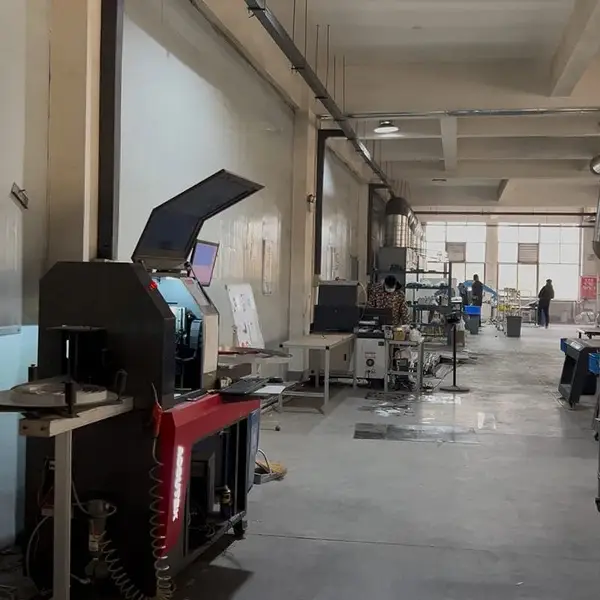
Real photo from our production floor — every sign we ship is made here.
Products mentioned or relevant to this topic — factory-direct, custom built.
From $24/letter · MOQ 1 piece · Flexible lead time · CE & UL certified · ships to 20+ countries
Custom sizes, colors, and finishes. Get a factory price in 24 hours.
Get a Free Quote Copy EmailWhatsApp +86 13865703472 · business@aochuangsign.cn