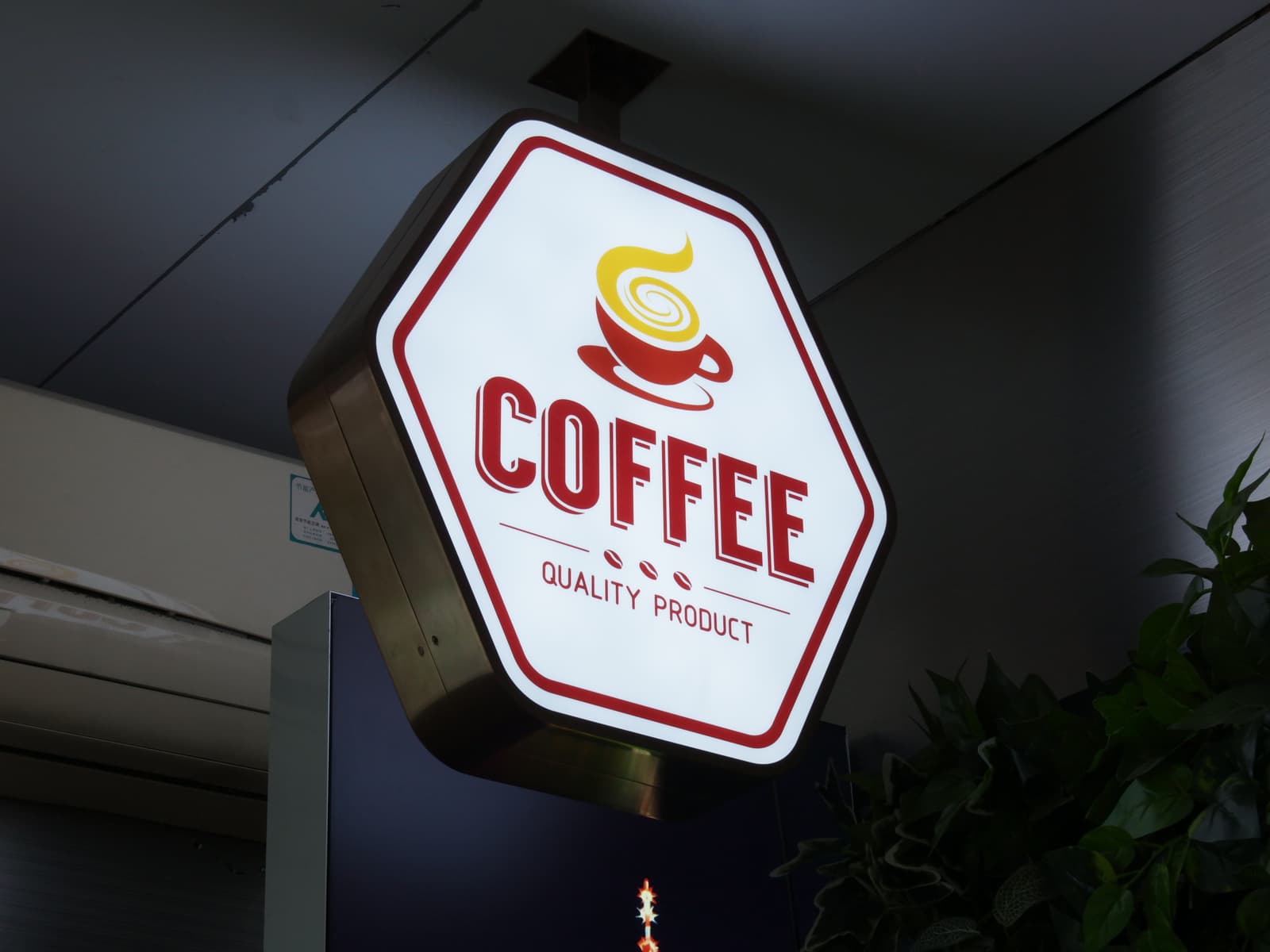
I’ve watched a hospital chain pay $40,000 for a set of exterior channel letters that failed within 18 months because the installer used cheap IP65-rated modules in a coastal environment. That’s not an oopsie — that’s a lawsuit waiting to happen. Medical office signage has to survive 24/7 operation, meet ADA mounting heights (48–60 inches to the baseline of tactile characters), and pass NEC Article 600 for electrical connections. Retirees with bad hips don’t care about your font choice. They care that the “Emergency” sign is lit when they can’t find the entrance at 2 a.m.
Here’s what nobody tells you: the most expensive part of a medical sign isn’t the metal or the LEDs — it’s the certification. UL 48 listing for a single sign design runs $4,000 to $15,000 and takes 4–9 months, plus quarterly factory audits. CE marking costs 20,000–50,000 RMB (about $2,800–$7,000) and takes 2–8 weeks. Most factories say they have it. Ask to see the certificate with today’s date. Watch them sweat. We’ve got CE, RoHS, ISO 9001, and we still keep paper copies for every export order because customs in the EU and US will hold your shipment if the paperwork doesn’t match.
You want a front-lit channel letter for a medical plaza? Expect to pay $200–700 per letter at retail in the US. That same letter — 304 stainless, 1.0–1.6mm thickness, SMD 2835 LEDs at 100–150 lm/W, UV-resistant acrylic with 90–92% light transmittance — ships from our factory for $120. And that includes a 2-year LED warranty (L70 ≥ 50,000 hours) and a 1-year power supply warranty. I’ve seen this go wrong: a sign shop I know paid $800 per letter domestically for the same spec. They’re still paying off the loan.
The ugly truth is that 90% of exterior medical signs use 304 stainless with a brushed #4 finish. That’s fine for inland Ohio or Kansas — 10+ years outdoor life. But if your facility is within a mile of saltwater, like Miami Beach or Galveston, you need 316 stainless. It costs 20–30% more, but it contains 2–3% molybdenum that resists chloride pitting. I’ve replaced 304 signs on a doctor’s office in Charleston after three years because the letters looked like they’d been shot with a rust gun. The owner didn’t want to spend the extra $400. He spent $2,800 instead.
Look, IP65 sounds impressive. It means dust‑tight and protected against water jets from any direction. It does NOT mean your sign survives a Florida hurricane or a monsoon in Houston. For medical buildings, spec IP66 minimum — that’s powerful jets. If you’re near the Gulf or Atlantic, go IP68 (submersible). We’ve seen cheap imported “waterproof” modules fail after one heavy rain because the silicone sealant wasn’t neutral cure. Neutral silicone doesn’t corrode aluminum. Acidic silicone does. A 50‑cent mistake per letter costs you a $5,000 redo.
Quickest way to spot bad LED modules: look at the solder joints. Dull gray means the solder’s contaminated — won’t last 18 months. Shiny silver means proper lead‑free solder with good wetting. We use Samsung and Osram chips in our SMD 2835 modules. Cheap ones use unbranded chips that hit 70% lumen depreciation at 12–18 months. Medical signage can’t afford that. A dark “Radiology” sign at midnight gets complaints, and complaints get forwarded to the building owner.
Interior signage for healthcare facilities is where most architects screw up. They spec pretty brushed aluminum with soft lighting. Then the ADA inspector shows up and says those floating letters aren’t tactile, the contrast ratio is wrong, and Grade 2 Braille is missing. Every interior sign in a medical building — room numbers, restrooms, exit signs, department labels — must comply with ADA Standards for Accessible Design. That means:
Here’s what nobody tells you: most Chinese factories don’t know ADA from a hole in the wall. They’ll slap on Braille that’s the wrong dot spacing or use a domed acrylic face that creates glare. We built a dedicated ADA line because we got sick of redoing orders. For tactile signs, we use 3mm acrylic face with 1.6mm aluminum backing. The Braille is CNC‑drilled, not pressed. Pressed dots deform after a few years. Drilled dots last 15+ years.
I’ve seen this go wrong: a $200,000 medical center in Texas ordered interior signs from a cut‑rate online supplier. The Braille was spaced 2.8mm center‑to‑center instead of the required 2.3mm. The building failed inspection. They had to replace 42 signs. My quote for a rush order of 42 ADA‑compliant signs was $6,200. Their lost time and re‑inspection fees? $14,000.
Color temperature matters more than you think. For medical office hallways, waiting rooms, and exam rooms, stick to 4000K–5000K neutral white. 3000K warm looks cozy but makes skin tones look jaundiced — bad for a dermatology clinic. 6000K cool looks like a morgue. We use SMD 2835 LEDs in those signs because they deliver 100–150 lm/W with a high CRI (>80). Cheap modules have CRI of 70 — everything looks gray. Patients don’t need to feel like they’re in a basement.
We don’t just weld letters and slap them in a box. Every medical sign goes through 10 steps, and each step takes a specific number of hours. Total lead time: 7–15 days. Here’s the breakdown from our floor:
Look, I’ve listened to sales guys promise “cutting‑edge” and “game‑changer.” Those words mean nothing. What matters is whether the silicone is neutral cure, the LEDs are brand‑name, and the stainless is 304 or 316. Our QC catches about 5% of signs that need rework — usually a loose ground wire or a crooked Braille dot. That 5% doesn’t ship. It gets fixed.
The ugly truth is that US hospital administrators don’t care where signs come from as long as they meet code and arrive on time. If your medical office buys from a domestic sign shop, you’re paying 50–65% more than factory‑direct. Example: a 12‑inch back‑lit channel letter (halo-lit, 304 stainless, Samsung LEDs) retails in the US for $400–1,000 per letter. Our factory price: $35–120. For a typical 20‑letter building sign, that’s $700–2,400 from us vs. $8,000–20,000 from a domestic fabricator.
But here’s the catch nobody mentions: the US Section 301 tariff on Chinese‑origin signs is about 30%. Add that to our factory price, plus freight, plus customs brokerage, plus local installation — and you’re still saving 30–40% compared to domestic. I’ve watched a medical chain in New Jersey run the numbers. They saved $14,000 on a $32,000 budget by importing. Then they spent $2,000 on an ETL listing (10–30% cheaper than UL) and got their sign approved in 6 weeks instead of 9 months.
Shipping matters too. Express courier (DHL/FedEx) takes 7-10 days and costs $30–100 for small orders. Air freight: $4–12/kg, about 10 days. Sea freight: $80–200 per cubic meter for LCL, about 65 days. And let me tell you: LCL sea freight means your crate gets handled 6–8 times between our dock and yours. Every touch is a chance for damage. We crate every medical sign with plywood and corner brackets — but I’ve still seen a shipment arrive with a forklift hole through two letters. Pay for air if you can’t handle a delay.
If you’re in the US and the sign has electrical components (LEDs, power supply, neon flex), it needs to

Real photo from our production floor — every sign we ship is made here.
Products mentioned or relevant to this topic — factory-direct, custom built.
From $24/letter · MOQ 1 piece · Flexible lead time · CE & UL certified · ships to 20+ countries
Custom sizes, colors, and finishes. Get a factory price in 24 hours.
Get a Free Quote Copy EmailWhatsApp +86 13865703472 · business@aochuangsign.cn
See pricing, specs, and get a free quote for the sign type you need. Built in our factory, shipped worldwide.