I’ve watched a 12-foot aluminum pole sign fold over a parking lot like a cheap lawn chair. Wind’s no joke.
You want to know about metal pole signs? Good. The difference between a sign that stays up for 15 years and one that becomes a lawsuit usually comes down to a few millimeters of steel, a stamped set of calcs, and a foundation that actually goes below the frost line. I’ve spent the last 14 years on a factory floor in Lu’an, Anhui, building these things for clients from Ohio to Dubai. Here’s what actually matters.
Look, aluminum is the workhorse. It weighs one-third of steel, so your installers won’t hate you. Expect 8–12 years outdoors, and it’s naturally rust-proof. For most inland locations, 5052 aluminum at 1.0–1.6mm does the job.
Galvanized steel? I’ve seen it used a lot in budget sign packages. The zinc coating helps, sure, but once you weld it, you burn that coating right off. Then you’re left with bare steel at the joints, and nobody wants to pay for touch-up galvanizing. That’s a rookie move.
Here’s what nobody tells you: for coastal or industrial zones, galvanized steel isn’t enough. Stainless steel 304 is the baseline if you want 10+ years outdoors. Stainless 304 is 18% chromium and 8% nickel, density 7.93 g/cm³. If you’re within a mile of salt water, pay the 20–30% premium for 316 stainless steel letters and components. The molybdenum is what saves you.
For a strip mall pole sign in Ohio? 304 is fine. For a Miami Beach pylon? 316 or you’re replacing cabinets in three years. I had a client in Clearwater specify 304 for a beachfront pole sign. Two years later, pitting. Saved $600, paid $6,000 to refabricate.
Most building departments reject metal pole signs because the shop didn’t submit stamped engineering drawings with the wind load calcs—not because the sign is bad. You can’t skip this.
Even for a single pole, dead load includes cabinet weight, internal LED modules, acrylic faces, and hardware. A 3mm acrylic face cuts 92% light output but adds real weight to the dead load calc. That’s why we spec 2mm or 3mm acrylic faces carefully, not just for optics but for structural math.
I’ve seen this go wrong: a contractor in Houston mounted a 10-foot aluminum cabinet on a 3-inch schedule 40 pipe with no engineering. Hurricane season turned it into a twisted metal sail. The insurer denied the claim—no stamped calcs.
Seismic calcs matter too. If your sign is in a zone with specified ground acceleration, you need base moment and natural frequency numbers. Most shops skip it if the sign is under 30 feet. Don’t. Building departments look for that stamp.
Here’s the part nobody thinks about: the pole is only as good as the hole in the ground.
Soil bearing capacity, wind zone, and pole height determine your foundation depth. In my experience, a 20-foot pole sign in sandy soil needs a concrete pier at least 6 feet deep with a rebar cage. But that’s a rule of thumb, not a spec. Get a geotech report.
Look, if your supplier doesn’t ask about frost depth, soil type, or local wind speed before quoting, don’t sign. Walk away. That’s the first filtering question. I don’t care how pretty the render looks.
We embed base plates with leveling nuts and grout, but you need a stamped engineer in the state where the sign goes to design the embedment. Chinese factories can provide fabrication drawings with ±0.1mm tolerances, but the local stamp's your job. Don’t cheap out on the guy with the seal.
Finish is where I see the most lies.
Powder coat on aluminum gives you an 8–12 year life if it’s done right. On stainless, a brushed #4 finish looks clean. Mirror #8 looks high-end but shows fingerprints from across the parking lot. We also do PVD and powder coating. For marine, 316 stainless with a baked paint finish or electroplated chrome? Don’t. The coating can trap chlorides and eat the base metal from underneath.
CE marking doesn’t mean corrosion-resistant. That certification costs 20,000–50,000 RMB and proves electrical safety, not salt spray resistance. I’ve had buyers ask for CE on a non-lit stainless pole sign. Meaningless. Ask for material certs, not wall certificates.
Here’s what nobody tells you: a lot of imported pole signs fail inspection because the cabinet is out of square by 5mm or the acrylic face is warped from cheap material. We cut with a laser at ±0.1mm. That’s the standard you should demand.
Quality audit isn’t a video call where they wave at the product. Ask to see the QC sheet for your specific order: material thickness, weld penetration, LED aging test. We run every sign through an 8–12 hour aging test and 100% QC before packing.
I’ve rejected entire batches for dull solder joints. Quickest way to spot cheap LED modules: dull gray solder means they’ll fail in 12–18 months. Shiny silver means proper lead-free solder. If you’re adding a cast aluminum or bronze plaque to the pole base, inspect the casting for porosity. Cheap foundries skip degassing, and you get pinholes that show up after powder coat.
Let’s talk money.
Factory-direct pricing for metal letters runs $15–40 per letter for stainless steel non-lit, and $80–250 per square meter for light boxes. But a metal pole sign is more than the cabinet; you’re paying for structural steel, foundation engineering, crane rental, and local install. Product is only half the total cost.
I’ve watched sign shops pay $800 for a front-lit letter from a domestic fabricator. Same 304 stainless, same Samsung LEDs. We ship that letter for $120. But that savings doesn’t include logistics, tariffs, and your time.
Sea freight takes 50–70 days and costs $80–200 per cubic meter LCL. Air freight is $4–12/kg and lands in 10–20 days. Add the 30% Section 301 tariff on most sign products. If you need it next month, air freight and tariff might eat your margin. If you’re sourcing a double-sided lightbox for a pole sign, factory-direct pricing runs $80–250/sqm, but check UL/ETL if it’s lit.
Minimum order? One piece. Lead time 7–15 days. But don’t air-freight a 20-foot pole sign and then complain about the bill. That’s on you.
Do I need UL listing for a metal pole sign?
If it’s non-lit, no. If it has LEDs, in the US, NEC Article 600 applies. UL 48 certification runs $4,000–15,000 and takes 4–9 months with quarterly audits. ETL's a cheaper alternative—10–30% less. Don’t ask for CE on a US pole sign; inspectors won’t accept it.
Can you provide wind load calculations?
We provide fabrication drawings with exact material specs and tolerances, but the stamped engineering for your state? That’s on you or your local engineer. Anyone who says a Chinese factory will stamp US calcs is either lying or using a rubber stamp.
What’s the minimum order?
Minimum order? One piece. Yes, one. We ship single prototypes by express in 7–15 days. But shipping one 20-foot pole sign by air will cost more than the sign.
How long will the finish last?
If you use domestic acrylic, 1–2 years before yellowing. UV-resistant acrylic from Mitsubishi or Degussa? 5–8 years. Stainless 304: 10+ years outdoors. Stainless 316 marine grade: 15+ years. If you paint over cheap steel, maybe 2 years. You decide.

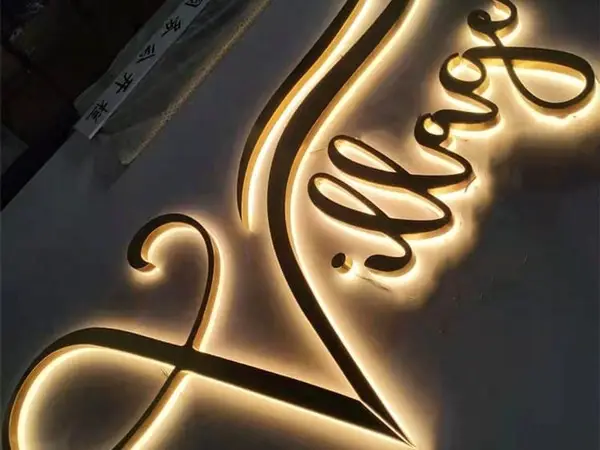
Real photo from our production floor — every sign we ship is made here.
Products mentioned or relevant to this topic — factory-direct, custom built.
From $24/letter · MOQ 1 piece · Flexible lead time · CE & UL certified · ships to 20+ countries
Custom sizes, colors, and finishes. Get a factory price in 24 hours.
Get a Free Quote Copy EmailWhatsApp +86 13865703472 · business@aochuangsign.cn