The ugly truth is most sign comparisons online are written by marketing guys who've never touched a sheet of 304 stainless. I've got 16 years on this floor. Let's talk about which material actually belongs on your storefront, not which one sounds fancier in a brochure.
Metal signs look expensive. Acrylic signs look clean. Both can be priced like a luxury item or a commodity, and both can fail spectacularly if you feed the customer the wrong specs.
Here's what nobody tells you: the material isn't the real decision. The environment, the budget, and the message lifespan are the decision. The material just carries the weight.
---
## The Core Difference: Mass and Message
Metal letters — stainless steel, aluminum, brass — are architecture. They sit on the building like they own it. A 3mm stainless steel letter with standoffs creates a shadow line that says "permanent." It'll outlast the business owner's mortgage in most cases.
Acrylic is the chameleon. You can backlight it, face-light it, shape it into anything. It's the workhorse of the sign trade. But here's the catch: acrylic has a lifespan, and if your supplier tells you otherwise, they're lying.
The 90-92% light transmittance of quality acrylic (Mitsubishi or Degussa) is what makes channel letters glow at night. That's science, not marketing. But a domestic acrylic face will start yellowing in 1-2 years. UV-resistant material pushes that to 5-8 years.
---
## What You're Actually Buying: Materials Breakdown
Let's get real about the options.
**Stainless Steel (for
stainless steel letters):** 304 grade has 18% chromium, 8% nickel. Outdoor life of 10+ years in most environments. For storefronts further than 5 miles from ocean salt air, 304 is your answer. It's $20-40 per letter factory-direct. Get it brushed #4 or mirror #8. Both look professional if the welds are clean.
**316 Marine Grade:** This is the coastal insurance policy. Contains 2-3% molybdenum, costs 20-30% more. If you're signing a building on Ocean Drive in Miami, spend the money. If you're doing a strip mall in Ohio, you're burning cash.
**Aluminum:** Third the weight of steel. Naturally rust-proof. 8-12 year outdoor life. The
aluminum letters in our shop run $10-25 per letter. Great for a budget that still wants the metal look.
**Acrylic:** Don't use domestic if you want it clear past year two. Mitsubishi or Degussa acrylic keeps 90-92% transmission. Common thicknesses: 2mm, 3mm, 5mm. If your letter is over 2.5 meters, you jump to 5mm plus, or it'll flex and crack.
---
## The Head-to-Head: Metal vs Acrylic
Look, I've seen this go wrong more times than I can count. A contractor spends $9,000 on acrylic channel letters for a coastal restaurant and wonders why they look like crap after 18 months. The UV degradation ate the face, and the salt air corroded the cheap LED modules.
Metal signs don't have that problem. That 304 stainless will still be standing when the building gets demolished. But the upfront cost is heavier, and you can't backlight solid metal without doing halo letters, which changes the whole aesthetic.
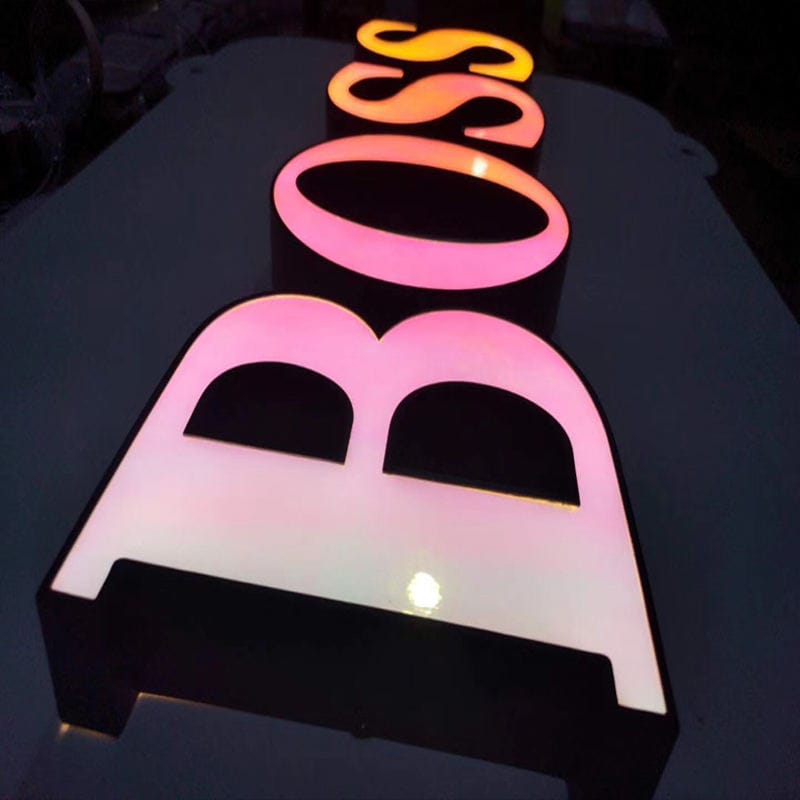
Acrylic signs have one secret weapon: light. You can't get that glowing face from solid metal. That's why most storefronts use
front-lit channel letters — a metal can with an acrylic face. You get the structural durability of aluminum or steel behind the glow.
---
## The Decision Tree: Which One For Your Job?
Here's a quick judgment guide I've developed from shipping worldwide:
**Choose acrylic (light box or channel face) when:**
- You're on a budget and need the factory-direct savings (50-65% less than US retail)
- You want the glow that brings in customers at night
- You're renting the space and only need 3-5 years
- You're in a retail district where visual impact > permanence
**Choose metal when:**
- You own the building and want to install once
- The business is high-end: law firms, banks, luxury retail
- You want the 3D dimensional look that catches morning light
- You're in a harsh environment that will destroy acrylic
---
## Brutal Honesty #1: The "Cheap Acrylic" Trap
Here's what nobody tells you about cheap import acrylic signs. The 12-18 month LED modules will die first. L70 rating means after 50,000 hours, the LED drops to 70% of its original brightness. That sounds like a decade, but cheap modules don't last 10,000 hours in the heat of a letter can.
We use Samsung/Osram/Blueview modules because they actually hit the 5+ year mark. They cost more. The factory-direct price difference is $2-3 per letter. That's the difference between a customer happy at year 4 and a customer emailing at month 14 with half their sign dead.
If a Chinese factory quote looks like magic, read the spec sheet. Ask which LED chip. Ask if the aluminum is A-grade. We quote honest, you get honest.
---
## Long-Term Cost Comparison (The Numbers That Matter)
Let's do real math for a 10-letter sign, 14 inches tall:
**Acrylic
channel letters (front-lit):**
- Factory-direct: $20-80/letter = $200-800
- US retail installed: $200-700/letter = $2,000-7,000
- Lifespan before significant degradation: 3-5 years
- Replacement cost: eat the whole number again
**Stainless steel (non-lit):**
- Factory-direct: $15-40/letter = $150-400
- US retail installed: $400-1,000/letter for halo-lit
- Lifespan: 10+ years, honestly longer than the business
- Maintenance: wipe it down twice a year
**The 10-year picture:** acrylic will cost you two or three installs if you're in a harsh environment. Metal costs you once. But acrylic puts money in your pocket tonight with glowing visibility. There's no universal right answer — there's only the right answer for the lease terms and the landlord.
---
## When Acrylic Beats Metal: The Light Box Case
I've seen great acrylic light box installations that absolutely crush metal-only signs. A backlit acrylic face at 2,500 kelvin makes fast food and retail pop at night. You can't replicate that with solid metal — it's physically impossible without adding illumination.
Our
acrylic light boxes run $80-250 per square meter. For a 2m x 0.5m box, that's $80-250 total, not per letter. That's unbeatable for a budget storefront, and the visual impact at night justifies every dollar. The
back-lit halo letters do the same for metal: the steel glows from behind, creating that premium architectural look.
---
## Brutal Honesty #2: The Reality of Tariffs and Shipping
Nobody on YouTube will tell you this, but your US Section 301 tariff on Chinese signs is roughly 30%. You don't avoid it. You budget it.
The factory-direct savings still put you 20-35% ahead of domestic US manufacturing. That's not me being loyal to my country — that's the arithmetic. But if you're quoting a rush job, the shipping times will kill you:
- Express (DHL/FedEx): about 5-15 days, $30-100 for small
- Air freight: about 10 days, $4-12/kg
- Sea freight: about 65 days, $80-200/m³ LCL
Plan your orders 2-3 months ahead for sea freight. The 7-15 day lead time on production is real, but the ocean doesn't care about your grand opening date.
---
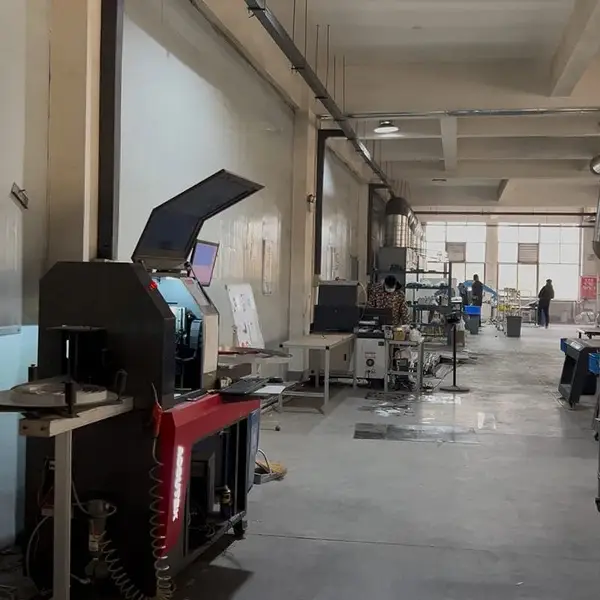
## The Production Reality Check
Here's what you're actually paying for when you buy from a real factory:
1. Design confirmation (1 day)
2. Laser cutting — achieved with ±0.1mm tolerance (1-2 days)
3. Bending and TIG welding (1-2 days)
4. Grinding and polishing (1-2 days)
That's the labor. Then the acrylic face gets CNC-cut, the LED assembly goes in, and the whole thing gets sealed with neutral silicone. We run every sign through an 8-12 hour aging test and 100% QC.
Every single sign. Not "samples." Not "first article." Every. Damn. One.
If a factory can't show you photos of their aging test room, they're not doing it. Quality certifications (CE, RoHS, ISO 9001) cost real money. CE marking runs 20,000-50,000 RMB just in testing. Ask to see the certificate with today's date on it — not the one from 2018.
---
## The Real Answer: What Should You Order?
Here's the decision guide I use for my own customers:
**Order acrylic when:**
- The storefront is in a protected area (not coastal, not extreme sun)
- The customer wants the brightest, loudest visual presence
- Budget is the #1 constraint
- They're leasing and might move in 3-5 years
**Order metal when:**
- The customer owns the property
- The brand is premium or professional (finance, legal, architecture)
- The sign needs to look expensive at any hour
- They want to install once and forget it for a decade
**Order both when:**
- The budget allows it and the building celebrates it
There's actually no conflict between the two materials. Smart storefronts use
dual-lit channel letters — metal returns for structure, acrylic face for daytime color, and halo lighting for night. That's the best of both worlds, and it's what I'd put on my own storefront.
---
## The Final Word
Don't let anyone sell you on a material. Sell the customer on the outcome.
Acrylic signs produce the brightest visibility per dollar. Metal signs produce the most perceived value per square meter. Neither is "better" in the abstract. They're better for specific situations, and your job is to help the customer see which situation they're in.
Ask the customer: are you going to be here in 10 years? Do you need the sign to glow? Is your budget a fixed number or a range you can justify?
When you get those answers, the material chooses itself. And if you're ordering from our shop in Lu'an, Anhui, we'll tell you the same thing we told the last worldwide of customers: order the material that solves the problem, not the one that looks prettiest in the showroom.
We've been at this since 2010. 3,000 square meters. 50+ workers who've welded thousands of letters. And when you talk to our sales team, they'll give you the honest recommendation — even if it means you order less from us this time.
That's how you build a sign business that survives. Not by selling the most expensive thing, but by selling the right thing.