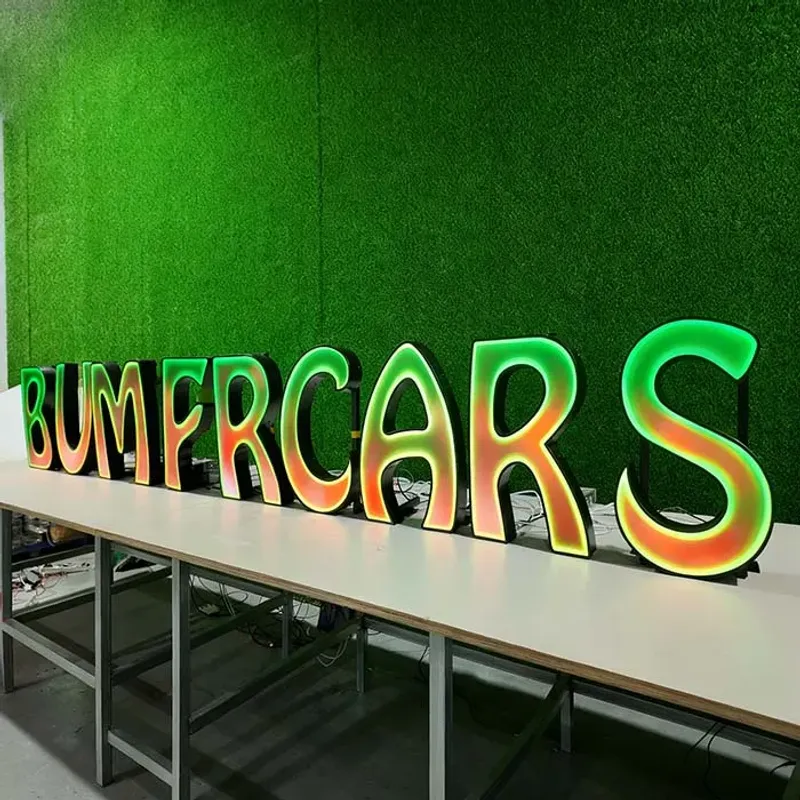
If you're importing electric signs and don't know Article 600 from a hole in the wall, you're about to make a $5,000 mistake.
I’ve watched contractors unbox gorgeous front-lit channel letters, mount them proudly, and then watch the inspector stick a red tag on the door before lunch. The letters worked. The LEDs lit up perfectly. So why did they fail? Because nobody read NEC 600. I’m not a lawyer, not an electrical engineer—I’m the guy who’s spent 16 years on a factory floor in Lu’an, Anhui, and I’ve had to explain this mess to sign shops from Miami to Melbourne. This isn’t a Wikipedia article. It’s everything I’ve learned the hard way about what your AHJ actually looks for, what your factory can actually deliver, and where most importers blow it completely.
NEC 600 is the section of the National Electrical Code that governs electric signs, outline lighting, and neon. It covers everything from the disconnect switch to the last LED module.
It doesn’t care if your sign looks beautiful. It cares if the wiring can survive ten summers without shorting out and burning down a strip mall. The code requires a sign to be listed and labeled by a Nationally Recognized Testing Laboratory (NRTL)—that’s UL 48, ETL, CSA, or equivalent. It mandates a line-of-sight disconnect within 50 feet of the sign. It spells out minimum clearances from combustible materials, proper grounding, bonding, and that all wiring inside a wet-location sign needs to be rated for wet locations. If you put a sign over a public right-of-way, there’s a whole separate set of rules about structural loading. And the kicker: even if you buy a sign with all listed components, the finished assembly is not automatically compliant. The entire sign, as a system, needs approval.
Look, I’ve had a client in Dallas get flagged because his back-lit halo letters used a power supply mounted 18 inches from a gas meter regulator. The inspector cited 600.6—clearance from electrical equipment—and made them relocate the whole display. That’s a $2,000 fix after installation. The sign itself was flawless, 316 stainless, IP66 sealed, Samsung LEDs. Didn’t matter. Nobody factored in the physical location.
Here’s what nobody tells you: blanket statements like “this sign is UL listed” are almost always incomplete.
Real UL 48 listing for electric signs is a full product certification, not a component sticker. It takes 4 to 9 months and costs anywhere from $4,000 to $15,000 per design family. There are quarterly factory audits. If a factory changes the LED spacing or switches from Mean Well to a different power supply, the listing is void until re-evaluated. I know because we looked into it. The ugly truth is that 90% of Chinese sign factories who claim “UL listed” are actually showing you a UL Recognized Component mark on a power supply or an LED strip—not a listed finished sign. That’s a dangerous half-truth. Your local inspector knows the difference. They’ll ask for the UL file number and the listing mark on the sign body. If you can’t produce it, you’re toast.
Field evaluation offers a practical out. When you import a custom channel letter set that can’t be lab-listed before shipping, you can hire an NRTL to inspect the sign on-site after installation. It usually costs $500 to $2,000 per sign depending on complexity and travel. My advice: budget for it. If you order from us, we build everything to NEC-ready standards—correct wire gauges, wet-rated IP65+ terminal boxes, schematics in English—so the field evaluator doesn’t find ten things to fail. We’ll even leave access panels accessible. But we can’t slap a UL sticker on a one-off design. I’m not going to lie to you.
We treat every electric sign as if it’s going to a picky inspector in Chicago. Because half the time, it is.
Inside our factory, the 10-step production flow includes hardwired quality checks that mirror NEC logic. We use only waterproof terminal blocks with dielectric grease, never wire nuts inside a channel letter. All wiring connections get double-layer heat shrink with adhesive lining—you’d have to soak that joint for a decade to corrode it. When we build back-lit halo letters, we space LEDs a minimum of 12mm from the acrylic face so heat doesn’t build up and melt the thermal protection. Our LED modules are Samsung or Osram, constant-current drivers with Mean Well power supplies that carry their own UL listing. Every finished sign goes through an 8-12 hour burn-in test at 110% rated voltage. If it’s going to fail, it fails on my bench, not on your storefront.
I’ve seen this go wrong: a competitor’s acrylic light box looked perfect. The shop owner was thrilled, until a rainstorm. The signmaker had used a sheet of acrylic glued to an aluminum frame with no drainage weep holes, and all the wiring sat in a pool of water. The GFCI breaker tripped repeatedly. The entire window sign was dead within a week. We cut 5mm drainage slots at the bottom edge of every exterior light box and we pressure-test the seals with a hose. IP65 isn't just a stamp—it’s a promise that your sign won’t fill up like a fish tank.
We can’t be your local electrical inspector, your NRTL, or your lawyer. And I won’t pretend otherwise.
If your town has an amendment requiring all exterior sign wiring to be in rigid metal conduit, that’s on you to catch. I can supply a remote power supply with pre-wired whips, but your electrician will need to install the conduit from that disconnect to the sign. We can’t certify that your sign meets local wind-load requirements for a hurricane zone unless you give us the ASCE 7 exposure category and building height. Pay a structural engineer $500. Don’t expect the factory at $120 a letter to do that. Also, we can’t claim an ETL listing for a custom design we’ve never submitted. I’ll happily show you our ISO 9001 and CE certifications, but they’re not the same as a field label. The factory that tells you “we’ll take care of UL” on a custom order without a pre-existing file number is either naïve or dishonest. Rookie mistake: believing them.
1. No disconnect within sight. NEC 600.6 demands a lockable disconnect that a firefighter can kill quickly. I’ve watched a inspector walk right past a gorgeous sign and tag the whole building because the disconnect was in the back room. If you’re installing an aluminum letters set with LED halo lighting, put the disconnect at the roofline near the sign.
2. Using the wrong wire. Inside a wet-location channel letter, you need THWN-2 or XHHW conductors, not NM-B building wire. We ship with pre-installed WTTC-rated cable. Don’t let your installer splice in Romex from the attic.
3. Skipping the ground. Every metal sign body must be bonded to the equipment grounding conductor. Our stainless steel letters get a welded grounding stud on the back. You’d be shocked how many factories skip that.
4. Ignoring clearance from service equipment. That gas meter, the electric panel, the overhead power lines—there are minimum clearances in 600.6 and 110.26. Cheat them and you’ll pay for a relocation.
5. Assuming the power supply’s rating is enough. A 100W power supply can’t run at 100W continuously in a sun-baked sign. We derate by 20%, so a 100W load gets a 120W driver. Hot drivers trip internal thermal fuses and leave your sign half-lit.
Tell us the truth upfront: city, state, mounting height, and whether you need field-evaluation-ready prep.
When you request a quote for front-lit channel letters, we’ll ask for your local code requirements. I’ll review the design and flag anything that might bite you—clearance issues, the need for a disconnect switch integrated into the sign, or if your selected font is so thin we can’t meet minimum LED spacing for even illumination without creating hot spots. Our MOQ is one piece, so even small orders get the same compliance scrutiny. We don’t charge extra to do it right; we just don’t do it the cheap way. A standard front-lit letter might cost you $40 to $80 from us. The same letter installed stateside by a local shop goes for $200 to $700. You save 50-65%, and if you factor in a $1,000 field evaluation, you still come out ahead. I’ve got a customer in Austin who orders 30 letters at a time, pays a flat $1,200 per set for on-site evaluation, and his total landed cost is 40% below the local sign company quote that included UL listing built-in because it was a high-volume catalog letter. The math works if you’re not scared of a clipboard.
Compliant doesn’t mean gold-plated. It means the right components and no shortcuts.
We’ve already baked most compliance into our standard pricing. When you pay $120 for a back-lit halo letter, that letter ships with a Mean Well IP67 driver, 14 AWG internal wiring with crimped and soldered terminals, and a factory grounding point. We don’t sell the $35 per letter version with an open-frame Chinese power supply and the wires twisted together—we can’t, because I’d lose sleep. That said, you can lower field evaluation costs by asking for an evaluation package: we provide wiring diagrams, component datasheets, and pre-labeled terminal strips in English for an extra $15 per sign. That’s a few bucks that saves the evaluator an hour of tracing wires. The bigger savings come from avoiding rework. I’ve watched sign shops pay shipping twice because a sign was rejected at customs for missing the UL mark—they didn’t know about the 30% Section 301 tariff, either. Sea freight LCL from our factory runs $80-200 per m³ and takes about 65 days. Air freight is $4-12/kg and gets here in about 10 days. Express 7-10 days costs $30-100 for small parcels. Factor in the 30% tariff on top of product cost. Your total landed cost on a $2,000 sign order might be $3,500 after freight and tariffs. Still miles cheaper than the $8,000 domestic alternative. But only if it passes inspection.
Look, the tariffs aren’t going away, so we price them into your spreadsheet at the quote stage.
Our lead time is 7 to 15 days production, then shipping on top. A typical project—let’s say 10 stainless steel letters with front illumination—takes 10 days to build. We load them into a plywood crate, ship by air, and you’ve got them in the US within three weeks. If you’re not in a rush, sea freight saves you 40% on freight but adds six weeks. The warranty covers LEDs for 2 years and power supplies for 1 year. That’s enough time for any manufacturing defect to show up. And because we use 304 stainless with a 10+ year outdoor life or 316 for coastal projects, the letters themselves won’t rust out before the LEDs expire. We’ve exported worldwide, so I’ve seen every freight scenario. The biggest delay? Not freight—it’s waiting for the importer to realize they need a customs bond and didn’t file one. Don’t be that person.
If a factory promises you a UL-listed sign and can’t show you the UL file number and a recent inspection report from UL’s database, walk away.
I want your repeat business. That means I’ll tell you the hard stuff before you place an order. We can’t fake a listing, but we can build you a sign that a field evaluator will approve in one visit. And we can do it at a price that makes importing worth the headache. Next time you’re comparing quotes, ask the hard questions: “Is this a listed sign or just listed components? Will you provide a wiring schematic for the AHJ? What gauge wire do you use inside the letter?” If the answer doesn’t come back in plain English with real numbers, you know what you’re dealing with. That’s 16 years of burned hands and blunt talk speaking. Now go get your sign approved.
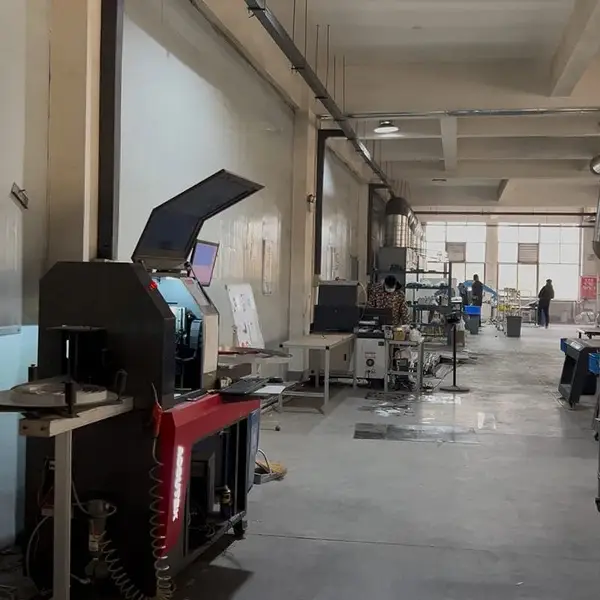
Real photo from our production floor — every sign we ship is made here.
From $24/letter · MOQ 1 piece · Flexible lead time · CE & UL certified · ships to 20+ countries
Custom sizes, colors, and finishes. Get a factory price in 24 hours.
Get a Free Quote Copy EmailWhatsApp +86 13865703472 · business@aochuangsign.cn
See pricing, specs, and get a free quote for the sign type you need. Built in our factory, shipped worldwide.