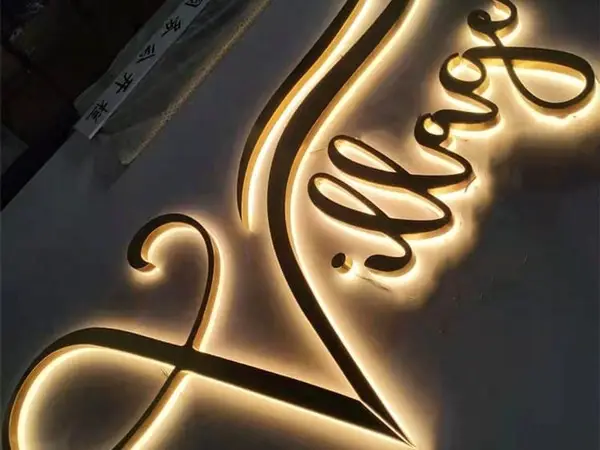
You've got a brand-new set of channel letters ready to install. The LED modules are high-quality SMD 2835s pushing 100-150 lm/W. The acrylic is 3mm Mitsubishi, UV-stable for 5-8 years. The stainless steel 304 return is brushed #4. It's a $40/letter sign from your fabricator, and you're charging the client $200/letter installed. You're making money. Then the inspector flags it.
The issue? Improper bonding of the metal frame to the grounding electrode system. It's the number one hidden killer of sign inspections. And it's costing shops thousands in rework every year.
NEC Article 600 is the bible for electric sign installation. It's not optional. It's not a suggestion. It's the law. And if you're importing signs from overseas—say from a 3,000m² facility like Aochuang in China—you need to spec your signs for compliance before they leave the factory. Because once that crate lands in Long Beach, fixing a bonding issue costs you about 65 days of sea freight time and a lot of aspirin.
Let's break down exactly what Article 600 requires, where the common pitfalls are, and how to never fail another inspection.
Article 600 covers any sign, outline lighting system, or skeleton tubing that's connected to an electrical supply. That means your standard front-lit channel letters, back-lit halo signs, neon flex and that LED strip lighting outlining the roofline.
But here's the nuance. Low-voltage LED signs—say a 24VDC system running SMD 5730 chips—are still under Article 600. The voltage doesn't exempt you. The sign's connection to a branch circuit does. Even if your sign runs on a Class 2 power supply, the wiring from the disconnect to the supply still falls under Article 600.
Exemptions? Very few. Portable signs with a cord and plug that aren't permanently mounted? Maybe. But if you're installing a sign on a building facade, assume Article 600 applies.
Article 600.7 spells out wiring methods. You need conductors rated for 90°C minimum. THHN is standard. Raceways must be rigid metal conduit (RMC), intermediate metal conduit (IMC), or electrical metallic tubing (EMT). For outdoor signs, you need weatherproof enclosures and fittings.
Here's where importers get burned. That Chinese-made sign with a 1.0mm aluminum frame and a 2mm acrylic face? It ships with pre-wired LED modules. But the internal wiring often uses PVC-jacketed cable rated for 60°C. That's a violation. You need to specify 90°C rated wire in your purchase order. It adds maybe $0.50 per sign. It saves you a failed inspection and a $200 callback.
For outdoor installations, all raceways and boxes must be listed for wet locations. That means gasketed covers, drain fittings on enclosures, and corrosion-resistant materials. Stainless steel 316 is ideal for coastal areas—its 2-3% molybdenum content gives 15+ years of life in salt air. But 304 stainless (18% Cr, 8% Ni) is fine for most inland jobs at 10+ years.
Aluminum raceways? Acceptable, but only if they're anodized or powder-coated. Raw aluminum reacts with concrete and some building materials. I've seen aluminum conduit corrode through in 3 years on a parking garage sign. Don't do it.
Article 600.15 is clear: every sign must have a disconnecting means within sight of the sign. "Within sight" means visible and not more than 50 feet away. The disconnect must open all ungrounded conductors simultaneously.
Can you use a standard light switch? For a small sign drawing less than 20 amps? Technically yes, if it's a horsepower-rated switch or a general-use switch with an ampere rating not less than the load. But the inspector will look at you sideways. Use a properly rated safety switch or a circuit breaker lockable in the open position. It's $40 more for a fused disconnect. It's worth it.
Multiple signs on one building? Each sign needs its own disconnect, unless the signs are part of a single circuit and located in the same area. But "same area" is a judgment call. If you have one channel letter set on the front facade and another on the side wall, inspectors usually want separate disconnects. I always design for one disconnect per sign. It's clean, it's obvious, and it passes inspection every time.
Here's a comparison table to help you size your disconnects for common sign types:
| Sign Type | Typical Load (Amps @ 120V) | Recommended Disconnect Rating | Notes |
|---|---|---|---|
| Front-lit channel letters (3 letters, 2ft each, LED) | 1.5-3 A | 15 A fused switch | Smallest practical size |
| Back-lit halo letters (5 letters, 3ft each, LED) | 3-6 A | 20 A safety switch | Use time-delay fuses |
| Light box (4ft x 8ft, LED backlit) | 5-10 A | 30 A disconnect | Consider future expansion |
| Neon flex sign (large, 50ft+ of tubing) | 8-15 A | 30 A with GFCI | Neon transformers need dedicated protection |
| Monument sign (multiple internal drivers) | 10-20 A | 60 A disconnect | May need subpanel |
The disconnect must be installed so it's accessible. Not behind a planter. Not inside a locked closet where the key is in the office. Accessible means a person can get to it without climbing over obstacles or using tools. Put it next to the sign's mounting location, on the building exterior, in a weatherproof enclosure.
This is where most inspections fail. Article 600.7 and 600.41 require that all metal parts of the sign—including the frame, transformer enclosures, and conductive raceways—be bonded to the equipment grounding conductor.
The problem with modern LED signs? They often have non-metallic enclosures. The power supply is a plastic box. The LED modules are on flexible circuit boards. The whole sign is "double insulated." So installers think bonding isn't needed.
Wrong. The aluminum frame still needs bonding. The stainless steel return still needs bonding. Even if the sign is listed as double insulated, the metal structure can become energized if a wire gets pinched during installation. I've measured 87 volts on an unbonded sign frame. That's a shock hazard. And it's a code violation.
Here's the rule: bond every metallic part of the sign system. Use a 12 AWG copper conductor minimum. Connect it to the grounding electrode system at the service equipment. If the sign is on a separate structure—like a monument sign in a parking lot—you need a grounding electrode at that structure (typically a ground rod).
For signs imported from overseas, insist on a bonding lug welded to the frame. Many Chinese fabricators will skip this if you don't specify it. They'll use self-tapping screws into thin aluminum. That's not reliable. A welded stainless steel lug with a 10-32 screw is the standard. It costs $2. It saves your inspection.
Article 600.3 says electric signs must be listed and labeled by a qualified testing laboratory. In the US, that means UL 48 compliance. UL 48 covers electric signs, including wiring, grounding, and fire resistance.
But getting UL certification from an overseas factory is expensive. We're talking $4,000 to $15,000 per product line, with quarterly audits. That's why many Chinese manufacturers skip UL and go for CE or RoHS. Those are fine for Europe. They're not accepted by US inspectors.
ETL is a legitimate alternative. It's 10-30% cheaper than UL and uses the same standards. Intertek's ETL mark is recognized by all US authorities. If your fabricator offers ETL listing, take it. But verify the listing covers the specific sign type you're buying.
For custom one-off signs, sometimes field evaluation is an option. A third-party inspector comes to your shop and certifies the sign. It costs $500-1,500 per sign. It's a workaround, but it's better than installing an unlisted sign and getting a red tag.
Bottom line: Don't buy signs from overseas without a written guarantee of UL or ETL listing. I've seen shops get stuck with 50 signs in a container that can't be installed. The importer says "they meet international standards." The inspector says "not my standards." That's a $15,000 problem.
After 15 years in this industry, I've seen the same mistakes over and over. Here are the top three:
1. Improper bonding. Already covered. Bond every metal part. Use a dedicated bonding jumper. Don't rely on the conduit as the sole grounding path.
2. Missing or inaccessible disconnects. I've seen disconnects installed 14 feet up on a ladder-only access point. That's not "within sight." It's not accessible. Put it at eye level, within 50 feet, visible from the sign.
3. Using non-listed components. That cheap LED power supply from an unknown brand? If it's not UL 1310 classified, it's a violation. Use listed drivers from known manufacturers. Samsung or Osram LED modules are a safe bet. They're more expensive, but they come with 5+ year real lifespan and the listing paperwork.
For outdoor signs, IP65 is the minimum rating. IP66 for coastal areas. IP68 for submersible applications like fountain signs. Don't use indoor-rated components outdoors. The silicone sealant will crack in 18 months.
Article 600 doesn't have separate sections for indoor and outdoor. But the requirements change based on location. Here's what you need to know:
I always spec stainless steel 316 for any sign within 1 mile of the ocean. The 20-30% cost premium over 304 is worth it. A corroded sign frame is a safety hazard and a liability.
I've walked through dozens of sign factories. The best ones have a dedicated QC station where every sign gets an 8-12 hour aging test before it ships. They check for flickering LEDs, loose connections, and ground continuity. They measure the resistance between the frame and the ground wire. It should be less than 1 ohm.
If you're importing, ask for photos of the bonding lug. Ask for the UL listing certificate. Ask for the IP65 test report. If the factory hesitates, find another factory. There are 50+ skilled workers at a place like Aochuang who can build your sign right. But only if you spec it right.
And remember: the NEC is updated every 3 years. Local amendments can add requirements. Always check with your local building department before starting a large installation. A 10-minute phone call can save you a 6-week rework.
Q1: Does NEC Article 600 apply to low-voltage LED signs (e.g., 24V)?
Yes. Article 600 covers any electric sign connected to a branch circuit, regardless of the operating voltage of the sign itself. The low-voltage portion is covered under Article 725, but the wiring from the disconnect to the power supply, the disconnecting means, grounding, and bonding all fall under Article 600. Don't assume low voltage means no code compliance.
Q2: Can I use a standard light switch as a disconnecting means for a small sign?
Technically yes, if the switch is rated for the load and is within sight of the sign. But inspectors rarely accept it. Use a horsepower-rated safety switch or a circuit breaker lockable in the open position. It's cleaner, safer, and passes inspection every time.
Q3: What are the clearance requirements for a sign disconnect near a wet location?
The disconnect must be installed in a weatherproof enclosure if it's outdoors or in a wet location. It must be accessible without climbing or using tools. There's no specific clearance distance in Article 600, but common practice is at least 3 feet from any water source. For indoor wet locations (like near a pool), GFCI protection is also required on the branch circuit.
Q4: How do I handle multiple signs on one building—do I need a separate disconnect for each?
Generally, yes. Article 600.15 requires each sign to have its own disconnecting means within sight. The exception is if multiple signs are on the same branch circuit and located in the same area. But "same area" is subjective. I recommend one disconnect per sign to avoid any ambiguity. It's a small cost for peace of mind.
Q5: What are the most common NEC violations found during sign inspections, and how can I avoid them?
The top three are: (1) improper bonding of metal frames to the grounding electrode system—bond every metallic part; (2) missing or inaccessible disconnects—install them within sight at eye level; and (3) using non-listed components—insist on UL or ETL listing for all sign parts. A pre-installation checklist with these three items will catch 90% of failures.

Real photo from our production floor — every sign we ship is made here.
Products mentioned or relevant to this topic — factory-direct, custom built.
From $24/letter · MOQ 1 piece · Flexible lead time · CE & UL certified · ships to 20+ countries
Custom sizes, colors, and finishes. Get a factory price in 24 hours.
Get a Free Quote Copy EmailWhatsApp +86 13865703472 · business@aochuangsign.cn
See pricing, specs, and get a free quote for the sign type you need. Built in our factory, shipped worldwide.