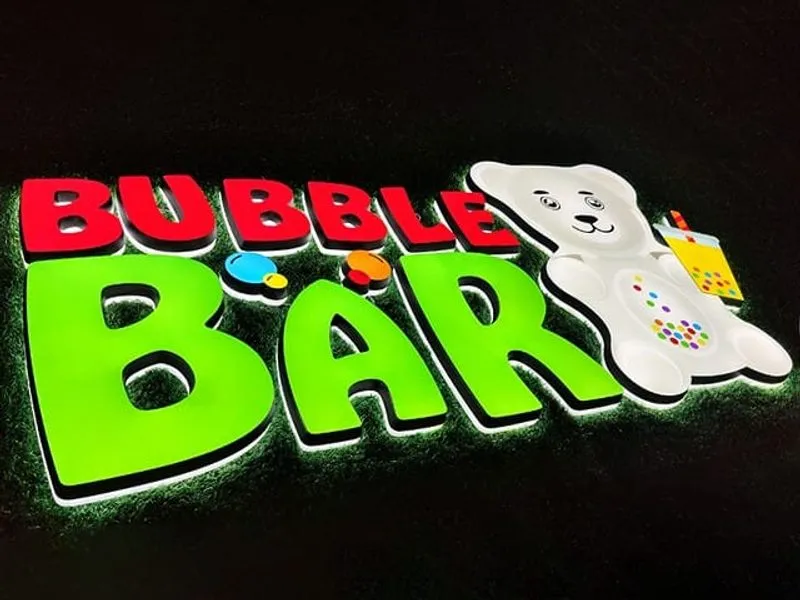
Look, I've seen it a hundred times. A new pharmacy opens, they spend $15,000 on a fancy halo-lit channel letter set, and six months later some lawyer shows up with a tape measure. The letter's mounted at 42 inches. ADA says 48-60. Now you're paying for a whole new sign plus legal fees. That's not a mistake—that's a career ender.
Here's what nobody tells you: medical retail signage isn't just about "making it bright." It's a three-way nightmare between local zoning, the Americans with Disabilities Act, and the National Electrical Code. One wrong LED module, one inch off on mounting height, and your customer's grandfather can't read the "RX" from the curb. That's a lost prescription sale. And a lawsuit.
The ugly truth is most sign shops treat drugstore signs like any other retail job. Slap on some 3mm acrylic, throw in 2835 LEDs, call it done. That works for a pizza joint. A pharmacy needs to be readable from 200 feet at 2 AM by someone whose glasses are on the nightstand. Different ballgame.
I've got a stainless-steel rule etched in my brain: tactile characters must be 48 to 60 inches from the ground, Grade 2 Braille, and the background has to be glare-free. That's NEC Article 600 stuff, but it gets ignored more than a flat-rate invoice.
Quick story. I did a job for a chain drugstore in Chicago. The architect spec'd a polished stainless steel plaque with 1/2-inch raised letters. Looked gorgeous. Problem? Polished #8 mirror finish throws glare like a cop's flashlight. ADA says non-glare. We had to swap to brushed #4 finish and re-cast everything. That was a $3,000 panic call.
Here's a hard fact: 304 stainless with 18% chromium and 8% nickel will last ten years outdoors—longer if you pick 316 for coastal spots. But the finish matters more than the alloy. Brushed surfaces scatter light. Mirror surfaces blind the viewer. And if your Braille dots aren't perfectly dome-shaped, the inspector will flag it. I've seen a 50-worker factory in Lu'an, Anhui—Aochuang Sign—do these right because they CNC-route the acrylic then laser-engrave the Braille. That precision costs but you're not paying for a redo.
The ugly truth: 90% of "ADA compliant" signs I see on drugstore photo bays aren't. They're close. Maybe the Braille is embossed instead of round-domed. Maybe the contrast ratio is borderline. But if a blind person can't read it, you're in violation. Period.
Your pharmacy needs to be seen from a moving car doing 35 mph. That means the sign needs to punch through headlight glare. I've seen shops spec 2835 SMD modules at 100-150 lumens per watt, and that's fine for most retail. But a drugstore? You should be looking at 5730 chips at 40-60 lumens per chip—the highest brightness.
Here's what nobody tells you: color temperature changes how quickly a driver registers the sign. 3000-3500K warm white feels like "cozy." That's for a restaurant. A pharmacy should be 4000-5000K neutral. It reads faster. 6000-6500K cool white might seem logical for "clean," but it washes out the red cross symbol. I've tested this. Warm washes red to pink. Cool turns red harsh. Neutral keeps it true.
And don't even get me started on LED brand. Samsung and Osram modules will run 5+ years. Cheap knockoffs? 18 months when the solder joints turn dull gray. I've watched a sign shop pay $800 for a single front-lit letter from a domestic fabricator—same 304 stainless, same Samsung LEDs. We ship that letter from the factory for $120. The difference is the Chinese factory runs an 8-12 hour aging test on every sign. Most US fast-buck guys plug it in for ten minutes and ship it.
One more thing: IP65 means the sign is dust-tight and can handle water jets from any direction. IP66 handles powerful jets—think pressure washer. For a pharmacy drive-thru sign, IP65 is enough unless you're in coastal wind. For a freestanding monument in Florida? You need IP68 or you're replacing LEDs every rainy season.
Nothing says "discount pharmacy" like a 2mm acrylic face yellowing after one summer. Domestic acrylic from Mitsubishi or Degussa lasts 5-8 years UV-resistant. Cheap domestic stuff? 1-2 years before it looks like old headlight lenses. A 3mm face cuts 92% light transmission; 2mm cuts 90%. Your customer won't see the 2% difference, but they'll see the 40% higher cost. And they'll see the yellowing.
I've seen this go wrong: a chain ordered 2mm acrylic for a 3-foot halo-lit "Drugs & More" sign. By month 14, the "M" looked maroon. Customer blamed the LEDs. Nope. It was the acrylic. A 5mm face would've been overkill for that size, but if you go over 2.5 meters in length, you absolutely need 5mm or it'll bow in the wind.
Stainless? For the main facade lettering, 304 is fine unless you're a block from the ocean. Then you want 316 with 2-3% molybdenum. It's 20-30% pricier but your lettering won't pit. Aluminum is lighter—one-third the weight of steel—and naturally rust-proof. Anodized aluminum holds up 8-12 years. But I've seen powder-coated letters chip at the edges during transit. That's not the factory's fault—that's LCL sea freight. Your crate gets handled 6-8 times between the dock and your shop. Every bump is a chance for a scratch.
Here's a brutal fact: that $400-per-letter halo-lit sign your competitor installed? Factory direct from Aochuang at $120. But only if you spec the right materials. If you ask for "halo-lit" and don't specify 304 stainless and Samsung 2835s, you'll get galvanized steel and cheap LEDs. That's not China's fault. That's your spec sheet's fault.
You need a sign in two weeks? Express air freight from China runs 7-10 days at $4-12 per kilo. Small order? $30-100. But if you order 20 big letters, sea freight takes about 65 days. LCL (less than container load) costs $80-200 per cubic meter. FCL (full container) is $1,200-3,000. And thanks to Section 301, you pay about 30% tariff on top.
The ugly truth is that shipping is where most rookies get burned. They see a $35 channel letter price from the factory and think "I'll save 60% over US fabrication." But they forget the $200 freight, the 30% tariff, and the fact that the crate arrives with a corner crushed because a forklift driver in Long Beach had a bad day.
I've seen this go wrong: a pharmacy chain ordered 50 signs for a regional rollout. Spec was standard 304 stainless, 3mm acrylic, Samsung 2835s. Factory price: $8,000. Shipping via sea: $1,500. Tariff: $2,400. Total landed: $11,900. US fabrication quote was $32,000. They still saved 63%. But they had to wait 60 days and fix two crates that got wet inside—because nobody specified waterproof packaging. A good factory like Aochuang uses foam + carton + plywood crate, but if you don't demand it, they'll use cardboard.
No. CE means the product meets European health and safety standards. That's fine for Europe. For the US, you need UL 48 or ETL. UL costs $4,000 to $15,000 and takes 4-9 months plus quarterly audits. ETL is 10-30% cheaper and accepted by most local codes. If your Chinese factory says "we have CE," ask to see the certificate with today's date. Half the time it's expired or from a testing lab nobody's heard of. Trust me, I've watched them sweat.
IP65 means dust-tight and water jets. It's the minimum for outdoor signs. IP66 handles powerful jets. IP68 means you can submerge the sign. For a pharmacy drive-thru menu board, IP65 is fine. For a canopy sign over the front door, IP65 is also fine unless you're in a hurricane zone. For a ground-mounted monument that gets splashed by snow plow melt? Get IP68. And don't let anyone sell you IP65 for coastal. The salt fog will eat the gaskets.
L70 rating of 50,000 hours means the light output drops 30% after that time. At 12 hours a day, that's about 11 years. But that's at 25°C ambient. In a hot Texas summer, inside an unventilated sign, you're maybe 5 years. Cheap modules with dull-gray solder joints? 18 months. Ask for Samsung or Osram modules with shiny lead-free solder. I still see guys order the cheapest Chinese modules and wonder why their "Drugs" sign goes dark after a year.
If the sign identifies the pharmacy name or "Rx" or "Drugs" and it's mounted where the public can touch it? Yes. ADA says any sign that designates a permanent room or space needs tactile characters and Braille. Drive-thru signs? No. Wall-mounted monument by the front door? Yes. And the Braille must be Grade 2. I've seen a sign with Braille dots that spelled "Druqs." That's not a misspelling I made up. That's a real inspection fail.
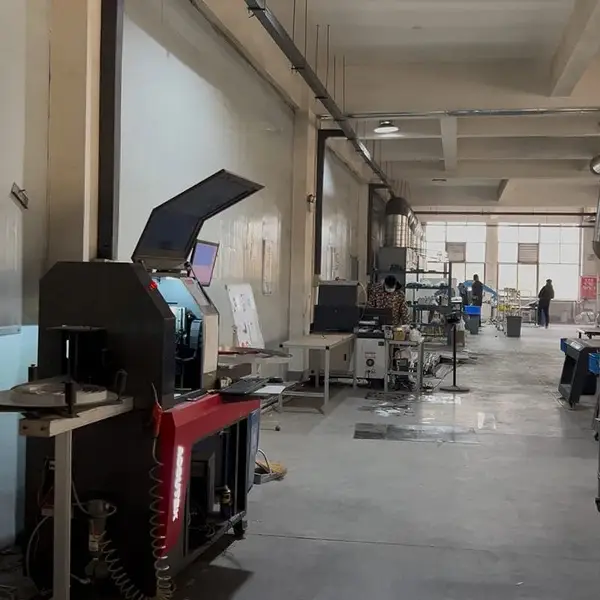
Real photo from our production floor — every sign we ship is made here.
Products mentioned or relevant to this topic — factory-direct, custom built.
From $24/letter · MOQ 1 piece · Flexible lead time · CE & UL certified · ships to 20+ countries
Custom sizes, colors, and finishes. Get a factory price in 24 hours.
Get a Free Quote Copy EmailWhatsApp +86 13865703472 · business@aochuangsign.cn
See pricing, specs, and get a free quote for the sign type you need. Built in our factory, shipped worldwide.