I've been installing signs for 20 years across 30 states. Seen every kind of sign fail and succeed. And I've watched business owners throw money at stuff that doesn't work while ignoring the stuff that does. This isn't a marketing guide. It's what I'd tell a new installer over a coffee break after a long day of climbing ladders.
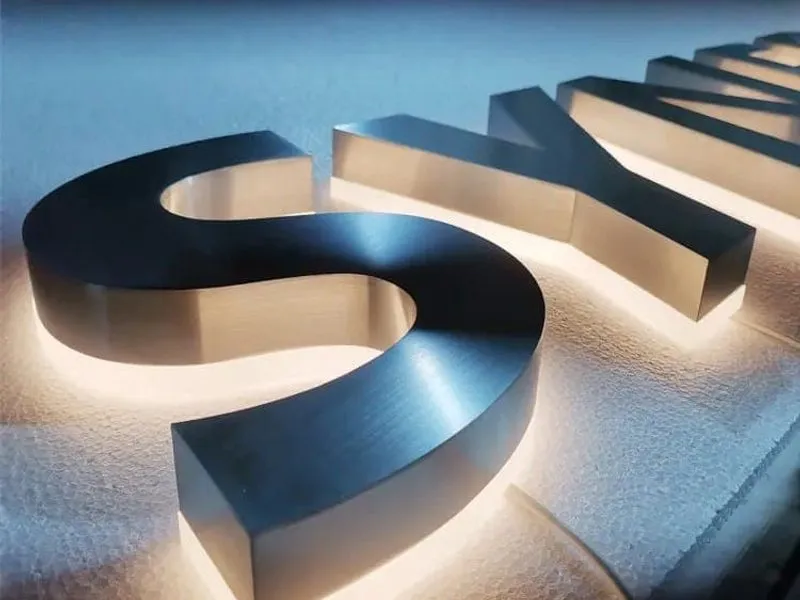
If you only install one type of sign in your career, make it channel letters. Front-lit channel letters are the backbone of commercial signage. They're visible day and night, they handle weather like a champ, and they're surprisingly affordable when you skip the middleman.
I've installed this in strip malls from Phoenix to Minneapolis. The best ones use 304 stainless steel with a brushed #4 finish – that's 18% chromium and 8% nickel, density 7.93 g/cm³, and it'll last over a decade outdoors. For the face, Mitsubishi acrylic with 90-92% light transmittance and UV resistance that holds for 5-8 years. Don't make the mistake I made: using domestic acrylic from an unknown source. It'll yellow in 1-2 years. You'll be back to replace it on your own dime.
Pro tip: The LED modules matter more than the metal. SMD 2835 chips give you 100-150 lumens per watt – that's industry standard. Samsung or Osram LEDs will run a solid 5+ years in real conditions. The cheap crap? 12 to 18 months max. Quickest way to spot bad LED modules: look at the solder joints. Dull gray = won't last 18 months. Shiny silver = proper lead-free solder. I've seen this a hundred times.
Here's what the permit office won't tell you: you don't need a UL listing for every job. But if you want one, expect to pay $4,000 to $15,000 and wait 4-9 months with quarterly audits. ETL is a solid alternative – 10-30% cheaper. For most strip malls, IP65 is enough – dust-tight plus water jets from any direction.
But IP65 does NOT mean your sign survives a Florida hurricane. Be warned. For coastal work, you need IP66 or even IP68. I once replaced a set of channel letters in Miami Beach that were IP65-rated. They looked like twisted pretzels after one storm.
Factory-direct pricing? I've watched sign shops pay $800 for a single front-lit letter from a domestic fabricator. Same 304 stainless, same Samsung LEDs. We ship that letter for $120 from Aochuang Sign in China – 3,000 m² facility, 50+ workers, CE and RoHS certified. Minimum order is 1 piece. Lead time about 5-15 days. The savings are 50-65% on product. But factor in the US Section 301 tariff – about 30% – and shipping.
LCL sea freight is cheap per cubic meter but your crate gets handled 6-8 times between the factory dock and yours. Every touch is a chance for damage. That's not in the brochure. Pay for plywood crates and foam. Don't skimp on packaging.
When a client says "I need to be seen from the highway but I have $2,000," you recommend a light box. Light boxes – specifically those using LED backlighting with a translucent acrylic face – are the most visibility per dollar you'll ever install. Factory prices run $80 to $250 per square meter. US retail installed? You're looking at $500 to $1,500 per square meter after markup, labor, and permit fees.
Don't make the mistake I made: using aluminum thinner than 1.0 mm for a light box over 2.5 meters. It'll flex in wind and crack the acrylic. Use 1.6 mm aluminum at minimum – 0.063 inches. Aluminum weighs one-third of steel and naturally resists rust, but it does dent. For outdoor boxes, powder coat finish – not anodized. Anodized scratches too easily and the color fades unevenly.
I've installed this in a gas station chain across the Southwest. The key is the LED layout. You want at least 30 modules per square meter for even illumination, and the modules should be spaced no more than 150mm apart. Cheap boxes use fewer LEDs and you get hot spots and dark patches. I once opened a competitor's light box – they used 18 modules per square meter. The face looked like a checkerboard at night. Customer paid half price upfront and spent twice as much fixing it six months later.
CE marking sounds impressive. Most factories claim to have it. Ask to see the certificate with today's date. Watch them sweat. Real CE certification costs 20,000 to 50,000 RMB and takes 2-8 weeks. If they can't show you a current certificate, they're lying. I've seen this happen three times in the last year alone. A fraudulent CE means your sign gets held up at customs. That's a 60-day delay you don't have.
This section depends on the approved design, installation conditions and local code. The remaining project-specific details depend on the approved design, installation conditions and local code; confirm them before ordering.

Real photo from our production floor — every sign we ship is made here.
Products mentioned or relevant to this topic — factory-direct, custom built.
From $24/letter · MOQ 1 piece · Flexible lead time · Project-specific compliance documents · ships to 20+ countries
Custom sizes, colors, and finishes. Get a factory price in 24 hours.
Get a Free Quote Copy EmailWhatsApp +86 13865703472 · business@aochuangsign.cn
See pricing, specs, and get a free quote for the sign type you need. Built in our factory, shipped worldwide.