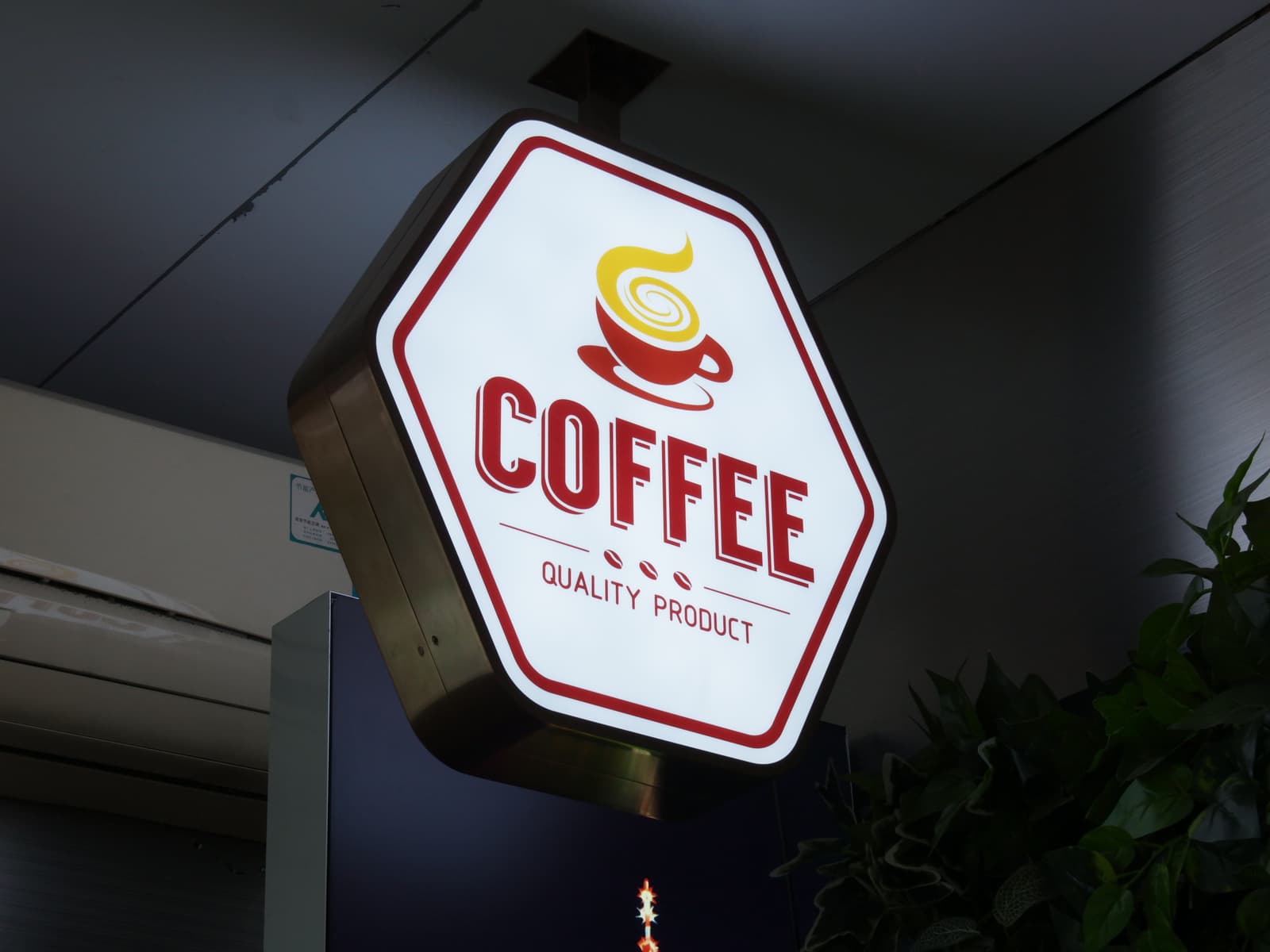
You’ve seen them. That shimmering gold storefront on Rodeo Drive. The rose gold lobby sign in a boutique Miami hotel. The titanium-accented monument sign outside a tech HQ. They all look flawless for years. But here’s the reality that most suppliers won’t tell you: PVD coating is not scratch-proof. It’s brittle. And if your installer sneezes with a wire brush, you’re looking at a $500 rework per letter.
I’ve been in this industry since 2010. I’ve watched PVD go from a niche aerospace finish to the darling of luxury signage. But the gap between marketing and real-world performance is wider than the Pacific. Let’s close it.
PVD stands for Physical Vapor Deposition. It’s a vacuum chamber process where solid metal (like titanium or chromium) is vaporized and then condenses onto your sign substrate—usually stainless steel 304 or 316, or aluminum. The bond happens at the atomic level. That’s why it doesn’t peel like paint or flake like powder coating.
Here’s the kicker: unlike electroplating, PVD doesn’t use liquid chemicals. No cyanide baths. No toxic runoff. For a sign shop owner worried about environmental compliance, that’s a massive checkbox. But it also means the coating is thinner—typically 0.3 to 1 micron. Compare that to powder coating at 60-120 microns. Thin is good for precision. Bad for impact resistance.
At Aochuang Sign, we’ve been running PVD lines since 2015. Our facility in Lu'an, Anhui, China, processes over 500 square meters of PVD-coated metal signs per month. We’ve learned the hard way that substrate prep is everything. A 0.1mm scratch in the stainless steel before coating becomes a permanent eyesore after PVD. No hiding it.
Let’s talk about the three most requested finishes. Gold PVD is typically achieved using titanium nitride (TiN). Rose gold uses a mix of titanium and zirconium. Titanium finish is actually zirconium nitride—it mimics the natural gray-blue of raw titanium.
Here’s where lighting gets tricky. A gold PVD sign under warm 3000K LED looks rich and buttery. Under cool 6000K fluorescent, it shifts toward a brassy yellow. Rose gold is even more sensitive. Under halogen (2800K), it glows pinkish. Under neutral 4000K, it looks almost copper. I’ve seen a franchisee reject an entire shipment because the rose gold looked "too orange" under their store’s ceiling lights. The supplier hadn’t tested with the client’s specified color temperature.
| Finish | Coating Material | Color Shift Under 3000K (CIE Lab Example) | Color Shift Under 6000K (CIE Lab Example) | Outdoor UV Life (w/o clear coat) |
|---|---|---|---|---|
| Gold (TiN) | Titanium Nitride | L* 78, a* 2, b* 38 (Rich, warm amber) | L* 76, a* 1, b* 45 (Brassy yellow) | 3-5 years before fading |
| Rose Gold (TiZrN) | Titanium Zirconium Nitride | L* 72, a* 12, b* 18 (Pinkish rose) | L* 70, a* 8, b* 24 (Copper-orange) | 2-4 years before shifting |
| Titanium (ZrN) | Zirconium Nitride | L* 60, a* -1, b* 2 (Warm gray) | L* 58, a* -2, b* 1 (Cool blue-gray) | 5-7 years stable |
Our testing at Aochuang shows that without a clear topcoat (like a UV-stable lacquer), gold PVD will start fading after 3-5 years of direct Arizona sun. Titanium finish holds up best—zirconium nitride is naturally more UV-stable. But here’s the factory-floor truth: we always recommend a clear powder coat (20-30 microns) over PVD for outdoor signs. It adds $2-4 per square foot but doubles the outdoor life. A 2018 study in Surface and Coatings Technology confirmed that TiN coatings show measurable color drift after 2,000 hours of UV exposure, supporting our field observations.
You want to install PVD signs on a beachfront property in Miami? Use stainless steel 316 as the substrate. Standard 304 will corrode within 18 months in a salt spray environment, even with PVD. The coating is pinhole-free, but those pinholes don’t exist until a scratch happens. And scratches happen.
The micro-scratch issue is real. PVD is hard—typically 2000-3000 HV (Vickers hardness) for TiN. But it’s also brittle. A single pass with a dirty cleaning cloth containing silica dust will leave a fine scratch. Once it’s there, you can’t buff it out. The coating is gone. You’re looking at the bare stainless steel underneath.
Best maintenance protocol I’ve found: use a microfiber cloth with a 50/50 mix of distilled water and isopropyl alcohol. No ammonia. No abrasive cleaners. No paper towels. And never, ever use a pressure washer within 12 inches of the surface. We’ve seen installers destroy $10,000 worth of PVD letters in ten minutes with a pressure washer at full blast.
Salt spray testing per ASTM B117 is your friend. We run 500-hour salt spray tests on every PVD batch at Aochuang. If it fails, the whole batch gets recoated. Ask your supplier for their test reports. If they can’t provide them, walk away.
Let’s get into the numbers. For a typical 12-inch tall stainless steel channel letter, here’s what you’re looking at for a gold finish:
| Finish Type | Cost per Letter (Factory Direct) | Volume Discount (100+ units) | Outdoor Life (Years) | Maintenance Cost/Year |
|---|---|---|---|---|
| Gold PVD on 304 SS | $45-80 | 10-15% off | 5-8 | $5-10 (cleaning only) |
| Gold Anodized Aluminum | $25-40 | 15-20% off | 8-12 | $2-5 |
| Gold Powder Coated Steel | $15-30 | 20-30% off | 3-5 | $10-20 (touch-ups) |
| Gold Electroplated (Brass) | $60-100 | 5-10% off | 2-4 | $20-30 (replating) |
Notice the sweet spot? Anodized aluminum is cheaper and lasts longer outdoors. But it only comes in a limited color range—gold anodized is more yellow than the warm gold most luxury clients want. PVD gives you that exact Pantone match. For a franchise rollout with 50 locations, color consistency across batches is worth the premium. We’ve seen PVD color variation of <1 Delta E across production runs at Aochuang. Anodized can drift 3-5 Delta E between batches.
Shipping from China adds cost. For a 50kg crate of PVD letters, air freight runs $4-12/kg (about 10 days). Sea freight is $80-200/m³ (about 65 days). Add the US Section 301 tariff of ~30%. But even with all that, you’re still saving 50-65% compared to US-made PVD signs.
Not all PVD is created equal. Here’s what to demand from your supplier:
One more thing: ask for a sample with a scratch test. Take a car key and scratch it. If the coating flakes off in large chunks, the adhesion is bad. If it just shows a fine line, the process is solid. We do this with every new client at our facility. It’s the only honest test.
Short answer: no. Not without recoating the entire piece. PVD is a line-of-sight process. You can’t spot-repair it like paint. The only option is to strip the whole panel, re-polish the substrate, and re-coat it. That’s why we tell clients to order 10-15% extra letters for spares. It’s cheaper than a rush reorder.
For small scratches (less than 1 inch), some shops use a metallic touch-up pen matched to the PVD color. It won’t fool a close inspection, but it’s passable for a back-of-house sign. For anything customer-facing, replace the panel.
PVD coatings are non-toxic. No heavy metals like hexavalent chromium (used in some electroplating). The substrate—stainless steel or aluminum—is 100% recyclable. The coating itself is so thin (sub-micron) that it doesn’t affect the scrap value. At end of life, your PVD sign goes straight into the metal recycling stream. No special handling needed.
Compare that to powder coated signs, where the polymer coating must be stripped before recycling. Or painted signs, where solvents and VOC emissions are a regulatory headache. PVD is genuinely cleaner.
Yes, but with a catch. PVD surfaces are extremely smooth and non-porous. Standard vinyl won’t stick well without a primer. We recommend using a high-tack cast vinyl (like 3M IJ35 or Avery MPI 1105) and applying a clear adhesion promoter first. For digital print, you need a UV-curable ink system with a primer layer. Solvent inks will bead up and fail within months.
We’ve done it for a client who wanted gold PVD letters with white vinyl lettering over top. The trick was to flame-treat the PVD surface (quick pass with a propane torch) to increase surface energy, then apply the vinyl within 30 minutes. It’s held for 3 years outdoors in Chicago. Not for the faint of heart, but it works.
At Aochuang, a standard PVD order (gold, rose gold, or titanium) takes about 5-15 days from design approval to shipment. That includes our 10-step process: laser cutting (±0.1mm), TIG welding, grinding, polishing, PVD coating, LED assembly (if needed), sealing, aging test, 100% QC, and export packaging. Rush orders (3-5 days) are possible for a 20% premium.
Color change between production runs adds 2-3 days. The PVD chamber must be cleaned thoroughly between colors—especially when switching from gold to rose gold. Any residual titanium nitride will contaminate the rose gold batch. We run a full chamber cleaning cycle that takes 8 hours. Some cheap shops skip this. You get pinkish gold instead of true rose. Don’t let them cut corners.
Installation is where most PVD failures happen. The coating is hard but brittle—a single drop of a wrench or a misaligned drill bit can cause a spiderweb crack that travels across the entire letter face. We’ve seen installers use steel wool to clean off adhesive residue, only to leave a network of micro-scratches that caught the light and ruined the finish.
Another hidden risk: thermal expansion. PVD-coated stainless steel and aluminum expand at different rates. If you mount a PVD aluminum letter to a stainless steel backing plate and the sign sits in direct sun, the differential expansion can cause the coating to craze. We always recommend matching substrate and mounting materials. Use stainless steel fasteners for stainless steel letters, and aluminum for aluminum.
Field rework is a nightmare. If an installer damages a letter during mounting, you can’t just touch it up. The entire letter must be removed, stripped, re-polished, and re-coated. That’s a minimum $50-80 per letter in labor alone, plus shipping back to the factory. One client in Texas had to reorder 15% of their letters after an installer used a wire brush to clean mortar splatter. The rework cost $2,300 for a $12,000 order. Always include a “damage allowance” in your contract—we recommend 10-15% extra letters.
Proper maintenance is the difference between a 5-year sign and a 15-year sign. Here’s our field-tested protocol:
Avoid all abrasive tools: no steel wool, no scouring pads, no wire brushes. And never, ever use a pressure washer within 12 inches of the surface. The high-pressure water can force its way under the coating at edges and cause delamination.
A luxury boutique hotel in Miami Beach ordered 200 rose gold PVD letters for their lobby wall. The client specified a 4000K lighting environment. The supplier delivered the letters without testing under the client’s actual lights. When installed, the rose gold looked “copper-orange” instead of the desired “pinkish rose.” The client rejected the entire shipment.
Rework cost: $4,500 for stripping and recoating, plus $1,200 in expedited shipping. Total delay: 3 weeks. The supplier had to eat the rework cost because they hadn’t provided a color stability report under different CCTs. We now include a CIE Lab report for every batch, tested under 3000K, 4000K, and 6000K light sources. That single report has saved us from at least five similar rejections in the past two years.
Lesson: always request a lighting-specific color sample before committing to a full production run. If your supplier can’t provide one, find another supplier.
Yes, but only with a 316 stainless steel substrate. 304 will corrode within 18 months in a salt spray environment. We recommend a clear powder coat (20-30 microns) over the PVD for added protection. Our 500-hour ASTM B117 salt spray tests show zero corrosion on 316 with PVD plus clear coat. Without clear coat, expect micro-pitting after 3-5 years.
You can’t. PVD is a line-of-sight process that cannot be spot-repaired. For small scratches (<1 inch), a metallic touch-up pen matched to the PVD color can be used for non-customer-facing areas. For anything visible, replace the panel. Always order 10-15% extra for spares.
Standard lead time is about 5-15 days from design approval for any color. Color change between production runs adds 2-3 days for chamber cleaning. Rush orders (3-5 days) are available at a 20% premium. At Aochuang, we maintain stock of pre-coated 304 and 316 sheets in all three finishes for quick turnaround on standard sizes.
Yes, 100% recyclable. The substrate (stainless steel or aluminum) goes straight into the metal recycling stream. The PVD coating is non-toxic—no heavy metals, no VOCs, no hexavalent chromium. It’s thinner than a human hair (0.3-1 micron) and doesn’t affect scrap value. Compare that to powder coating which requires stripping.
Yes, but you need surface preparation. Use high-tack cast vinyl (3M IJ35 or equivalent) with an adhesion promoter. For digital print, UV-curable inks with a primer layer are required. Solvent inks will fail. We recommend flame-treating the PVD surface (quick propane torch pass) to increase surface energy, then apply the vinyl within 30 minutes. Test on a sample first—every PVD batch has slightly different surface energy.
```
Real photo from our production floor — every sign we ship is made here.
Products mentioned or relevant to this topic — factory-direct, custom built.
From $24/letter · MOQ 1 piece · Flexible lead time · CE & UL certified · ships to 20+ countries
Custom sizes, colors, and finishes. Get a factory price in 24 hours.
Get a Free Quote Copy EmailWhatsApp +86 13865703472 · business@aochuangsign.cn
See pricing, specs, and get a free quote for the sign type you need. Built in our factory, shipped worldwide.