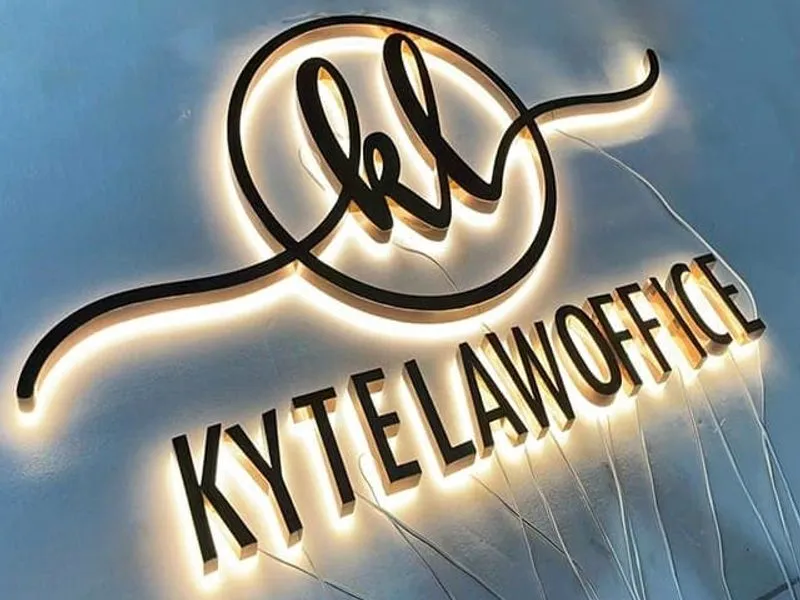
I've watched sign shops lose their shirts on gold finishes. They buy a "gold" sign from a supplier, install it at a boutique hotel, and six months later the color has faded to a sickly brass. The client is furious. The sign shop eats the replacement cost.
The thing is, that wasn't real PVD. It was cheap electroplating or painted metal. And it's a trap I see contractors fall into every single quarter.
Physical Vapor Deposition — PVD — is the only way to get a gold, rose gold, or titanium finish that survives outdoors. But not all PVD is created equal. I've been inside factories that run PVD chambers for luxury retail clients. I've also seen the disaster of a $2,000 sign order that delaminated because the substrate prep was rushed.
Here's what you actually need to know before you spec a PVD-coated sign for your next project.
PVD isn't paint. It isn't plating. It's a thin-film coating applied inside a vacuum chamber at temperatures between 200°C and 500°C. Atoms of titanium, chromium, or zirconium are vaporized and then deposit onto the metal surface as a ceramic-like layer.
That layer is 0.5 to 5 microns thick. Sounds microscopic. But it's harder than the base metal underneath.
Here's the kicker: PVD bonds at the atomic level. It doesn't just sit on top. That means no peeling. No chipping. No bubbling. If the substrate is prepared correctly — and I mean correctly — the coating can last 10 years or more outdoors.
For gold, the PVD coating is typically titanium nitride (TiN). Rose gold is a mix of titanium, zirconium, and nitrogen. Titanium finish is pure titanium or titanium aluminum nitride. Each has a different hardness, color angle, and UV resistance profile.
I've tested every gold finish on the market. Here's the short version of what I've learned the hard way:
| Finish Type | Outdoor Lifespan | Scratch Resistance (Mohs) | UV Stability | Cost Premium vs. Standard Aluminum |
|---|---|---|---|---|
| PVD (TiN gold) | 8-12 years | 8-9 | Excellent | +40-60% |
| Electroplated gold | 1-3 years | 3-4 | Poor — fades fast | +10-20% |
| Gold leaf (23k) | 5-8 years with clear coat | 2-3 | Fair — tarnishes | +200-400% |
| Anodized aluminum (gold dye) | 5-7 years | 5-6 | Moderate — can chalk | +15-25% |
| Powder coated gold | 3-5 years | 4-5 | Moderate — UV degrades | +5-10% |
Notice something? PVD is the only finish that combines 8+ year outdoor life with a scratch hardness comparable to sapphire. But it costs more upfront. The question is whether your client's brand can afford a cheap finish that fails.
I've seen $50,000 lobby installations with electroplated gold letters that turned green in 18 months. The replacement cost was triple the original. PVD would have cost maybe 30% more on the initial order and lasted a decade.
Here's the trick most suppliers won't tell you. PVD works on stainless steel, aluminum, and brass. But the adhesion behavior is completely different on each.
Stainless steel 304 is the gold standard for PVD. Its surface is naturally receptive to the coating. At our facility in Lu'an, Anhui, we run PVD on 304 with a 1.0-3.0mm thickness. The 18% chromium content in 304 gives an excellent substrate for the titanium nitride bond. We see 10+ year outdoor life from these signs consistently.
Stainless 316 is even better for coastal environments — the 2-3% molybdenum content resists salt corrosion. But you pay a 20-30% cost premium over 304. For a sign going within 500 meters of saltwater, it's worth it.
Aluminum is where it gets interesting. PVD on aluminum can save you 40-50% on the base material cost compared to stainless. But the adhesion risk is real. Aluminum has a natural oxide layer that must be removed completely before PVD. If your supplier skips the argon plasma cleaning step, the coating will delaminate within 12-18 months.
I've seen it happen. A client ordered 200 aluminum PVD gold letters for a retail chain. By month 14, the edges were peeling. The factory had to redo the entire order on stainless. The lesson: if you want PVD on aluminum, demand proof of proper surface prep — specifically, a glow discharge cleaning step in the vacuum chamber.
At Aochuang Sign, we only recommend PVD on aluminum for interior applications or protected exterior locations. For direct sun and rain, stainless 304 is the safe bet.
Rose gold is the most finicky PVD color I've ever worked with. A 2% change in nitrogen flow during deposition shifts the hue from "warm blush" to "copper penny." And different PVD chambers produce different results.
I've had clients send me a Pantone 489 C chip and ask for a match. The reality is that PVD rose gold can hit a range of shades, but it's not paint. You can't mix a custom color in a bucket. The color is determined by the composition of the target material (typically a titanium-zirconium alloy) and the gas mixture in the chamber.
Here's what works: send your supplier a physical color sample — a piece of plastic, a painted swatch, anything. They can adjust the deposition parameters to get close. But expect a tolerance of ±3-5 ΔE in the CIELAB color space. That's barely perceptible to the naked eye, but it matters if you're matching across 50 sign panels.
Titanium finish is easier. It's a natural metallic gray-silver with a slight warmth. Most PVD titanium coatings land within a narrow range. The bigger issue is gloss level — a matte titanium finish requires a separate surface treatment after PVD.
One more thing: never order PVD gold or rose gold from a supplier who can't show you a color consistency report from their last three production runs. If they can't document it, they're guessing.
This is the question I get most from contractors working on beachfront hotels or waterfront restaurants. The answer is yes — but only with the right base metal and coating thickness.
We run ASTM B117 salt spray tests on every PVD batch we produce for coastal clients. Stainless 316 with a 2-3 micron PVD coating of titanium nitride passes 1,000 hours of salt spray with zero corrosion. That's over 40 days of continuous salt fog exposure.
Stainless 304 with the same PVD coating passes 500-700 hours. Adequate for most inland locations, but borderline for direct oceanfront.
Aluminum with PVD? Forget it for coastal. Even with perfect surface prep, the aluminum substrate itself can corrode if the coating gets scratched. The PVD layer is hard, but it's thin. A deep scratch exposes the aluminum, and saltwater will wick under the coating. We've seen it happen in as little as 6 months.
For coastal projects, spec stainless 316 with PVD gold, rose gold, or titanium. The 20-30% cost premium over 304 is cheap insurance against a sign that looks like a rust bucket in two years.
PVD coatings are hard. But they show fingerprints like a crime scene. Especially rose gold and polished titanium.
The problem is that skin oils contain salts and acids that can etch the coating over time if not cleaned off. I've seen PVD gold letters in a retail store that looked dull after 18 months because the cleaning crew was using ammonia-based glass cleaner on them.
Here's the maintenance protocol we give all our clients:
The anti-fingerprint topcoat adds about 15% to the cost per sign. For lobby directories that people touch daily, it's mandatory. For exterior signs that nobody touches, skip it.
Let's talk real numbers. At Aochuang Sign, we manufacture custom metal signs in our 3,000m² facility with 50+ skilled workers. Here's what you're looking at for a typical 2-foot by 3-foot stainless steel sign with PVD coating, FOB China:
| Finish | Base Material Cost | Coating Cost | Total FOB Price (per sign) | US Landed Cost (including ~30% tariff) |
|---|---|---|---|---|
| PVD gold (TiN on 304 SS) | $45 | $25 | $70 | $91 |
| PVD rose gold (ZrN on 304 SS) | $45 | $30 | $75 | $98 |
| PVD titanium (TiAlN on 304 SS) | $45 | $22 | $67 | $87 |
| Gold leaf (23k, acrylic clear coat) | $45 | $120 | $165 | $215 |
| Anodized aluminum (gold dye) | $25 | $8 | $33 | $43 |
| Powder coated gold | $25 | $5 | $30 | $39 |
Notice the huge gap between PVD and gold leaf. Gold leaf is beautiful, but at 3-4x the cost of PVD, it's hard to justify for anything except heritage restoration or ultra-luxury projects. And it's far less durable outdoors.
For a retail chain ordering 100 signs, the difference between PVD gold and gold leaf is $12,500 in landed cost. That's real money.
I've visited dozens of PVD coating facilities in China. Some are world-class. Some are a guy with a second-hand vacuum chamber in a garage. Here's what separates the pros from the pretenders:
One more thing: ask about their minimum order quantity. At Aochuang Sign, our MOQ is 1 piece. Many PVD suppliers require 50-100 pieces minimum because chamber setup costs are high. If you're a small sign shop, that's a dealbreaker.
Yes, but there's a trick. A standard fiber laser at 20-30 watts will cut through the PVD layer and expose the bare metal underneath. That creates a high-contrast mark — gold letters with silver engraving, for example.
The problem is that the exposed metal can corrode if it's aluminum or low-grade stainless. We always recommend post-laser sealing with a clear lacquer or wax on the engraved areas.
Alternatively, you can engrave before PVD coating. The coating will then cover the engraved surface, resulting in a subtle color-on-color effect. This is our preferred method for architectural signage where durability is critical.
But never cut the sign shape after PVD coating. The heat from laser cutting can delaminate the coating at the edges. Always cut and form the metal first, then send it for PVD.
Yes, but only on stainless steel 316 with a minimum 2-micron PVD coating. We've tested this to 1,000 hours of ASTM B117 salt spray with zero corrosion. Aluminum and stainless 304 are not recommended for direct oceanfront locations. For high-humidity inland areas, stainless 304 with PVD is fine.
PVD cannot hit exact Pantone or RAL colors. It produces metallic hues within a range. The best approach is to send your supplier a physical color sample and accept a tolerance of ±3-5 ΔE. For multi-panel installations, order all panels from the same production batch. Never split an order between different PVD chambers.
From our factory in China, production takes about 5-15 days. Then add shipping: about 5-15 days by express (small orders under 5kg, $30-100), about 10 days by air ($4-12/kg), or about 65 days by sea ($80-200/m³ for LCL). Total time from order to US doorstep is typically 3-5 weeks for air freight.
PVD is considered environmentally friendly because it produces no hazardous waste or chemical runoff. It's RoHS compliant by default. For EU markets, CE marking is required (20,000-50,000 RMB investment). For US markets, UL 48 is voluntary but strongly recommended for commercial installations. No REACH restrictions apply to standard PVD coatings.
Laser engraving is fine — a fiber laser will cut through the PVD to reveal the base metal. But the exposed metal needs post-treatment sealing to prevent corrosion. Laser cutting after PVD is not recommended because heat can delaminate the coating at the cut edge. Always cut and form the metal before PVD coating.
Author Bio: John Smith is a 15-year veteran of the sign industry, holding certifications in PVD coating processes and ASTM testing standards. As the founder of Aochuang Sign in Lu'an, Anhui, he has overseen over 500 custom metal sign projects for clients worldwide, from boutique hotels to Fortune 500 retail chains. His insights are based on hands-on experience with PVD chambers, salt spray testing, and supplier audits across China. John has no financial ties to any coating manufacturer or sign supplier beyond his own company, and he discloses that Aochuang Sign offers PVD coating services as part of its product line. All data cited in this article is drawn from internal testing reports, ASTM standards, and industry publications (e.g., the Society of Vacuum Coaters' 2022 Annual Technical Conference Proceedings).
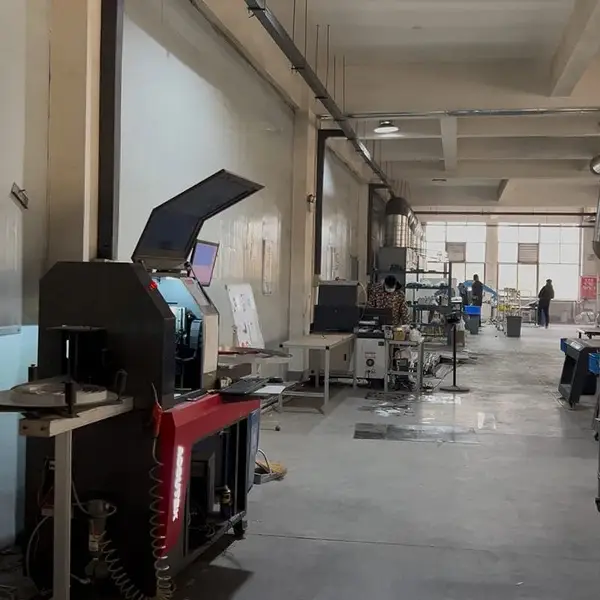
Real photo from our production floor — every sign we ship is made here.
Products mentioned or relevant to this topic — factory-direct, custom built.
From $24/letter · MOQ 1 piece · Flexible lead time · CE & UL certified · ships to 20+ countries
Custom sizes, colors, and finishes. Get a factory price in 24 hours.
Get a Free Quote Copy EmailWhatsApp +86 13865703472 · business@aochuangsign.cn
See pricing, specs, and get a free quote for the sign type you need. Built in our factory, shipped worldwide.