Gold lettering on a dark facade. Rose gold halo-lit numbers on a medical building. Black stainless steel channel letters that won't fade in the Arizona sun. Someone asks for that, and the same question comes up: PVD coating or electroplating? I've heard it debated over cheap coffee and expensive mistakes for 16 years.
Here's the thing — most suppliers will sell you whatever makes them the highest margin. I'm going to tell you the truth, including where we might lose your business to a local powder coater. Because a warranty claim in three years costs a hell of a lot more than losing one order today. That's experience talking.
We make metal letters every day at Aochuang. Stainless steel, aluminum, brass. We've shipped worldwide, and we've had to rework exactly three jobs due to coating issues. You bet I remember every one. This guide puts all that knowledge on the table so you can make a call that holds up past the installation selfie.
PVD stands for Physical Vapor Deposition. Sounds space-age, because it is. We put your letters in a vacuum chamber, vaporize a solid metal (like titanium or zirconium), and that vapor bonds to the surface atomically. No liquid, no dipping, no bath of chemicals.
Electroplating is the opposite. Current runs through a chemical solution, dissolved metal ions cling to your letter's surface. That's chrome, that's nickel, that's the shiny gold on bathroom fixtures. It's been around since your granddad's shop, and it works — sometimes.
Here's the dirty secret: a lot of "PVD" you see quoted from low-end factories is actually electroplating with a clear coat. If they can't show you the vacuum chamber, it's not PVD. I've toured plants where the chamber sat unplugged for decoration while letters came out of a plating bath in the next room. The ugly truth is that a 50,000 RMB PVD machine can't produce the volume those Alibaba prices suggest.
Look, I don't care what spec sheet they sent you. Put a PVD-coated stainless steel 304 letter in direct sun, rain, and road salt, and here's what happens: nothing for a decade. The color is part of the metal surface, not a coating that sits on top. We've pulled 7-year-old PVD letters off a hotel in Dubai for a rebrand, and the brass-gold still matched the new ones within a Pantone shade.
Electroplating is a layer. A delicate one. UV hits it, acid rain attacks it, thermal expansion works it loose. I've seen electroplated black letters start blistering in year two, especially if the shop skipped nickel undercoating to save three dollars. The color doesn't fade evenly — it peels off in chunks. That makes your shop look terrible, and your client doesn't call you again.
Our factory uses a multi-arc PVD process for stainless steel letters. We control the deposition thickness down to half a micron. That covalent bond doesn't chip when you bend the letter or drill a mounting hole. Electroplated surfaces crack at radiused edges because hydrogen embrittlement weakens the steel. Nobody tells you that on a quote.
But I'll be fair: indoors, electroplating holds fine. Museum signage, lobby directories, anything behind glass. The sun's the killer. And chlorine. I've seen a poolside sign plated with fancy nickel dissolve in 18 months. PVD would've laughed at it.
Here's what nobody tells you: electroplating is cheaper today. PVD is cheaper by year five.
I've watched sign shops pay $200 per electroplated letter installed, only to strip and repaint them three years later for $350 per letter in labor plus scaffolding rental. The lifetime cost dwarfs the 30% extra PVD would have added on day one.
We ship factory-direct stainless steel letters with PVD in champagne, rose gold, dark bronze, gunmetal, and black for $40–65 per letter. Compare that to US retail fabricated and PVD-coated at $300–500. The math is broken, but it works in your favor if you plan ahead for the 10–15 day lead time.
Color range. That's it. Electroplating can give you a turquoise that PVD simply cannot achieve because the chemistry allows exotic combinations. PVD is limited to metals that can be vaporized: titanium gives gold tones, zirconium gives black, chromium gives silver-white. You want a true red? We powder coat aluminum.
Electroplating also makes sense for brass letters, where the base material already carries the color. A clear lacquer over polished brass is a classic, and that's essentially electroplating with a transparent shield. But outdoors, that lacquer yellows and fails within 2–3 years. PVD doesn't yellow.
If your client demands a specific RAL match, we steer you toward powder coating on aluminum letters. It's the most predictable, and we can hit any color. PVD is for metallic, luxurious, enduring finishes. Know the difference.
A contractor in Florida ordered 80 feet of 2-inch stainless steel channel letters with "gold" electroplating for a marina. Six months in, rust bled through the plating from pinholes. The underlying 304 was fine, but the nickel undercoat was skipped to save time. We got the panic call. We replaced the whole set with PVD titanium nitride gold under a 2-year LED warranty, no questions asked, but the installation rip-out cost him his profit on the whole project.
Look, I've seen electroplaters rinse letters with tap water to save deionized water expense. Chlorides in municipal water get trapped under the clear coat and start corrosion the day it's installed. We know this because we've stripped competitors' failures down to the metal for forensic analysis. That's not marketing fluff — that's an afternoon with a scanning electron microscope and a very angry client.
The ugly truth is, if you get a quote for "gold stainless letters" at $28 each with a 10-day lead time, it's not PVD. It's flash-plated and clear-coated. Flash plating is about 0.2 microns thick. A human hair is 70 microns. You do the math on how long that lasts in a hailstorm.
For every PVD order at Aochuang, we run three tests: a 24-hour salt spray (ASTM B117) on a sample tab, a cross-hatch adhesion test (ISO 2409, rating 0 or we reject), and spectrophotometer verification against your approved swatch. Electroplating orders get the same, plus a thermal shock from -40°F to 180°F to check for micro-cracking. Most shops don't do the thermal shock. That's how you catch hydrogen embrittlement before it's on a truck.
We keep records. If you need UL 48 later for the LEDs in those channel letters, the PVD finish doesn't affect the electrical listing — another advantage. Electroplating can mask grounding faults if the coating insulates too well. Little detail, big code violation.
We can't PVD coat aluminum directly. The adhesion isn't reliable. For color on aluminum letters, use powder coating or anodizing. Both last outdoors, both are half the cost of PVD on steel.
We can't PVD coat plastic or acrylic faces. If you want metallic-looking trim on an acrylic light box, that's a different process — usually vapor metallizing, which fails fast. We'll steer you away.
We can't guarantee PVD color matching to a fabric swatch because metallic finishes shift with light angle. If you need a corporate color like "Tiffany blue" in metal, it's electroplating or powder coat. I'd rather lose the order than ship a letter you'll apologize for.
Our PVD chamber fits letters up to 1.2 meters wide. If your design is a 3-meter monolith, we segment it and align the grain. The seam will be visible. I tell you that now, not after you've paid.
Standard stainless steel letter production runs 7–15 days. Add PVD and we need two extra days for the batch run plus cooling and testing. Electroplating adds one day. Not a dealbreaker. What kills schedules is rework because the plating came out cloudy. Our PVD yield is above 98%. Our electroplating yield hovers around 94% — we often re-polish and re-plate if the bath isn't perfect. Factor that into your timeline.
Shipping via air freight, those PVD-finish letters arrive at your dock in about 10 days. Ocean freight is about 65 days. Tariffs under Section 301 hit metal letters at about 30%, same as anything. I break that down on every invoice so you don't get a customs surprise.
If your installation is outdoors and the client wants gold, rose gold, black, or champagne, order PVD on 304 stainless steel. Period. Use 316 stainless if it's within ten miles of saltwater. The cost premium over electroplating evaporates the first time you avoid a warranty call.
If your project is indoors, temporary, or needs a color PVD can't hit, electroplating works and keeps the budget happy. Just insist on a nickel undercoat, deionized rinsing, and a UV-stable clear topcoat. We'll do it, but I'll email you this article again with the order confirmation.
And if someone tells you they can do "PVD-like" coating for half the price, hang up. There's no substitute for a vacuum chamber and 2,000 degrees of titanium plasma. We invested in that equipment because we sleep better at night. You should too.
When you're ready to spec real metal letters that stay beautiful, our team walks you through every choice — including the times we'll talk you out of spending money with us. That's the only way a factory survives 14 years in this business.

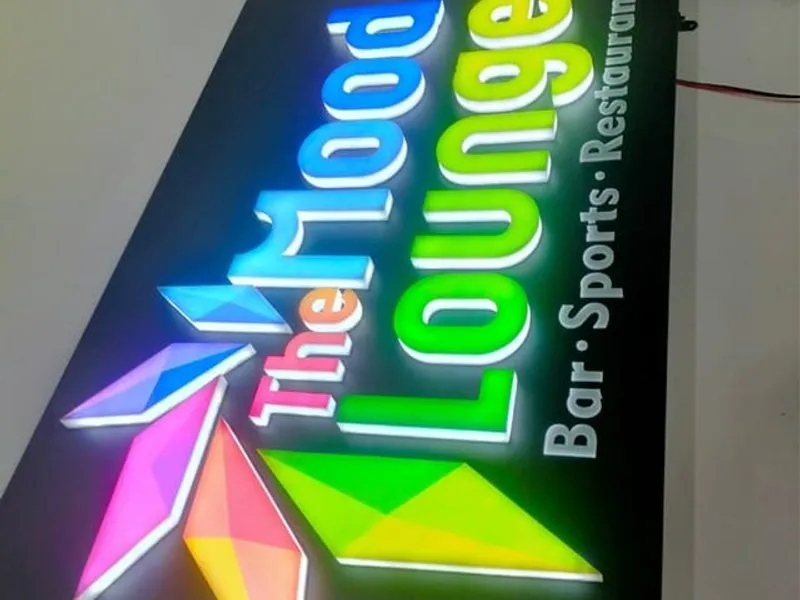
Real photo from our production floor — every sign we ship is made here.
Products mentioned or relevant to this topic — factory-direct, custom built.
From $24/letter · MOQ 1 piece · Flexible lead time · CE & UL certified · ships to 20+ countries
Custom sizes, colors, and finishes. Get a factory price in 24 hours.
Get a Free Quote Copy EmailWhatsApp +86 13865703472 · business@aochuangsign.cn
See pricing, specs, and get a free quote for the sign type you need. Built in our factory, shipped worldwide.