Let me guess: you sent an RFQ to five Chinese sign factories, got five lead times back, and every single one of them said "about 5-15 days." You're staring at your project calendar thinking that's your production window. Wrong. That's just the factory build time, not the time to your dock.
I've been on the factory floor at Aochuang Sign in Lu'an since 2010. I've packed channel letters into plywood crates and watched them sit in customs longer than they took to build. I've also seen sign shops lose clients because nobody told them the truth about door-to-door lead time.
Here's what nobody tells you: that 7-15 day factory lead time is real, but it doesn't start until you approve final artwork and pay the deposit. At our 3,000 square meter shop with 50+ workers, a standard front-lit channel letter order runs 7-15 production days from artwork approval to crate. Same for back-lit halo letters, unless you're asking for weird custom returns or mirror-polished stainless faces.
Front-lit channel letters are the fast lane. Acrylic face, aluminum or stainless returns, SMD 2835 modules—that's a rhythm job. Back-lit halo letters take a couple days longer because the mounting hardware has to be jigged and the LED spacing gets more math.
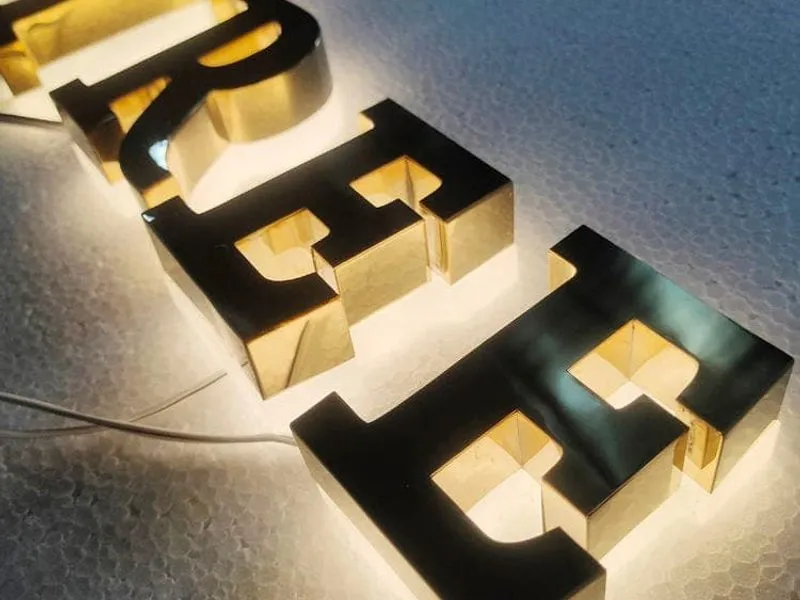
Stainless steel letters don't play nice with rush jobs. I don't care what the sales rep says. TIG welding, grinding, and #4 or #8 finishing on 304/316 stainless steel letters eats time. Add 2-3 days to the top end if you want mirror polish. 3D fabricated letters with multiple returns can push the full 15 days because every weld is a potential rework point.
Light boxes and large pan channel letters? You're looking at 10-15 days for a 1.5 meter by 3 meter unit, mostly because the acrylic face needs CNC routing and the LED layout has to be verified before sealing. Mini acrylic letters and party letters might ship in 7 days if they fit standard templates. Don't expect miracles on 100-piece custom orders.
One more thing: our MOQ is 1 piece. So you're not waiting for a batch to fill. But a single custom letter still goes through the same 10-step process as a 50-letter order. One-offs don't get a shortcut.
The ugly truth is you are the biggest lead time variable. If your proof sits in your inbox for four days, that's four days on the door-to-door clock. If you send a change after we've cut acrylic, the clock resets. Artwork approval should take 1 day if you're prepared. In reality, it takes 3-5 days because sign shop owners are juggling a dozen jobs.
Look, a 3mm acrylic face cuts 92% light output. A 2mm face cuts 90%. Your customer won't notice the 2% but they will notice the 40% cost bump. Spec the thinner face if you want to save money and a day of material handling. If the sign spans over 2.5 meters, use 5mm or it'll bow in the sun. That's not opinion—it's acrylic physics.
Color temperature also slows you down if you don't know what you need. Warm 3000-3500K for hospitality, neutral 4000-5000K for corporate, cool 6000-6500K for industrial. If you tell the factory "white LED," you'll get three rounds of clarification emails. That's three days burned.
Chinese holidays kill timelines. I won't sugarcoat it. Chinese New Year shuts down most of Lu'an for two weeks, and the week before is chaos because every factory is pushing orders out the door. If your deadline lands in February, plan backwards or wait.
I've seen this go wrong: a sign shop specs imported Mitsubishi acrylic because they heard it's UV-resistant for 5-8 years. Then they get mad when the factory says material delivery adds 3-5 days. Domestic acrylic is cheaper and faster, but it yellows in 1-2 years outdoors. If your client is paying for long-term signage, wait for the Mitsubishi. If it's a temp retail pop-up, domestic is fine.
LED modules are the other wildcard. We stock SMD 2835 modules, industry standard at 100-150 lumens per watt. If you want Samsung or Osram, that might add 2-4 days depending on supplier inventory. Here's the real talk: quality modules with Samsung/Osram/Blueview dies last 5+ years in the field. Cheap no-name modules fail in 12-18 months. Quickest way to spot bad LED modules: look at the solder joints. Dull gray = won't last 18 months. Shiny silver = proper lead-free solder.
Stainless steel sourcing moves the needle too. 304 stainless is stock standard, 10+ years outdoors, 18% chromium and 8% nickel. 316 stainless costs 20-30% more and contains 2-3% molybdenum for marine conditions. For a strip mall in Ohio, 304 is fine. For Miami Beach, pay for 316 or you're replacing letters in 3 years. And yes, 316 sheet stock sometimes takes an extra 3-5 days from the mill if we don't have it in the rack.
Aluminum is the easiest material to rush. It weighs one-third of steel, cuts fast, and doesn't rust. A standard lightbox frame or aluminum channel letter return can shave a day or two off production compared to heavy stainless fabrication. If you need speed and the customer doesn't need a mirror finish, spec aluminum.
Look, a trading company doesn't stock or build anything. It forwards your email to three factories and waits for quotes. That's 2-4 days before a real factory even sees your artwork. Then they add their markup and become a broken telephone between you and the welder. I've lost count of how many times a trading company asked for a change five days after the factory already bent the metal.
Factory-direct at Aochuang Sign, you talk to the person who signs off on the cutting file. That cuts pre-production time by at least a third. You also save 50-65% versus US retail installed pricing. I've watched sign shops pay $800 for a front-lit letter from a domestic fabricator. Same 304 stainless, same Samsung LEDs. We ship that letter for $120. The catch? You wait for shipping. But that's a different problem.
If a supplier can't show you a live video of the factory floor, or their certificate has yesterday's date on it, run. Ask for CE, ISO 9001, and if they claim UL, ask for the certificate number. CE marking costs 20,000-50,000 RMB. Most factories will say they have it. Ask to see the certificate with today's date. Watch them sweat.
The ugly truth is IP65 sounds impressive. It means water jets from any direction. It does NOT mean your sign survives a Florida hurricane. IP66 handles powerful jets for coastal wind-driven rain. IP68 is submersible and only for extreme flood zones. If a factory quotes IP65 on a sign that's going on a Miami rooftop, they don't understand the spec.
Every order at our shop goes through an 8-12 hour aging test before it gets packed. That's not optional. You can't skip it and expect LED modules to survive the first month. After aging, we do 100% QC inspection—every letter, every solder joint, every acrylic edge. Then export packaging: foam, carton, plywood crate. That packaging step alone takes 4-6 hours for a 20-letter order. Add 1 day to your mental math if you want third-party inspection, because the inspector has to schedule a slot after production but before crating.
I've seen this go wrong: a client insisted we skip the aging test to ship three days early. Six weeks later, half the LED modules died because a driver wasn't seated properly. We fixed it under warranty, but the client paid air freight to get replacements. Saving 72 hours cost them 14 days. Do the math.
If you need US electrical compliance, UL 48 listing costs $4,000-15,000 and takes 4-9 months with quarterly audits. ETL is a UL alternative and runs 10-30% cheaper. Don't ask a factory to "just put a UL sticker on it." That's a felony on your side if something burns. NEC Article 600 governs sign electrical in the US. Read it before you import.
Here's what nobody tells you: production might be 10 days, but sea freight is about 65 days. That's not a typo. You're shipping a crate across the Pacific. Warehouse crews handle LCL sea freight 6-8 times between our dock and yours. Every touch is a chance for damage. Nobody puts that in the brochure.
Express shipping takes about 5-15 days for small signs, but it'll run you $30-100 for a small box. Air freight runs about 10 days at $4-12 per kilogram. Sea freight is the only sane option for a 400 kilogram crate—$80-200 per cubic meter LCL or $1,200-3,000 for a full container. Then you pay US Section 301 tariff, roughly 30% on Chinese sign products. And customs. Customs can hold your crate for 2-5 days if paperwork isn't perfect. That's on you as the importer.
Let me put it in numbers that solve your project calendar. Artwork approval: 3-5 days. Production: about 5-15 days. Sea freight: about 65 days. Customs: 2-5 days. Total door-to-door from deposit to your dock: 62-95 days. If you need it in 30 days, you're flying it. No way around physics.
Look, the fastest sign order is one that never changes. Send vector files—AI, EPS, or PDF with outlined fonts. Include Pantone or RAL colors. Give exact dimensions in millimeters, not inches. Tell me the color temperature. Approve the proof within 24 hours. That alone can shave 3-4 days off your door-to-door time.
Batch your orders. One 50-letter order runs through laser cutting and LED assembly faster than five 10-letter orders. Our factory has 50+ workers, but they're not standing around waiting for your next PO. If you're a sign shop doing recurring work, send a 3-month forecast. I'll hold stock of your acrylic and LED modules. That cuts material sourcing time to zero.
Don't rush the solder joints. Don't skip the aging test to save a day. The quickest way to blow a client relationship is to install a sign that flickers in 30 days. We warranty LED modules for 2 years and power supplies for 1 year, but a warranty doesn't cover your labor to climb a ladder twice.
Use factory-direct pricing to offer your customer a better installed margin, then put some of that margin into faster shipping. If you're paying $120 for a $800 retail letter, you can afford express on the first order to get the client on your side. After that, ride the slow boat and bank the savings.
"Can you really produce 50 custom channel letters in 7 days?" Yes, if they're standard acrylic face with aluminum returns and you approve artwork on Monday. No, if you want mirror-polished stainless or RGB modules. And no, if you change the copy on Thursday.
"Why does sea freight take about 65 days? It's just a boat." Your crate gets handled 6-8 times before it reaches your dock. Trucking to port, export inspection, consolidation, loading, unloading, customs, trucking to your shop. Every touch adds a day or two. The boat isn't the problem. The hands are.
"Why is UL certification taking 4-9 months and costing $4,000-15,000? Can't you just put a sticker?" Because UL comes to the factory every quarter and audits the process. They test the sign, the wiring, the LED drivers. If you want a fake sticker, you're on your own when the inspector finds it. And they will find it.
"Does CE mean it's UL listed?" No. CE is European. It costs 20,000-50,000 RMB and takes 2-8 weeks. It lets you sell in the EU. UL is for US electrical code. One does not replace the other. Stop asking.
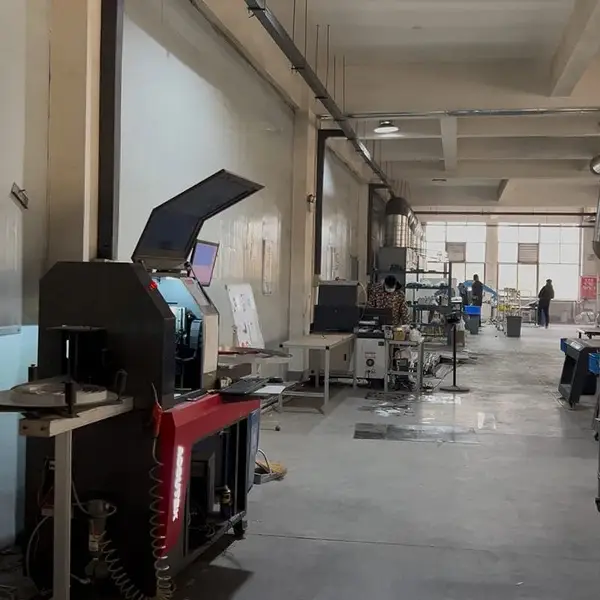
Real photo from our production floor — every sign we ship is made here.
Products mentioned or relevant to this topic — factory-direct, custom built.
From $24/letter · MOQ 1 piece · Flexible lead time · CE & UL certified · ships to 20+ countries
Custom sizes, colors, and finishes. Get a factory price in 24 hours.
Get a Free Quote Copy EmailWhatsApp +86 13865703472 · business@aochuangsign.cn