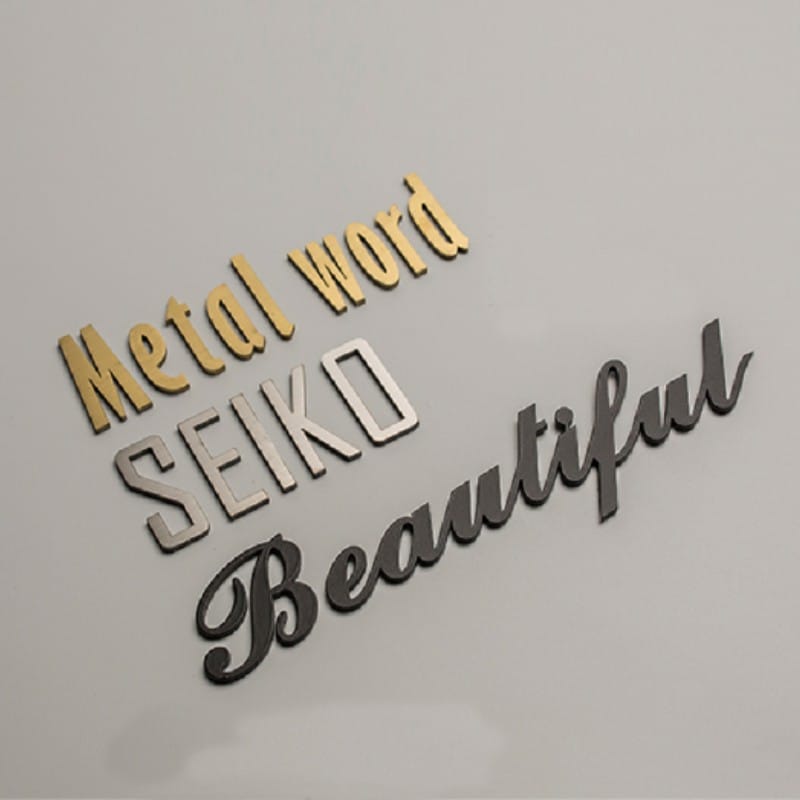
A restaurant sign isn't decoration. It's the first handshake with a hungry customer who's already late for dinner.
I've been on the factory floor since 2010. Built everything from a 2-foot taco shop sign to a 40-foot steakhouse facade. The restaurants that fail all make the same mistake: they treat signage as a line item to trim, not a moneymaker.
Here's what nobody tells you: a front-lit channel letter from our floor runs $20-80. The same letter installed by a domestic shop? $200-700. That gap is either your margin or your client's savings, depending on which side of the quote you're standing on.
If you're quoting front-lit channel letters for a restaurant, you're not selling plastic and steel. You're selling visibility at 10 p.m. when a driver is deciding between your client and the burger joint three doors down.
SMD 2835 LEDs push 100-150 lumens per watt. That's the industry standard for a reason — enough punch to cut through parking lot glare without turning the facade into a light cannon.
Look, I've seen this a hundred times: chef-driven spots want backlit halo letters. They want that soft architectural glow. QSRs and sports bars want the brightest front-lit letters they can get. Both are right, but you'd better know the difference before you quote.
Back-lit halo letters run $35-120 per letter from the factory, compared to $20-80 for front-lit. That changes how the brand reads. Fine dining, wine bars, boutique bakeries — they'll pay for the halo.
For counter-service spots, a light box at $80-250 per square meter is a practical menu board. It speeds up ordering. That's throughput, not decoration.
Stainless steel is the workhorse for restaurant signs because it cleans up like a prep table. No pores, no crevices for grease to build up. That matters when the sign sits ten feet from a vent hood.
304 stainless steel has 18% chromium and 8% nickel. That gives you a 10+ year outdoor life in most locations. 304 stainless steel letters are the standard for a reason — durability without the marine-grade premium.
But if your client is in Miami Beach or within spitting distance of salt spray, pay the 20-30% premium for 316 stainless. It adds 2-3% molybdenum, which buys you 15+ years in corrosive environments. For a strip mall in Ohio? 304 is fine. Don't oversell 316 to a landlord who'll never need it.
The ugly truth is most sign shops won't tell you domestic acrylic yellows in 1-2 years. UV-resistant acrylic from Mitsubishi or Degussa lasts 5-8 years before yellowing. That's not a small difference. That's the difference between a one-year warranty and a five-year reputation.
Acrylic thickness matters too. For faces over 2.5 meters, use 5mm or thicker. I've seen cheap 2mm sheets bow like a vinyl tablecloth on a windy patio.
Aluminum is another option: one-third the weight of steel, 8-12 year outdoor life, naturally rust-proof. Powder coat it any RAL color and it'll shrug off kitchen exhaust. But it doesn't have the same premium heft as stainless.
Restaurant signage has more code layers than a laminated menu. You've got city zoning, landlord sign criteria, and the National Electrical Code. Miss one and you're re-fabricating on your own dime.
For electrical signage in the US, NEC Article 600 sets the rules. Your sign needs a UL 48 listing or an ETL mark to satisfy most inspectors and insurance carriers. UL 48 will run you $4,000-15,000 and take 4-9 months, with quarterly audits. ETL is 10-30% cheaper and functionally equivalent in most jurisdictions.
Look, I've had a client tell me their landlord accepted a non-UL sign. Then the city inspector showed up. The re-fabrication cost more than the original sign. Don't be that client.
The ugly truth is CE marking costs 20,000-50,000 RMB and takes 2-8 weeks. Most factories will say they have it. Ask to see the certificate with today's date. Watch them sweat. I've done it. Half the time the cert expired two years ago.
Outdoor signs need at least an IP65 rating — dust-tight and protected against water jets. That's the minimum, not a badge of honor. For coastal or industrial areas, spec IP66. IP68 is for extreme weather or accidental submersion, like a sign mounted near a splash zone in a seafood restaurant.
ADA rules are separate and non-negotiable for wall-mounted interior signs: tactile characters, Grade 2 Braille, non-glare finish, mounted 48-60 inches from floor. Get this wrong and you're not just paying to re-make a sign. You're paying a lawyer.
Not all LEDs are the same. SMD 2835 chips give you 100-150 lumens per watt. That's the sweet spot for channel letters. SMD 5730 outputs 40-60 lumens per chip and is the brightest, but it runs hotter. SMD 5050 handles RGB when you need color-changing effects.
Quality LED modules from Samsung, Osram, or Blueview run 5+ years real-world. Cheap no-name modules? 12-18 months. I've opened failed signs and seen solder joints so dull they look like pencil lead. Shiny silver solder is lead-free and lasts. Dull gray solder will fail before your chef's first menu change.
I've seen this go wrong: a restaurant bought a beautiful acrylic LED letter package, but the installer buried the drivers behind a fixed panel. Six months later, half the sign was dark. Service tech had to cut the wall open. Always ask: where's the driver access?
Sealing matters. Use neutral silicone, not acid-cure. Acid-cure eats acrylic edges. After assembly, the sign should sit through an 8-12 hour aging test. If a factory skips that, LEDs that were going to fail early will fail in your parking lot, not on their bench.
Digital menu boards are a different animal. They need their own power, their own environmental rating, and a content strategy that doesn't look like a screensaver. I'm not knocking them, but don't spec a $3,000 menu board and then backlight it with $2 LED strips.
Legibility beats pretty every time. A script font in a 12-inch letter looks like a squiggle from 40 feet. If your client's brand uses a thin serif, you need more letter height or a bolder face for the sign. That's not a design opinion; that's physics.
Color temperature is where restaurant signs go right or wrong. 3000-3500K warm white is hospitality standard — it flatters faces and food. 4000-5000K neutral works for fast casual and retail-adjacent concepts. 6000-6500K cool white? That's industrial. Use it on a drive-thru, not a date-night spot.
Here's what nobody tells you: a 3mm acrylic face transmits 92% of light. A 2mm face transmits 90%. Your customer won't notice the 2% difference, but they will notice the 40% cost bump from going thicker. Unless the face spans over 2.5 meters, 3mm is usually plenty.
Brand consistency means the sign on the building matches the menu board matches the wall art. Pick one color temperature and one acrylic face for the whole package. I've had clients mix 3500K letters outside with 6500K menu boards inside. It looks like two different companies.
For tactile interior signs, don't forget non-glare finishes. A glossy acrylic panel under a pendant light is unreadable. ADA says non-glare for a reason. Grade 2 Braille and 48-60 inch mounting are non-negotiable.
Here are factory-floor prices, because I'm tired of vague website quotes. Front-lit channel letters: $20-80 per letter. Back-lit halo: $35-120. Stainless steel non-lit: $15-40. 3D fabricated: $40-120. Aluminum: $10-25. Light boxes: $80-250 per square meter. Neon flex: $30-200 per sign.
US retail installed pricing for front-lit channel letters runs $200-700 per letter. Halo-lit runs $400-1,000 per letter. The factory-direct savings on product is 50-65%. The rest of that gap is installation, freight, tax, and markup. Don't pretend it's all labor.
Shipping choices matter. Express takes about 5-15 days for $30-100 on small stuff. Air freight is about 10 days at $4-12 per kilogram. Sea freight is about 65 days at $80-200 per cubic meter for LCL, or $1,200-3,000 for a full container. Add US Section 301 tariffs at about 30% if you're importing from China.
I've seen this go wrong: a restaurant owner ordered sea freight to save $600 on a sign package. It arrived 65 days later, three days after opening. He paid $2,000 for rush air freight on a second set. Plan ahead. Or pay twice.
Maintenance is a design decision. LED modules last 5+ years from quality suppliers, but power supplies typically carry a 1-year warranty and LED modules carry a 2-year warranty. Build access panels for drivers. Use weather-sealed connectors. Your future service tech will either send you a holiday card or curse your name.
Here's the math. A five-letter front-lit channel sign from the factory costs $100-400. That same sign installed locally could be $1,000-3,500. If it helps bring in an extra 10 covers a night at a $25 average check, that's $250 a day. The sign pays for itself in under two weeks.
I'm not saying a sign alone fills tables. But a restaurant without a visible sign is relying on word of mouth and delivery apps. That's a lease on someone else's audience.
The ugly truth is most restaurant owners under-budget signage because it's the last line item before opening. Then they spend $500 a month on social media ads so people can drive past a sign they can't read from the road.
Factor in lifespan. A quality 304 stainless steel letter with UV-stable acrylic and Samsung LEDs will look good for 10+ years. A cheap alternative will fade, yellow, and fail in 18-24 months. The cheaper sign costs more every time.
Signage isn't a cost. It's a customer magnet you pay for once and it works for 5-10 years. I've built enough signs to know which ones get replaced at year two and which ones still look new at year eight. The difference is never the chef. It's the spec.
Do I really need a UL listing for restaurant signage in the US?
Yes, if your landlord, inspector, or insurance carrier asks. UL 48 runs $4,000-15,000 and takes 4-9 months, with quarterly audits. ETL is 10-30% cheaper and accepted in most jurisdictions. If a factory won't show you a current certificate, walk away.
What's the cheapest material that won't look terrible in two years?
Aluminum. One-third the weight of steel, 8-12 year outdoor life, naturally rust-proof. Powder coat it any color. If you want premium, 304 stainless steel letters are the standard. For coastal, pay the 20-30% premium for 316.
Why is sea freight so slow?
Because your crate gets handled 6-8 times between our dock and yours. That's not in the brochure. Sea freight takes about 65 days. Air freight is about 10 days at $4-12/kg. If you're opening next month, don't order sea and pray.
Can I just use domestic acrylic and save money?
You can. It'll yellow in 1-2 years. UV-resistant Mitsubishi or Degussa acrylic lasts 5-8 years before yellowing. The savings evaporate the first time you re-face a sign at full installed cost.
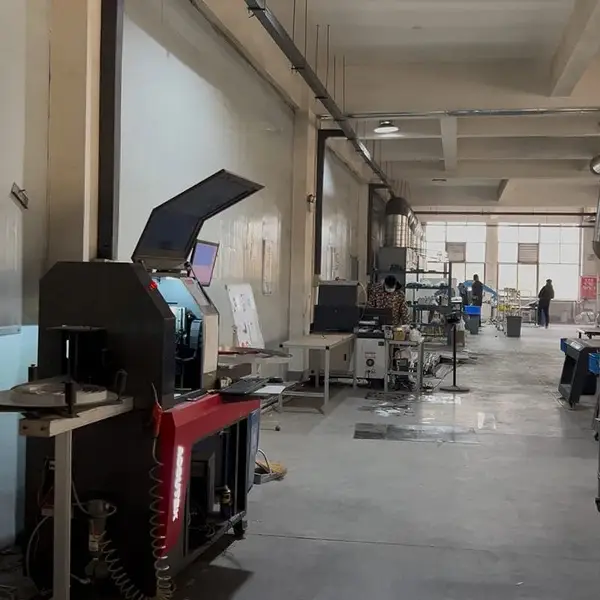
Real photo from our production floor — every sign we ship is made here.
Products mentioned or relevant to this topic — factory-direct, custom built.
From $24/letter · MOQ 1 piece · Flexible lead time · CE & UL certified · ships to 20+ countries
Custom sizes, colors, and finishes. Get a factory price in 24 hours.
Get a Free Quote Copy EmailWhatsApp +86 13865703472 · business@aochuangsign.cn