You’ve got 3 seconds to make a first impression with your store sign. Three. Seconds. I’ve watched people walk right past a poorly lit, yellowed acrylic sign and into a competitor’s door 20 feet away. Your sign isn’t decoration – it’s your cheapest salesperson. And if it’s done wrong, that salesperson is sleeping on the job.
I’ve been in this trade since 1997. Started on the factory floor at 25, burning my fingers on hot acrylic, arguing with suppliers about why their “waterproof” LED modules died after one rain. Now I manage production at a shop that’s shipped worldwide. I’ve seen what works, what’s a waste of money, and what rookie mistakes cost retailers thousands. This isn’t a marketing brochure.
It’s the truth.
Here’s what nobody tells you: the material you pick decides 80% of your sign’s lifespan. Not the design, not the font, not the lights. The substrate.
Acrylic is the go-to for 90% of retail channel letters because it’s cheap and looks good. But there’s a trap. Mitsubishi or Degussa acrylic – the UV-resistant stuff – costs more upfront but lasts 5–8 years before yellowing. Domestic acrylic? You’re lucky if it’s still clear after 18 months. I’ve replaced signs after one summer where the face turned the color of a bad banana. For any sign over 2.5 meters tall, you need 5mm thickness minimum. 3mm will warp in wind. I’ve seen it.
Stainless steel is a different animal. 304 stainless – 18% chromium, 8% nickel – will live outdoors for 10+ years. But if you’re within a mile of salt water, you need 316 stainless. That extra 2–3% molybdenum costs 20–30% more, but it’s the difference between a sign that still shines after a hurricane and one that looks like a rusted tractor part. I’ve watched a strip mall in Miami replace their 304 letters after 3 years. The 316 letters next door? Still showing off a mirror finish.
The ugly truth is that aluminum signs are lighter – one-third the weight of steel – but they dent easier. For retail storefronts, 0.040 to 0.063-inch (1.0–1.6mm) aluminum with a powder coat finish is good for 8–12 years. But if some kid kicks your sign, it’s got a permanent dent. Stainless takes a beating and looks like nothing happened.
Look, I’ve seen this go wrong: a retailer buys a cheap sign with “50,000-hour LED modules.” Sounds great, right? Those cheap modules use poor solder joints – dull gray, not shiny silver. That means they’ll fail in 12–18 months flat. I’ve replaced them in 14 months. The factory promise? Meaningless.
Quality modules use Samsung, Osram, or Lan Jing. The SMD 2835 is the industry workhorse – 100–150 lumens per watt. SMD 5730 is brighter, 40–60 lumens per chip, but draws more power. For most retail, 2835 is plenty. If you want RGB color-changing, you need SMD 5050. But here’s the kicker: L70 rating of 50,000 hours means 70% brightness after 50,000 hours. That’s about 5.7 years of continuous operation. In real-world use – on 12 hours a day – that’s over 11 years. Cheap modules aren’t rated for L70 at all. They just claim 50,000 hours based on lab conditions you’ll never see.
Color temperature matters more than most retailers think. 3000–3500K warm light for restaurants and bars – makes food look appetizing. 4000–5000K neutral for retail and corporate – looks clean. 6000–6500K cool for industrial or highways – flat and harsh. I had a bakery owner insist on 6500K. His pastries looked gray. Sales dropped 15% in two months. He switched to 3500K and sales came back. The color of light changes how people see your product.
Here’s what nobody tells you: CE marking costs 20,000–50,000 RMB. Most factories will say they have it. Ask to see the certificate with today’s date. Watch them sweat. I’ve walked into a dozen Chinese sign factories. Half of them had “CE” stickers on their signs but couldn’t show me a valid cert. Don’t take their word.
For the US market, UL 48 is the gold standard – costs $4,000–15,000 to certify, takes 4–9 months, and requires quarterly factory audits. ETL is a cheaper alternative – 10–30% less – and accepted by most inspectors. If you’re importing, know that Section 301 tariffs add about 30% on top. That’s not a hidden fee; it’s the law. Plan for it. Don’t let your sign vendor surprise you with an extra 30% at the border.
IP ratings: IP65 means dust-tight and protected from water jets from any direction. That’s fine for most outdoor signs. IP66 stands up to powerful jets – think pressure washer from 3 feet. IP68 can be submerged. I’ve had clients ask for IP65 and then complain when their sign failed in a Florida hurricane. IP65 does not mean hurricane-proof. If you live coastal, specify IP66 or even IP68 for the power supply. And for ADA compliance in the US – tactile signs between 48 and 60 inches high, non-glare finish, Grade 2 Braille – that’s NEC Article 600. If you don’t meet it, you can get fined. I’ve replaced signs for chain stores that had to rip out their entire lobby because the Braille dots were wrong.
I’ve watched sign shops pay $800 for a front-lit letter from a domestic fabricator. Same 304 stainless, same Samsung LEDs. We ship that letter for $120. The difference isn’t quality – it’s efficiency and scale. Our production floor has 50+ skilled workers running a 10-step process that takes 7 to 15 days total. Here’s the breakdown from someone who’s been doing this 16 years:
Day 1: design confirmation. We don’t guess – you approve the vector file. Day 2–3: laser cutting to ±0.1mm tolerance. Next 2 days: bending and TIG welding – no gaps, no weak points. Then 2 days of grinding and polishing. Day 6: CNC routing the acrylic face. Day 7–8: LED module assembly. Day 9: sealing with neutral silicone – not the cheap stuff that cracks. Days 10–11: an 8–12 hour aging test – lights on full, looking for early failures. Day 12: 100% QC inspection – every module, every solder joint, every seal. Days 13–15: export packaging – foam, carton, plywood crate. That crate gets handled 6 to 8 times between our dock and yours. LCL sea freight means your sign goes on a pallet, then into a container, then onto a truck, then into a warehouse, then onto another truck. Every touch is a chance for damage. That’s not in the brochure. But if we pack it right – plywood crate with foam inserts – damage rate is under 1%. We take that seriously.
The ugly truth: US retail installed prices for channel letters run $200–700 each for front-lit, $400–1,000 for halo-lit. From our factory, you pay $20–80 for front-lit and $35–120 for back-lit. That’s 50–65% savings on the product itself. But you still have to pay shipping. For a small order, express (7-10 days) is $30–100. Air freight (about 10 days) runs $4–12 per kg. Sea (about 65 days) the cost is $80–200 per cubic meter for LCL, or $1,200–3,000 for a full container. If you’re doing 50 letters for a chain store, a full container might save you money. If you’re a single shop, LCL is fine – just budget for extra packing.
I’ve worked with retailers who tried to cut corners on LED modules. Quickest way to spot bad modules: look at the solder joints. Dull gray = won’t last 18 months. Shiny silver = proper lead-free solder. That simple test has saved clients from buying junk more than once.
One. We’ll make a single letter if that’s what you need. Our MOQ is 1 piece. That’s not common in this industry – most factories want 50 or 100. But we’ve been doing this since 2010 and we know some shops just need a replacement or a small test run. Don’t abuse it – we’re not Amazon – but it’s real.
Express is 7-10 days. Air is 10–20. Sea is 50–70. Those are live timelines – not marketing numbers. The holdup is almost always customs, not transit. I’ve had a crate sit in Long Beach for 12 days because the paperwork had a typo in the HS code. Double-check your customs broker before you even place the order.
LED modules carry a 2-year warranty, power supply 1 year. That’s for manufacturing defects. If your sign gets hit by a forklift, that’s not covered. The L70 lifespan claim of 50,000 hours is valid for quality modules. If you buy cheap ones, you’re replacing them in 18 months. We use Samsung, Osram, or Lan Jing – none of that unknown brand nonsense. Ask for the module datasheet. If they can’t provide it, run.
Sure, if you’re a licensed electrician and you understand NEC Article 600. Most people can’t. The average DIY install on a channel letter set takes 2–4 hours if you know what you’re doing. If you don’t, you’ll crack the acrylic, strip the mounting clips, or wire it backward. Then you call us complaining the sign doesn’t work. I’ve had that call 15 times. Hire a professional.

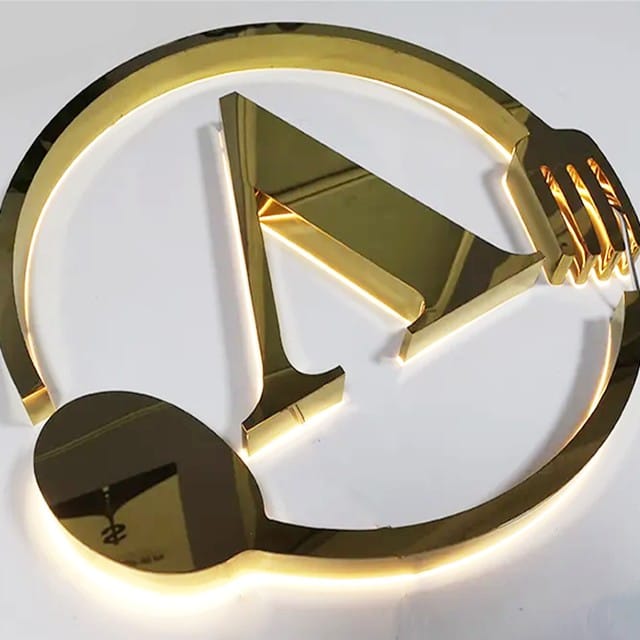
Real photo from our production floor — every sign we ship is made here.
Products mentioned or relevant to this topic — factory-direct, custom built.
From $24/letter · MOQ 1 piece · Flexible lead time · CE & UL certified · ships to 20+ countries
Custom sizes, colors, and finishes. Get a factory price in 24 hours.
Get a Free Quote Copy EmailWhatsApp +86 13865703472 · business@aochuangsign.cn
See pricing, specs, and get a free quote for the sign type you need. Built in our factory, shipped worldwide.