I got a call from a facilities manager two years ago. He'd spent $80,000 on a new campus wayfinding system — directed pathways, building identification, parking lot maps.
Six months after installation, the acrylic faces on six monument signs turned yellow. The LED modules in the building letters started flickering. One stainless steel post by the marine science building had rust drip stains down the side. He wanted to know what went wrong.
I didn't have the heart to tell him everything. The acrylic was cheap domestic stuff — good for 1-2 years before yellowing, not the UV-resistant Mitsubishi with a 5-8 year life. The LEDs were no-name modules with dull gray solder joints, maybe good for 12 months. And the stainless? Standard 304 — fine for an inland campus, not for a coastal campus with salt spray. Should've been 316 marine grade, but that costs 20-30% more and nobody asked. That's what happens when nobody asks the right questions.
Look, I've been on this floor since 1997. I've seen every wayfinding failure a school can throw at a sign.
Here's what nobody tells you: most campus signage vendors are selling you a system they've never tested in your climate, with your sun exposure, with your student body kicking it. And the industry loves to pretend "wayfinding" is some high-design consulting gig. It's not. It's aluminum, acrylic, LEDs, and stainless, bolted into the ground. If any one of those materials isn't right for your location, you're replacing the whole thing inside three years. Most are avoidable.
The ugly truth is that 70% of the material decisions on a campus sign are made by someone who's never held a welding torch. Let's break it down by the numbers.
Acrylic faces. You've got two choices: the good stuff and the cheap stuff. Mitsubishi or Degussa UV-resistant acrylic gives you 90-92% light transmittance and lasts 5-8 years without yellowing. Domestic acrylic? 1-2 years, tops. I've pulled yellowed faces off a 2-year-old sign and the client said "but it looked fine in the sample." Yeah, samples sit in an office. Real acrylic sits in direct sun 10 hours a day. Samples lie.
Stainless steel is another minefield. For building identification letters that'll be 20 feet up, 304 is fine — 18% chromium, 8% nickel, 10+ year outdoor life. But for ground-mounted monuments near sidewalks where kids lean on them, or near any coastal environment? You need 316 marine grade. It's got 2-3% molybdenum that stops pitting corrosion from salt. Costs 20-30% more. I've seen this go wrong: a campus in Florida used 304 on their entrance signs. Three years later the welds were pitting. They paid double to replace with 316. Should've done it the first time. That was an expensive lesson.
Aluminum is your friend for large-scale wayfinding panels. Natural rust-proof, weighs a third of steel, lasts 8-12 years outdoors. Common thickness runs 0.040-0.063 inches (1.0-1.6mm). But I keep seeing spec sheets calling for 0.080-inch aluminum for "durability." That's overkill — adds weight and cost with zero functional benefit. A 1.6mm aluminum panel with proper internal bracing will outlast the building it's pointing to. Rule of thumb: don't overbuild.
Here's what nobody tells you about LED modules for campus signage: the L70 rating of 50,000 hours is a lab number. In real life, heat kills. And in an enclosed channel letter on a south-facing wall in Texas, you're looking at maybe 30,000 hours before the light drops below 70% — that's about 3.5 years.
Quickest way to spot bad LED modules: look at the solder joints. Dull gray means no-name lead-free solder that'll crack in a year. Shiny silver means proper industrial solder — Samsung or Osram or a quality Chinese brand like Lan Jing. I've tested modules side by side. Cheap modules: 12-18 months. Quality modules: 5+ years real life. The price difference is maybe $2 per letter. The labor to replace a bad module inside a 20-foot-tall illuminated channel letter is $200. The math is simple. But most buyers ignore it.
IP ratings get abused too. IP65 sounds impressive — water jets from any direction. It does NOT mean your sign survives a Florida hurricane or a Minnesota blizzard. For campus signs exposed to wind-driven rain, you need IP66 at minimum. For anything that could sit in standing water — like a monument sign in a flood zone — IP68 submersible. And if your vendor says "IP65 is standard for outdoor," they're selling you a sign that'll leak in year two.
I've watched campus facilities managers pay $800 for a single front-lit channel letter from a domestic fabricator. Same 304 stainless, same Samsung LEDs, same 5mm acrylic. Our factory in Lu'an, China ships that letter for $120. Same spec. Same certification. That's a 50-65% savings on the product, and on a campus with 40 building identification signs and 200 wayfinding posts, that's not pocket change.
But here's the catch: shipping. Express courier for small samples — 7-10 days, $30-100. Air freight for a moderate order — about 10 days, $4-12 per kilo. Sea freight for the full job — about 65 days, $80-200 per cubic meter for LCL. That's where things get dicey. LCL sea freight means your crate gets handled 6-8 times between our dock and yours. Every touch is a chance for damage. I've seen crates that looked like someone played soccer with them. That's not in the brochure.
Also: US Section 301 tariff adds about 30% on top of the factory price. So that $120 letter becomes

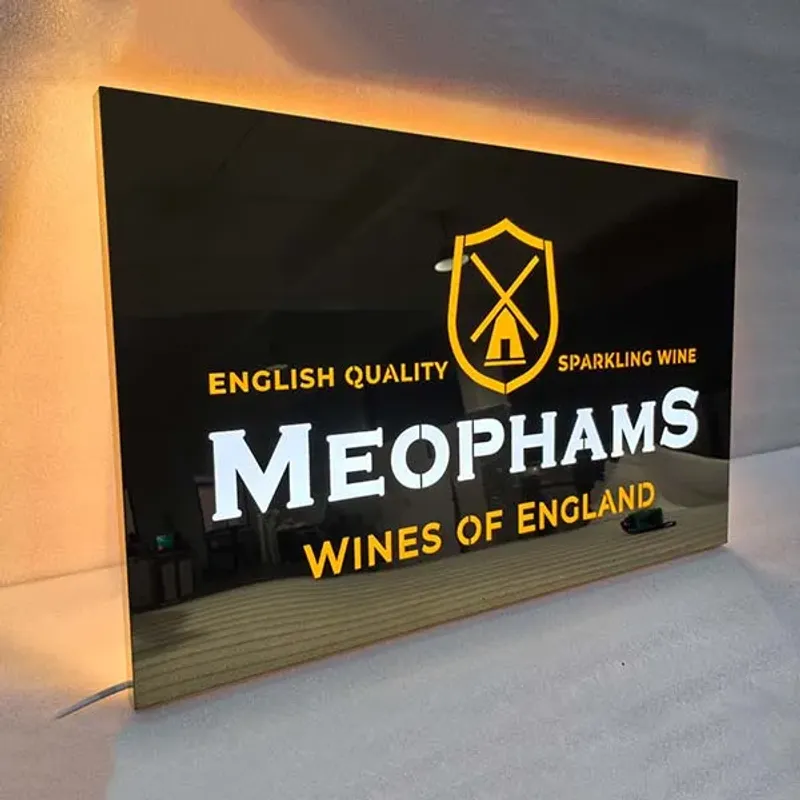
Real photo from our production floor — every sign we ship is made here.
Products mentioned or relevant to this topic — factory-direct, custom built.
From $24/letter · MOQ 1 piece · Flexible lead time · CE & UL certified · ships to 20+ countries
Custom sizes, colors, and finishes. Get a factory price in 24 hours.
Get a Free Quote Copy EmailWhatsApp +86 13865703472 · business@aochuangsign.cn
See pricing, specs, and get a free quote for the sign type you need. Built in our factory, shipped worldwide.